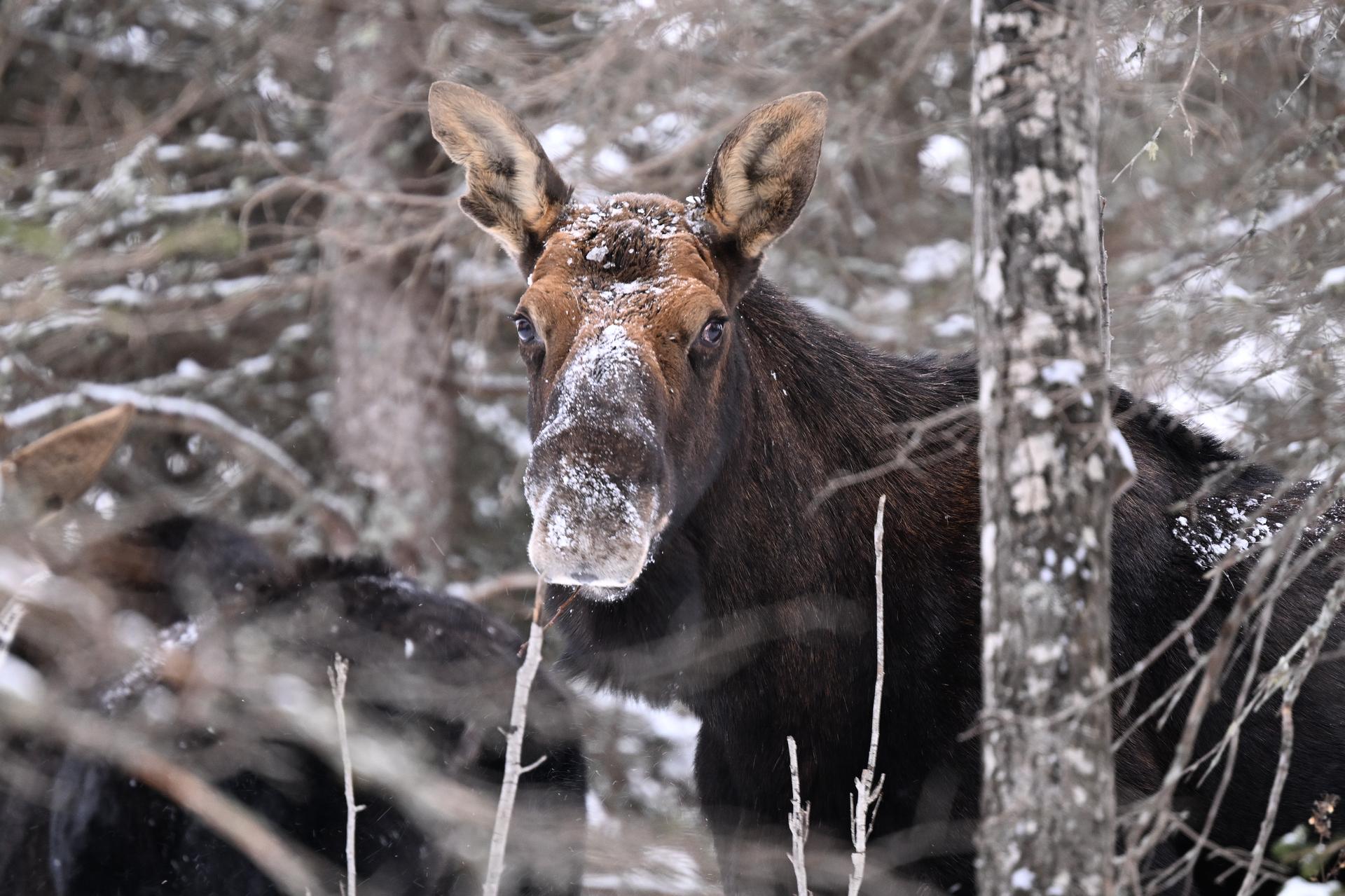
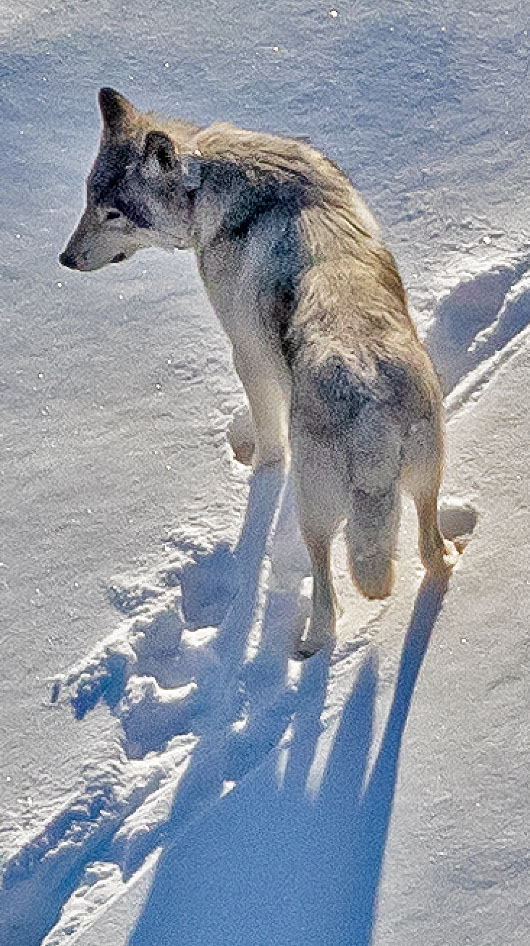
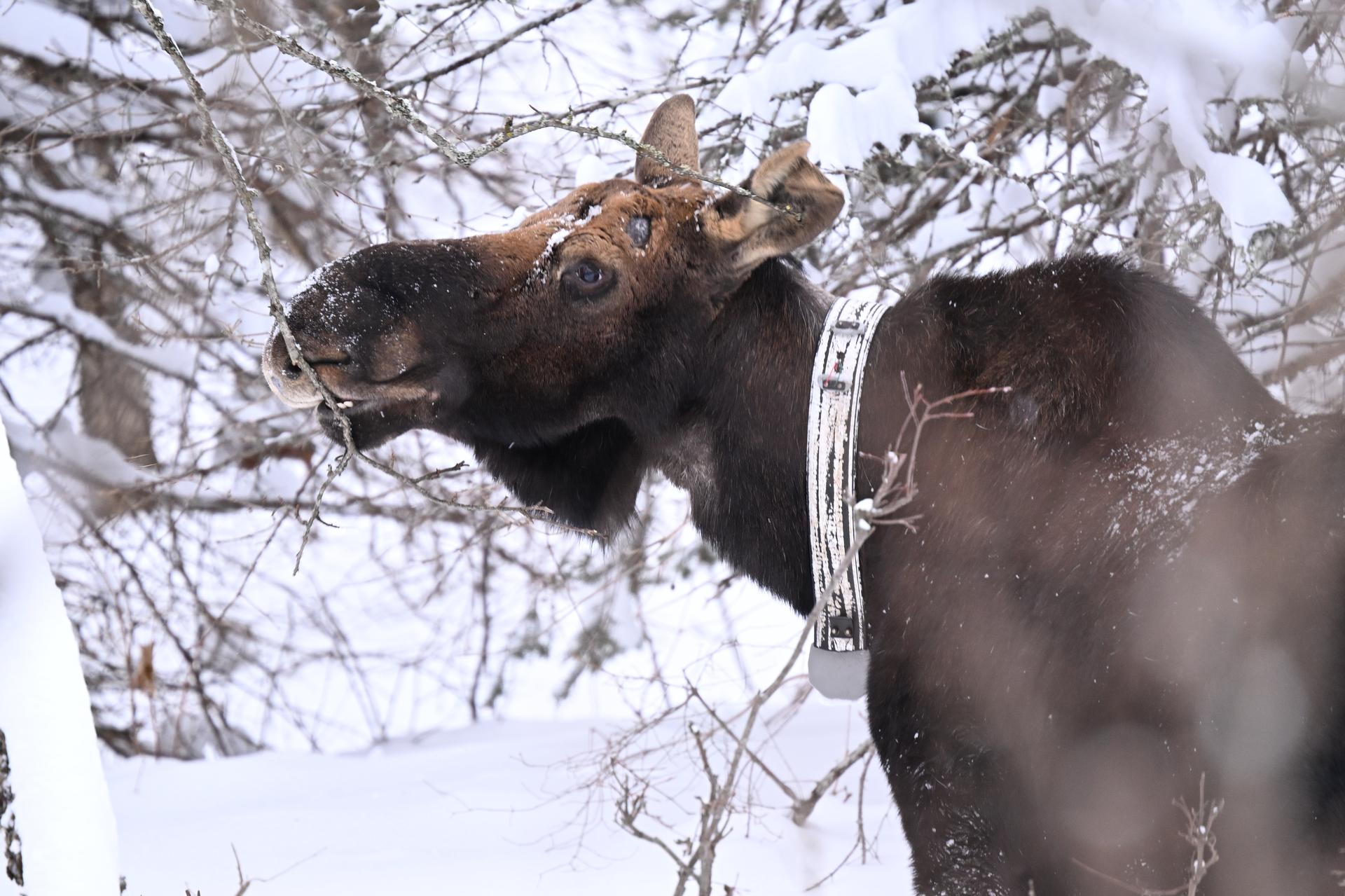
Bull Moose, Winter Study 2026 Photo Credit: Sarah Hoy |
|
|
Letter from the President |
|
|
|
Jeffrey Holden has been supporting the Wolf-Moose Project since 2002 leading groups searching for moose bones with Moosewatch. Jeff is the author of the recently published Dead Moose on Isle Royale: Off Trail with the Citizen Scientists of the Wolf-Moose Project from Michigan State University Press. Jeff loves the Island and meeting all of the people associated with the Project. Professionally, Jeff was a mild-mannered data guy in healthcare in southeast Michigan.
|
|
|
It is the end of March, the end of winter, and there is a lot going on. Winter Study, the Winter Seminar Series, and Moosewatch are just around the corner. The scientists only recently completed the Winter Study and have left Isle Royale. It will be fun to hear what they learned and what the estimated numbers are for the wolves and moose on the island. How have they been faring? How many wolf packs are there?
Our annual Winter Seminar Series, with two sessions down and one to go, wraps up on Tuesday, April 7, when John Vucetich of the Wolf-Moose Project will discuss Wolves and the Endangered Species Act. Sign up here. These virtual presentations have been a success, entertaining and informative, and they will definitely be back in 2027. Remember, donors have access to recordings of each of these presentations from this year and last.
|
|
|
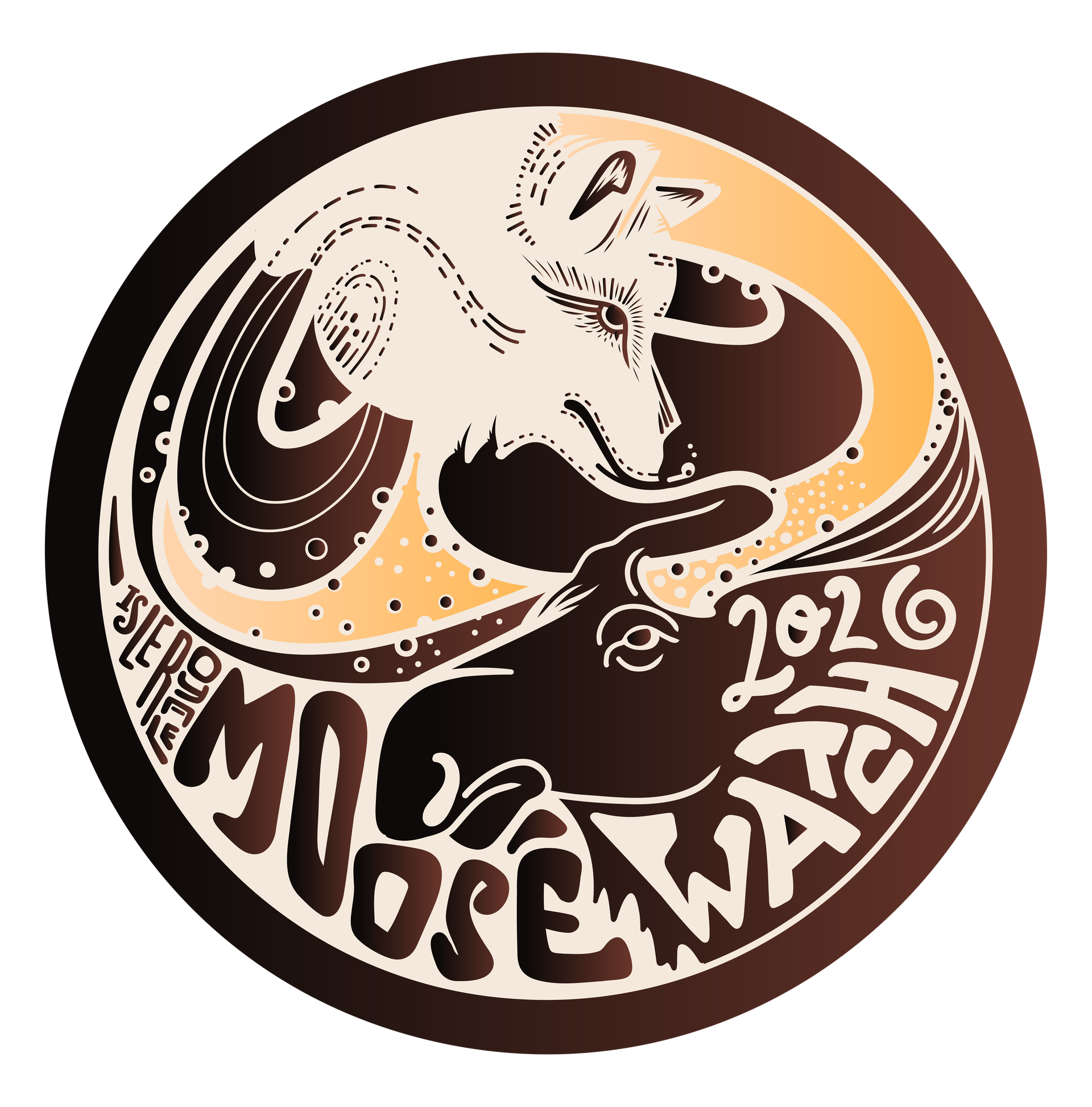
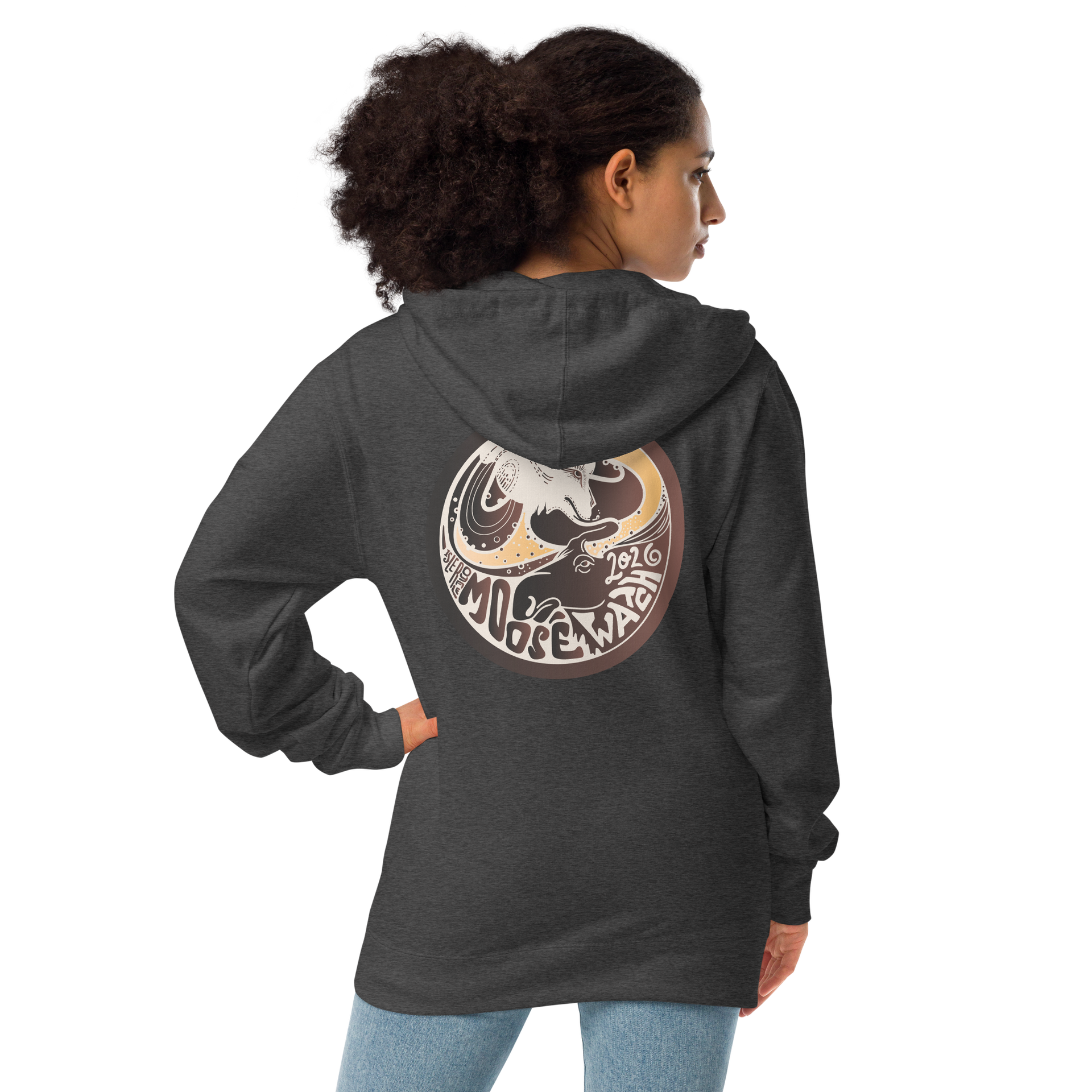
And a biggie for many of us Wolf-Moose people is Moosewatch. The first wave of volunteers will hit the island on May 9, just about six weeks from now. I expect those first volunteers will encounter ice and snow on the ground given the recent weather, which has brought a boatload of snow. They will have GPS coordinates generated from the Winter Study to guide their search. They can also do it in some new Moosewatch clothing we’ve developed in collaboration with our friend Matt Brass of Smoky Outfitters. Thank you, Matt.
|
| Moosewatch 2026 logo, artwork by Matt Brass |
|
|
Amid all of this, we are working behind the scenes, supporting the Wolf-Moose Project and preparing projects for the spring and summer. You can expect another photography contest and a new fundraising effort later this summer. As always, thank you for your interest and support. By Jeffrey Holden |
|
|
The Science of Isle Royale |
|
|
|
Ken Lemieux first visited Isle Royale in 2009. Despite a 36-hour storm, he was smitten and has returned several times. He began participating in Moosewatch in 2022. He’s a husband, father of three, tech writer, and lover of the outdoors. |
|
|
Part 2: The Capture of Wolves from Four Locations and their Introduction to Isle Royale This is the second article in a three-part series explaining the wolf situation on Isle Royale.
In the previous article, we discussed how disease, inbreeding, climate change, and random events had brought the Isle Royale wolf population to the brink of extirpation.
In 2015, the National Park Service began determining whether and how to relocate wolves to Isle Royale to preserve and protect the isolated wolf population. Four possible alternatives were considered: - Alternative A: No Action
- Alternative B: Immediate Limited Introduction
- Alternative C: Immediate Introduction with Potential Supplemental Introductions
- Alternative D: No Immediate Action with Allowance for Future Action
After much consideration, Alternative B: Immediate Limited Introduction, was selected, and is summarized by the NPS as:
Under Alternative B, between 20 and 30 wolves with a wide genetic diversity would be introduced to the island. Wolves would be supplemented as needed up to the third year after initial introduction. After the third year, should an unforeseen event occur that impacts the wolf population, such as a mass die-off or introduction of disease, and the goals of the alternative are not being met due to this event, wolves may be supplemented for an additional two years. No additional wolves would be brought to the island after five years from the date of initial introduction.
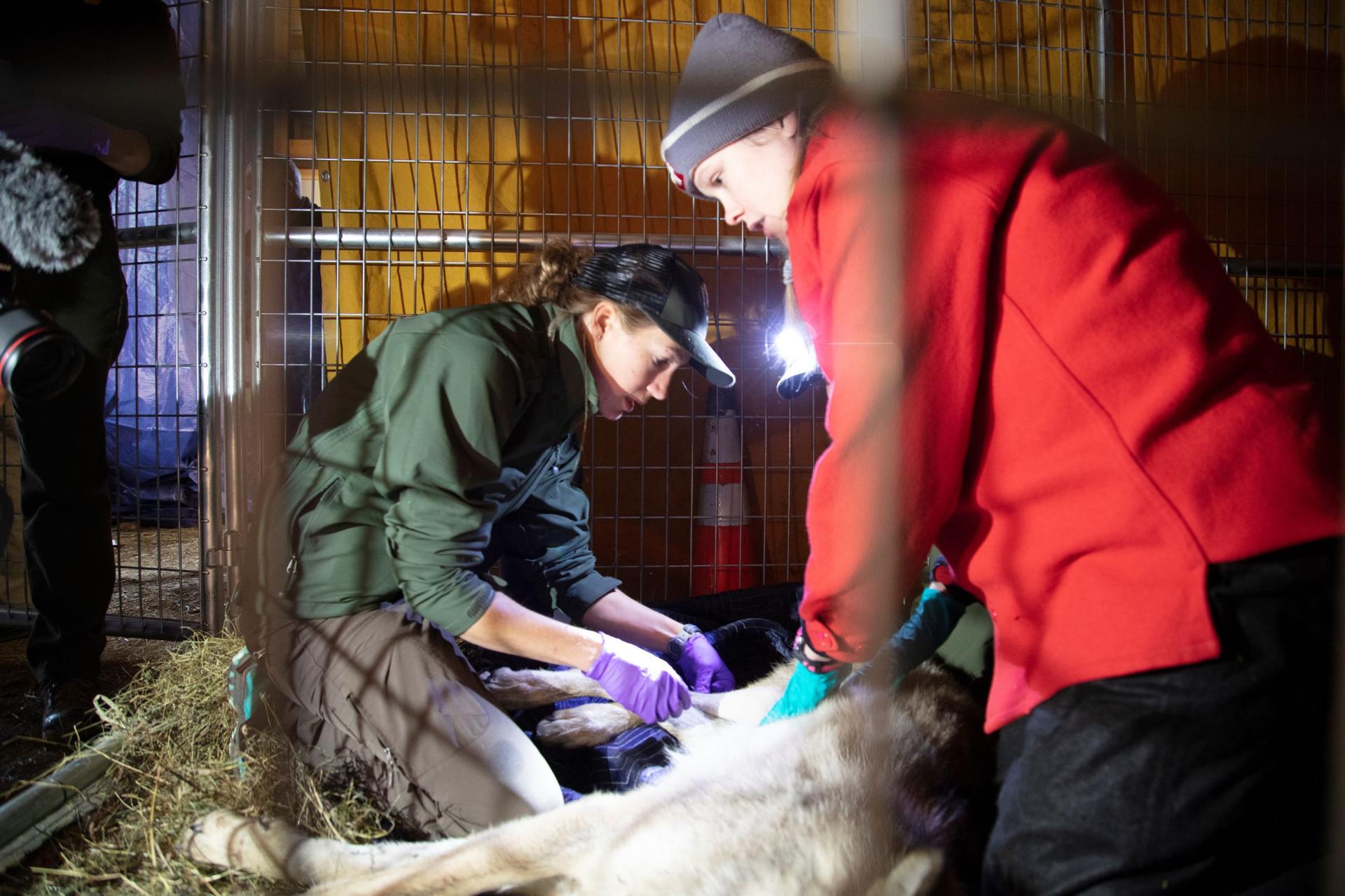
Genetically diverse wolves were relocated from Minnesota, Ontario, and Michigan. Foothold traps, prebaited with nuisance beaver and vehicle killed white-tailed deer carcasses, were used to capture wolves in Minnesota and Michigan. In Ontario, net guns were used from helicopters. For all relocation efforts, wolves were inspected by veterinarians after capture. |
|
|
Veterinarians' Medical Examination Photo Credit: Courtney Celley, USFWS |
|
|
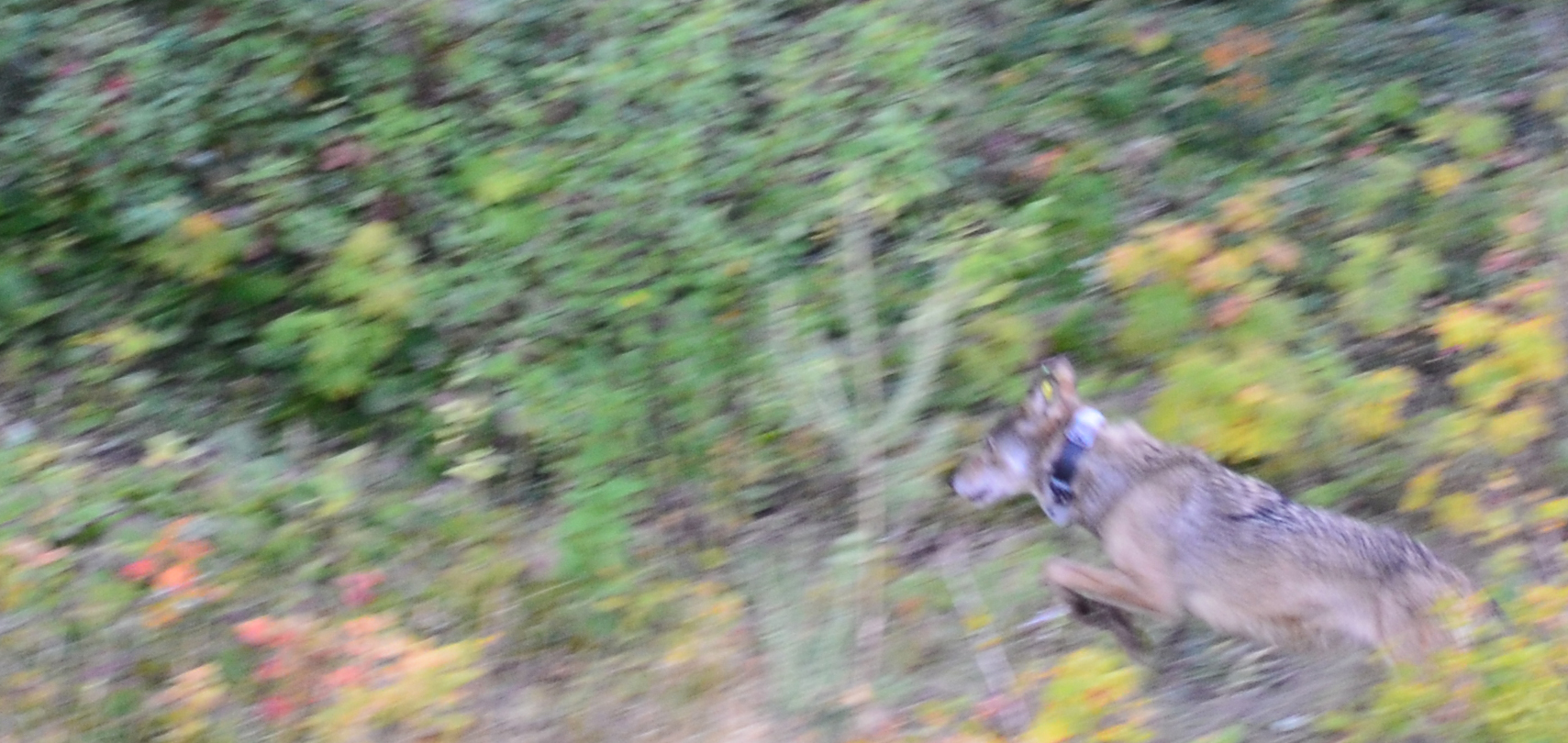
Before each relocation, a GPS collar, ear tags, and a passive integrated transponder (PIT) were attached to healthy wolves. Wolves that passed veterinarian inspection were transported to Isle Royale by boat or plane. Notably, the incoming wolves were vaccinated and/or treated to protect against canine parvovirus, rabies, mange, and other afflictions that may compromise their health.
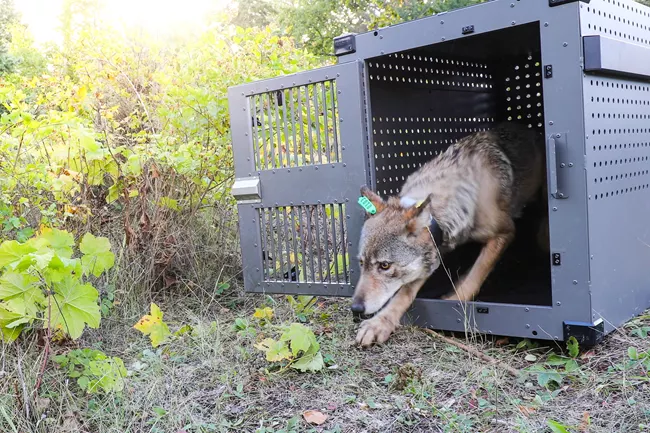
Wolf introduction occurred by hard release. This entailed releasing individuals or groups of wolves onto the island without time to acclimate in holding pens beforehand and without intensive support afterward. An example of a hard release would be releasing wolves into a suitable habitat (e.g., a beach, dock, or frozen lake) and allowing them to disperse freely. This type of release is effective in reducing the risk of wolf injury or habituation in holding pens.
The first wolves were captured on the Indian reservation of the Grand Portage Band of Lake Superior Chippewa in Minnesota and relocated between September 24 and October 5, 2018. The Grand Portage wolves consisted of four wolves: one male and three females. Notably, these four wolves were essentially gifted to Isle Royale National Park by the Grand Portage Band, which bore much of the cost and effort associated with their capture, handling, and transport. A female wolf, not included in the aforementioned totals, died soon after capture due to an adverse reaction to anesthetics used for relocation. It should be noted that relocating wildlife is a delicate procedure, and positive outcomes are not guaranteed. |
|
|
First Wolf Relocation Release Photo Credit: Jacob W. Frank / NPS |
|
|
The second and third groups of wolves were captured and relocated from Ontario in February and March of 2019. This included three wolves from the mainland near Jostle Lake and eight wolves from Michipicoten Island Provincial Park in northeastern Lake Superior. The Michipicoten Island wolves had virtually eliminated the caribou population on the island and were facing starvation.
In anticipation of this prey decline, an effort in the previous year by Ontario provincial biologists and Michipicoten First Nation saw 11 caribou airlifted from Michipicoten to the Slate Islands in order to preserve this last remnant of native Lake Superior caribou.
In September 2019, two female and two male wolves were captured in the western Upper Peninsula of Michigan and relocated to Isle Royale.
Interestingly, an ice bridge briefly formed between the island and the mainland during January 2019. A female wolf that had been relocated from the Grand Portage Indian Reservation in Minnesota four months earlier used this bridge to return to the mainland and the area that it had roamed before capture—yet another lesson in the unpredictability of nature. |
| Alpha Male from Michipicoten Island
Photo Credit: Wolf-Moose Project |
|
|
There She Goes Photo Credit: John Pepin, NPS |
|
|
|
Yelizaveta P. Renfro was the artist-in-residence at Isle Royale National Park in 2021 and has since participated in two Moosewatch expeditions. She has also served as artist-in-residence at Porcupine Mountains Wilderness State Park and Denali National Park and Preserve. Her newest book, The Season of Birds and Stones, was recently released by the University of Georgia Press and explores her experiences in Isle Royale and other wild places. Supporters of the Wolf-Moose Foundation can get 30% off by purchasing directly from the University of Georgia Press and using discount code 08BIRDS.
|
|
|
August 2025, Moosewatch Team 4
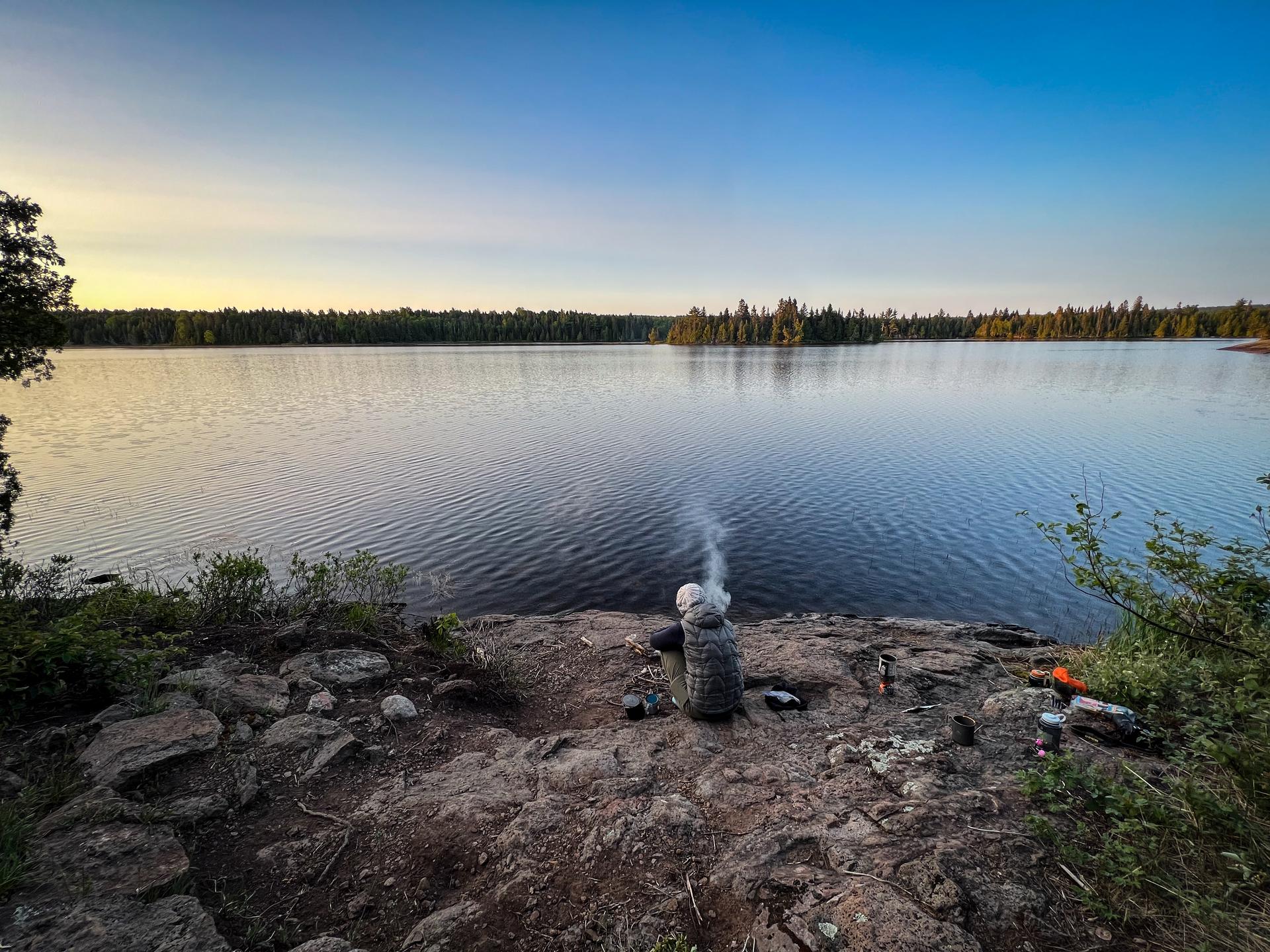
It was our final evening in the backcountry. We were camped on a rocky outcropping on a small nub of a peninsula on the south side of Lake Richie, a place with a breeze, with water a steep scramble away, with loons and swans, and a red disk of a sun just visible through the scrim of smoky haze made by distant fires. |
|
|
Lake Ritchie, Isle Royale Photo Credit: Amanda Griggs | |
|
We were at the end of a hot, enervating week. The foliage was so thick on the island we couldn’t see our feet and stepped blindly, hoping for solid ground but sometimes landing on unstable rocks, in bog, or in tangles of roots. We were stepping into the beyond, losing our footing, being pummeled by branches. In some places we drifted through thimbleberries up to our necks, and sometimes we floundered, falling over unseen obstacles, then getting up and trying again. What gratitude we felt when we finally stepped onto a ridge or a solid slab of rock, when we saw our feet again, when we could take bold and unobstructed steps, if only for a short distance before being swallowed back up by the sea of pure plant.
|
|
|
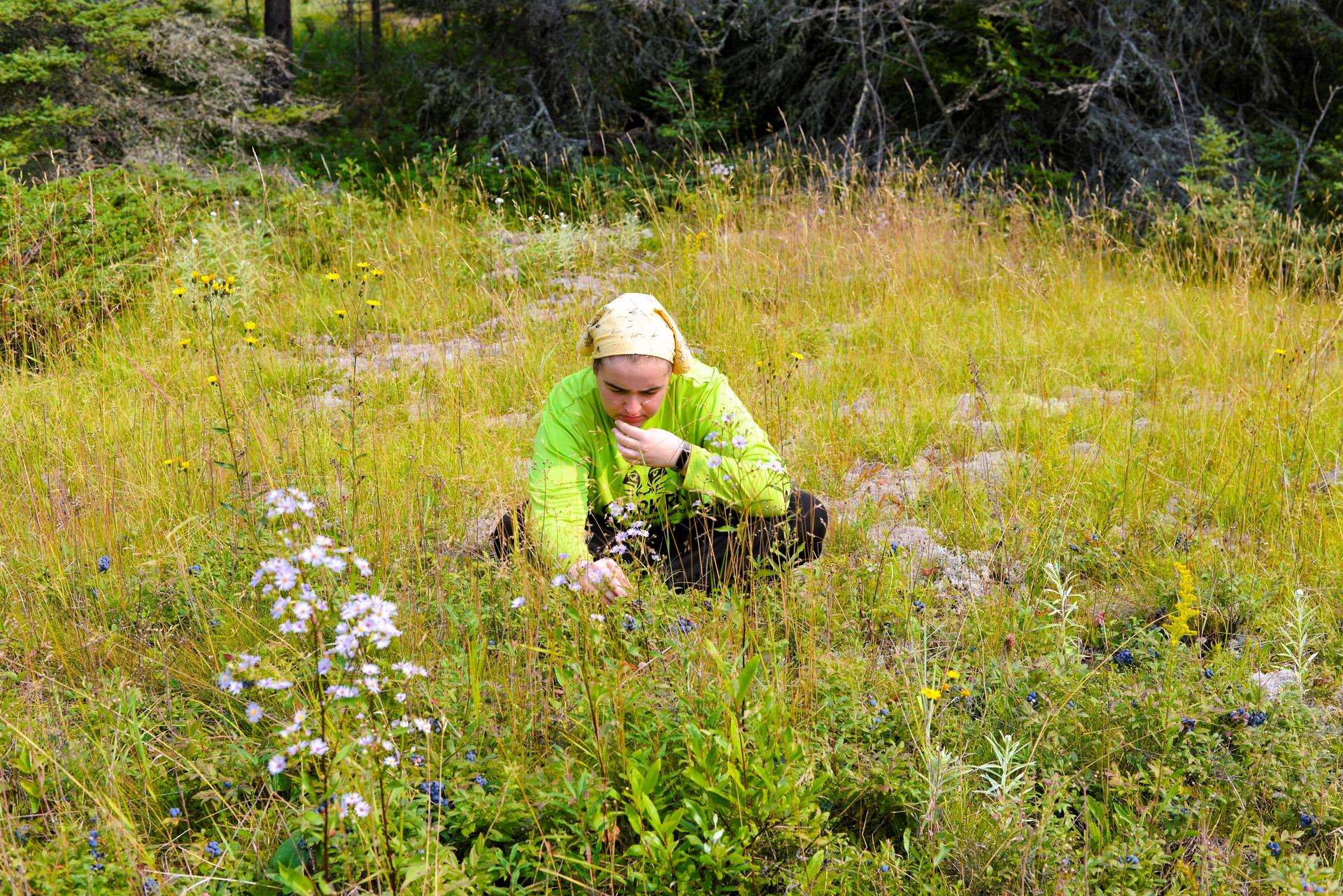
We learned something: if we can’t see our feet, we can’t see bones. We learned something else: when it’s hot and the sky is choked with smoke and we haven’t found a bone all day, sometimes we wanted to sink down into the thimbleberries and gorge ourselves. That occasional small pleasure of a berry blooming sweet on our tongues was a gift to keep us moving. And there were other gifts the island offered us: the bald eagle that soared over our camp, the moose we encountered on the trail, the sandhill cranes we surprised in the blueberry meadow that rattled their alarm and took off in creaky flight.
|
|
Blueberry Snack
Photo Credit: Yelizaveta P. Renfro |
|
|
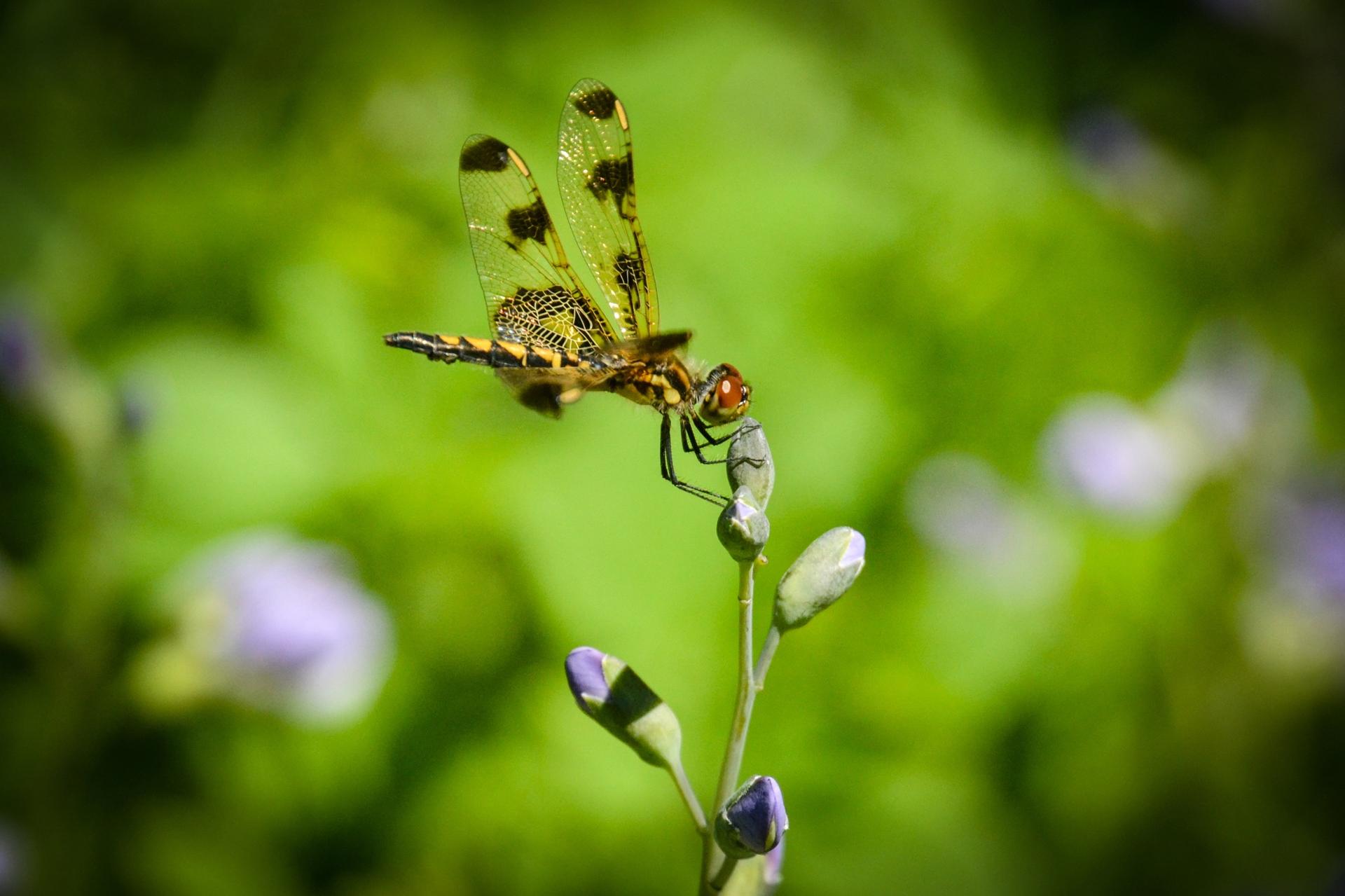
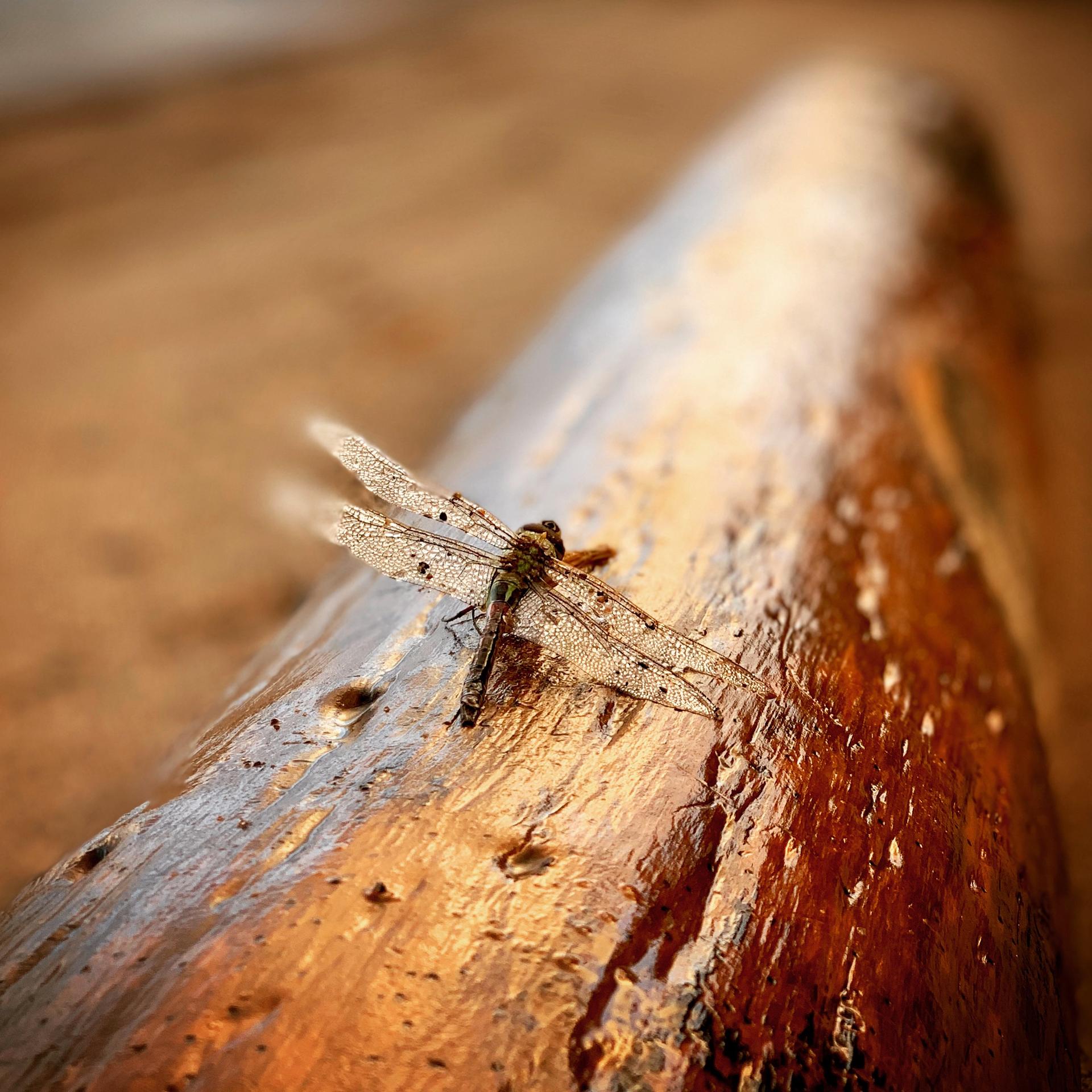
It was that final evening, as we sat on the rocks after dinner, looking out over Lake Richie, when the dragonflies came. They descended all at once, as though coalescing out of thin air, as though they’d all received the same memo—meet up at the rocky nub 8:30 p.m., Thursday—and here they all were in a boisterous thrum, some shimmering labradorite green, some flashing black-and-white markings on their wings like airborne zebras, a motley bunch all roiling together, zipping and darting in haphazard flight, displaying the stunning iridescence achieved so perfectly by certain insects, minerals, and birds. We were suddenly in the middle of a dragonfly swarm.
Though they may look like ornate jewels, dragonflies are fierce predators, in both their aquatic larval and their airborne adult stages. Dragonflies congregate in multi-species swarms, often at dawn or dusk near water, to feast on mosquitoes and other prey, but these brief coalescences are ephemeral and not well understood. Since 2009, citizen scientists have been collecting dragonfly larvae from over 190 parks and other protected areas, including the inland lakes of Isle Royale, as part of the Dragonfly Mercury Project. As excellent bioindicators, dragonfly larvae can provide information about the level of mercury contamination in a particular location. Just as the moose bones we collect can tell many stories, so can dragonflies, the charismatic megafauna of the insect world.
|
|
|
Calico Pennant Dragonfly Photo Credit: Amanda Griggs |
|
But we weren’t thinking of science as we sat there on the rocks with front-row seats at the dragonfly show—or rather, we were in the show, for it was an immersive experience, an avant-garde production with the performers careening inches from our faces as if we weren’t even there, engrossed as they were in the rapture of their feasting. We rested our tired bodies inside the cavorting cloud. This frenetic dance was another gift of the island. Letting go of our aches and worries, we allowed ourselves to be held aloft in the invisible net made of the dragonflies’ exuberant flights.
|
|
|
Dragonfly on Lake Superior
Photo Credit: Amanda Griggs |
|
|
|
Moose 5802: The Methuselah |
|
|
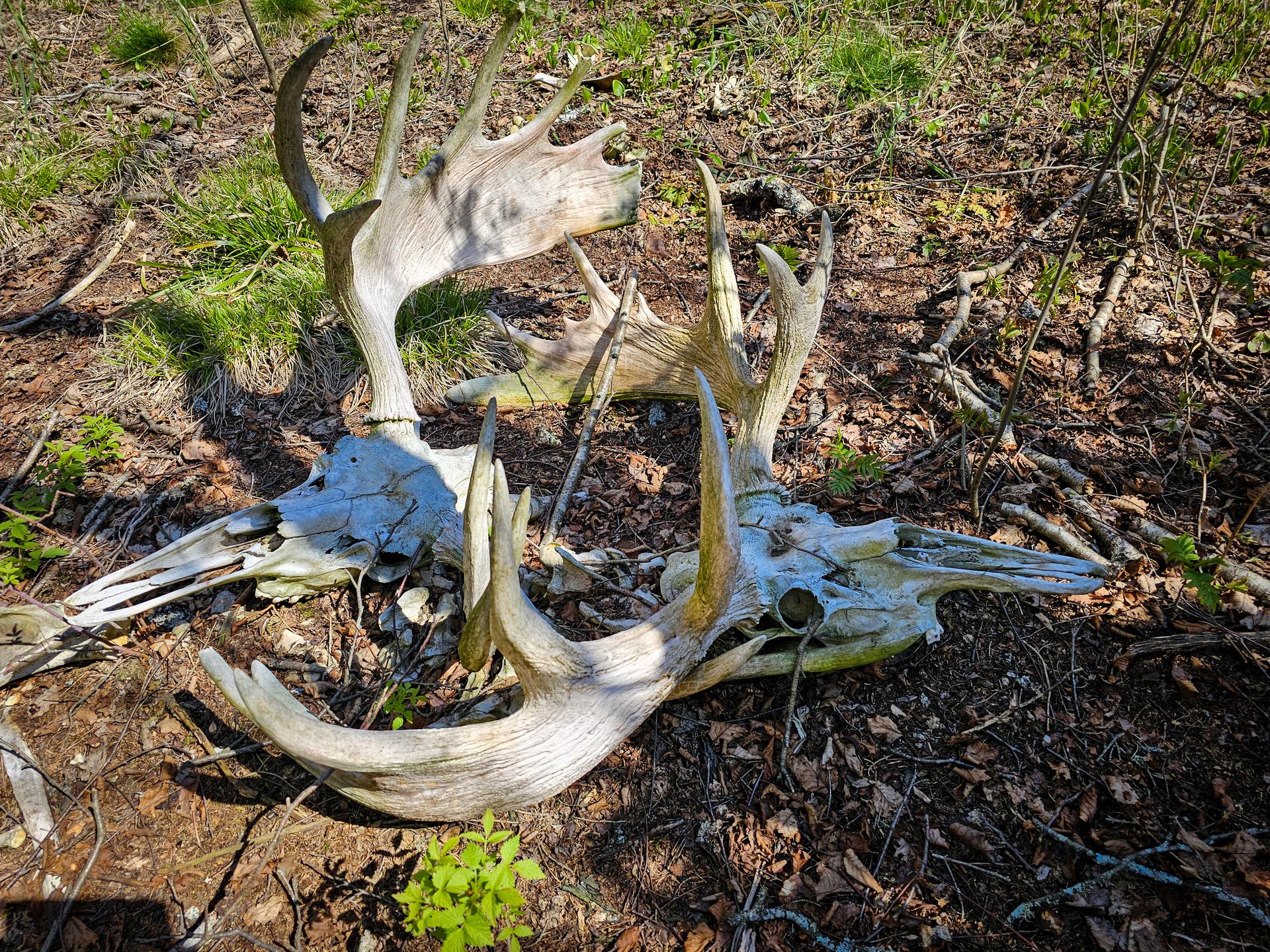
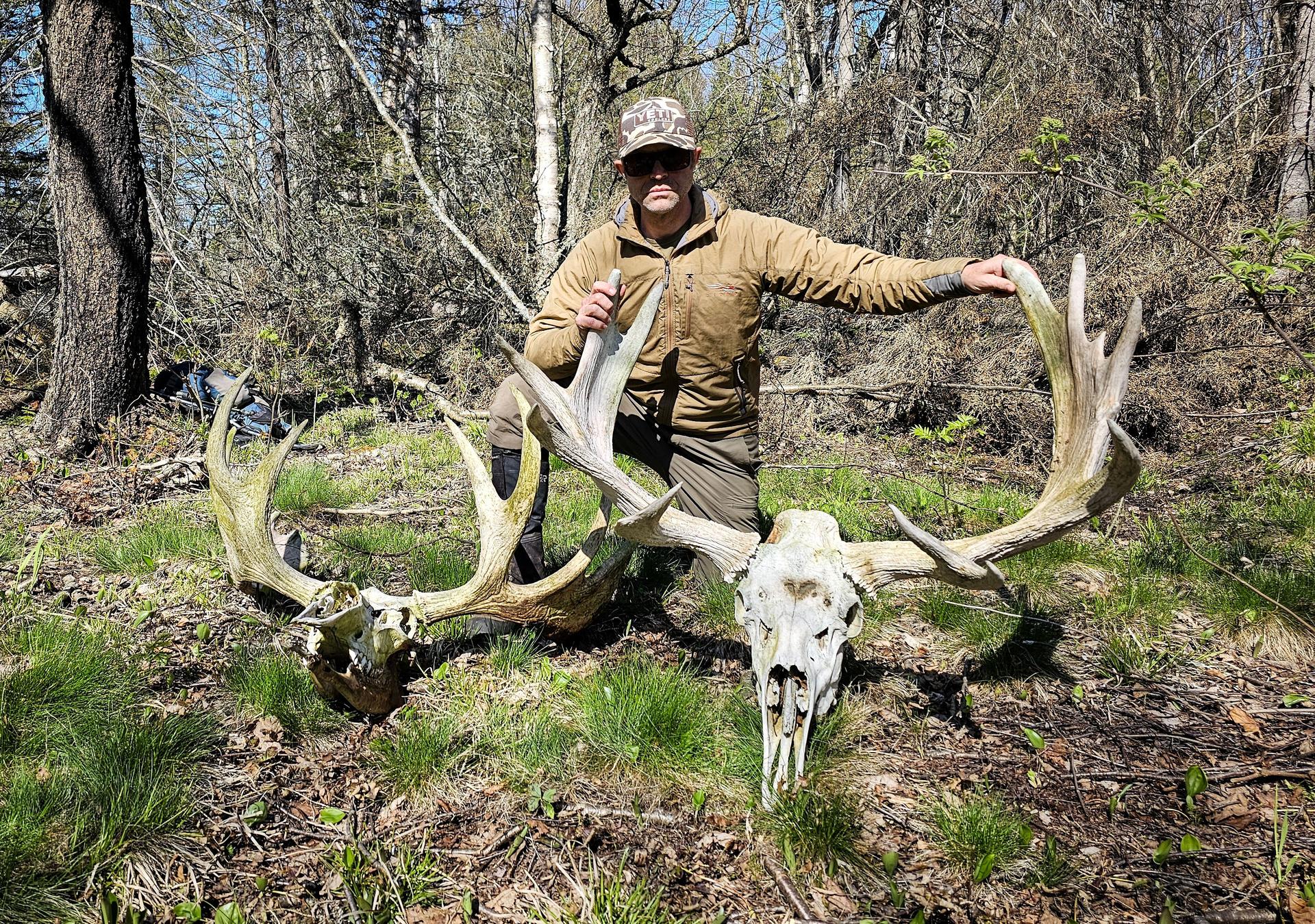
On May 13, 2024, the Shannon brothers’ group from Moosewatch Team One made an extraordinary find: two bull moose skeletons with locked antlers near Feldtmann Lake. Everyone on the team knew this was a rare discovery, but they had no idea it would prove to be one for the record books. |
|
|
The Skulls as They Appeared When Discovered
Photo Credit: Seth Shannon |
|
|
According to Dr. Rolf Peterson, approximately five percent of bull moose skulls found on Isle Royale still have polished antlers attached. Having been part of Moosewatch groups that have found antlered skulls, I can say it is quite a thrill. But discovering bull moose with locked antlers is something else entirely. |
|
|
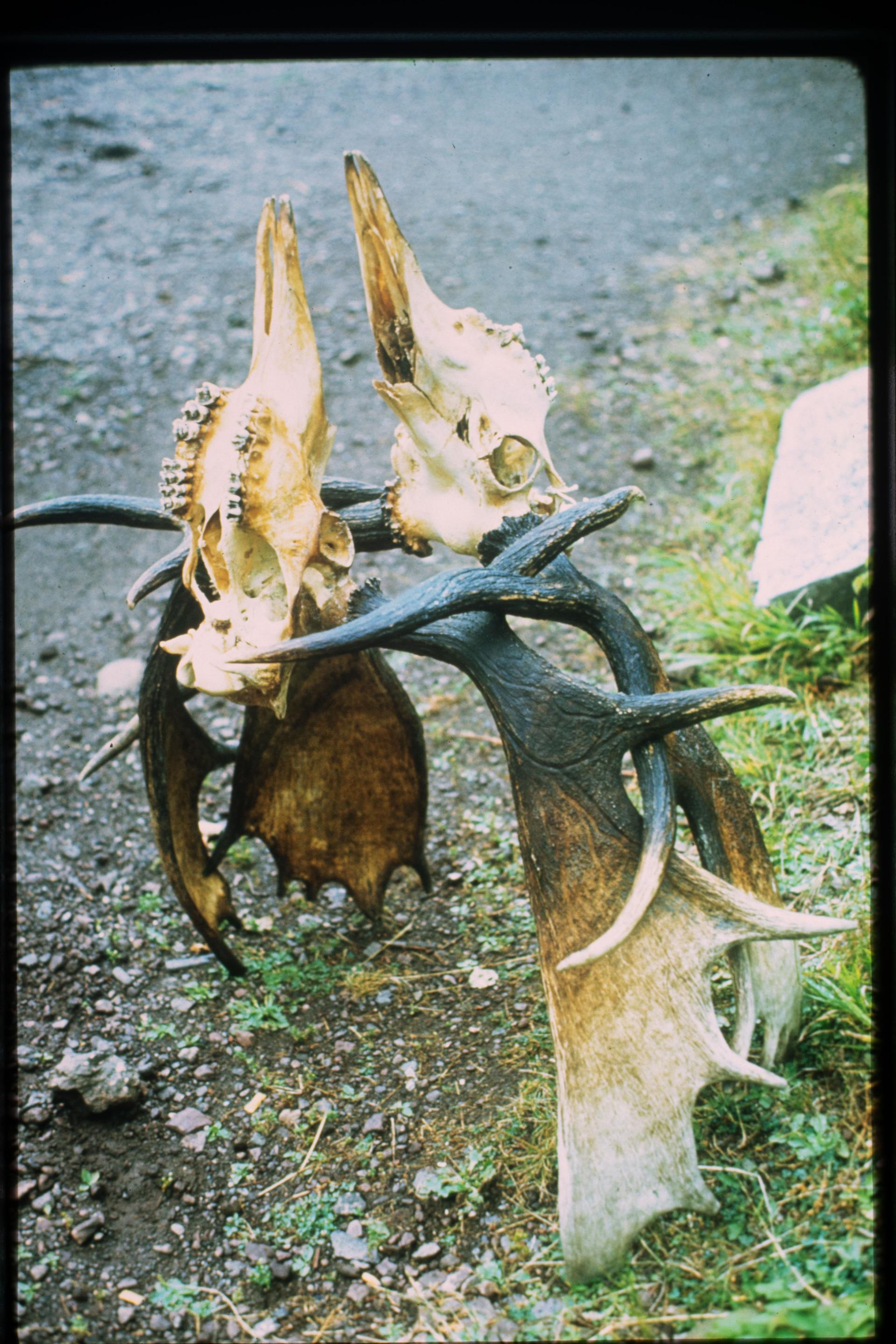
Locked Antlers Mud Lake, 1969 Photo Credit: Rolf Peterson |
|
During autumn, the mating season also known as the rut, moose behavior differs from that during the rest of the year. Cow moose remain solitary, attracting bulls through vocalizations and the release of pheromones. Bulls often compete for access to a cow as she nears estrus, displaying their antlers and sometimes fighting. Unlike sparring, fighting is violent, and bulls may suffer injuries ranging from minor to fatal. On very rare occasions, these fights end with the antlers of two bulls locked together, resulting in the death of both animals.
During the past century on Isle Royale, only three sets of locked antlers had been found prior to the 2024 discovery. According to Dr. Peterson, one set was found in Mud Lake during the 1969 Winter Study and is now on display in the Rock Harbor Visitor Center. Another set was discovered in 1997 by an Earthwatch team led by the late Tim Pacey. The date of the third set, now on display in the Windigo Visitor Center, is unknown. |
|
|
After finding the antlered skulls, Seth Shannon, Tyler Shannon, Matt Sanford, and John Warming carried them to Windigo, where they were turned over to scientists for study. By counting the cementum rings in a tooth, researchers determined the ages of the two moose. One was found to be seven years old, a prime-aged bull. The other, assigned number 5802 in the study, was determined to be 18 years old, a senescent moose above the age of ten, tying the record for the oldest antlered bull ever documented on Isle Royale, or anywhere else in the world, as far as we know.
Moose on Isle Royale die in a variety of ways. Wolves often target older moose weakened by osteoporosis, periodontitis, starvation, or osteoarthritis. Moose 5802’s skeleton, however, was found to be in remarkably good condition for its age. According to Dr. Peterson, “it had relatively little tooth wear for an aged bull (class 6 out of 9, with 9 being extremely heavy wear).” There were no signs of arthritis on the bones. Dr. Peterson also noted that “the large pedicel diameter of the 18-year-old indicates that he formerly had much larger antlers.” The exceptional health and longevity of Moose 5802 stand as a testament to the resilience and adaptability of these remarkable animals.
|
|
|
Based on the degree of bone weathering, Dr. Peterson estimated the year of death to be around 2017. At that time, only a single pair of highly inbred and non-reproducing wolves remained on the island, both confined to the east end and many miles from where the bulls with locked antlers were found near Feldtmann Lake. The lack of predation was likely a contributing factor in this bull’s longevity. Similarly, in 2018, the oldest cow moose ever recorded on Isle Royale lived to age 22 and ultimately died of starvation. On Isle Royale, where humans do not hunt moose, the average age at death is nine years, and the median age is twelve.
|
|
|
Matt Sanford with the Skulls Photo Credit: Seth Shannon |
|
|
The only other bull moose known to have reached age 18 on Isle Royale was killed by wolves; a wolf skeleton found alongside the moose’s remains suggests the bull may have killed a wolf during the struggle. That Moose 5802 survived the rigors of old age only to die battling a much younger bull is remarkable. One cannot help but wonder how many battles this bull won and, in turn, how many calves Moose 5802 ultimately sired. By Ken Lemieux |
|
|
Exclusive Moosewatch Gear—While Supplies Last |
|
|
Matt Brass is the founder of Smoky Outfitters and a creative professional with more than 20 years of experience in advertising, where he advanced from designer to Vice President of Creative before launching his own company. He now focuses on destination-inspired artwork and documentary-style photography that captures people and wild places. His work has been featured in National Parks Magazine and Street Photography Magazine.
We are honored that Matt created the Moosewatch 2026 logo, bringing his distinctive visual storytelling and sense of place to this year’s design. |
|
|
We Need to Talk About Your Flair
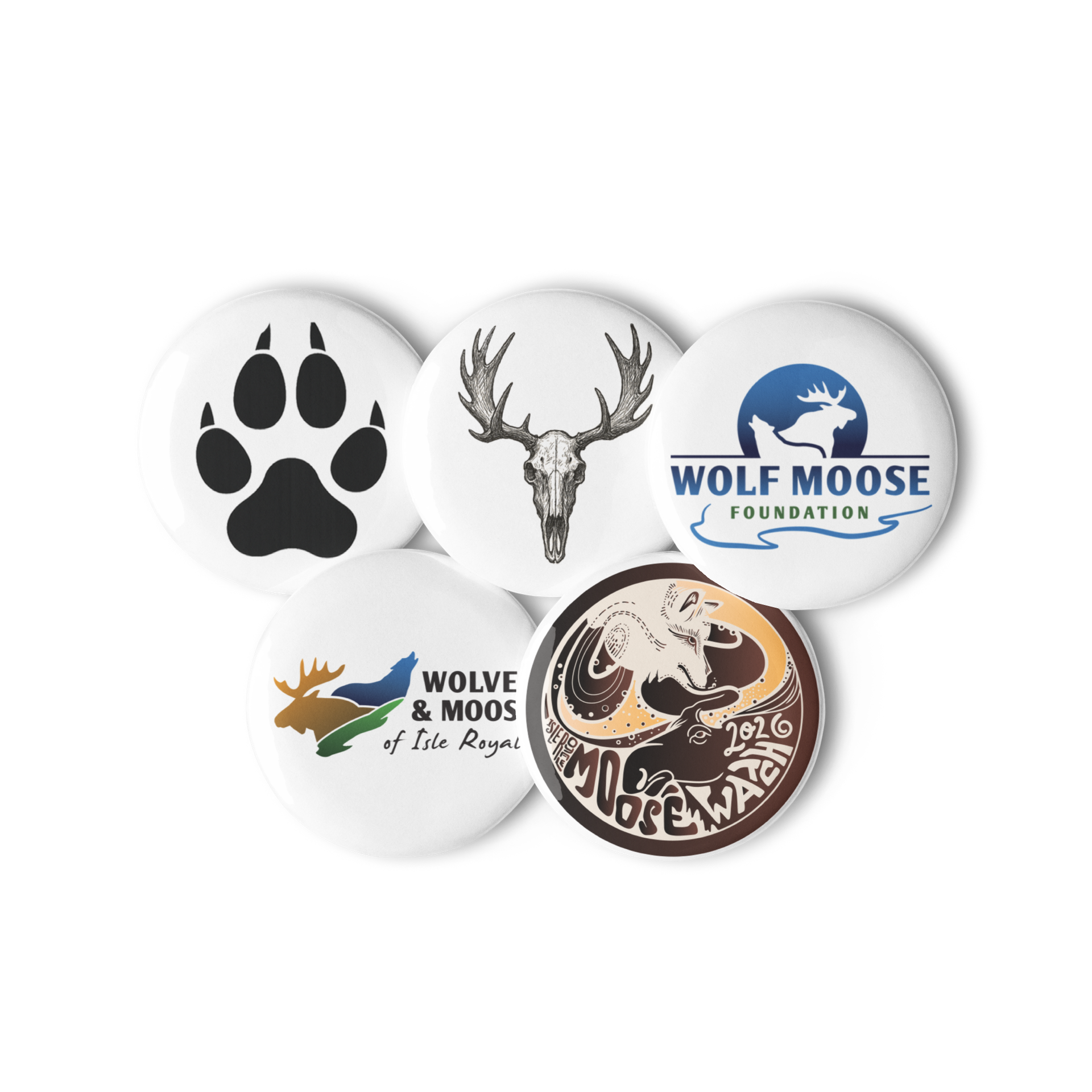
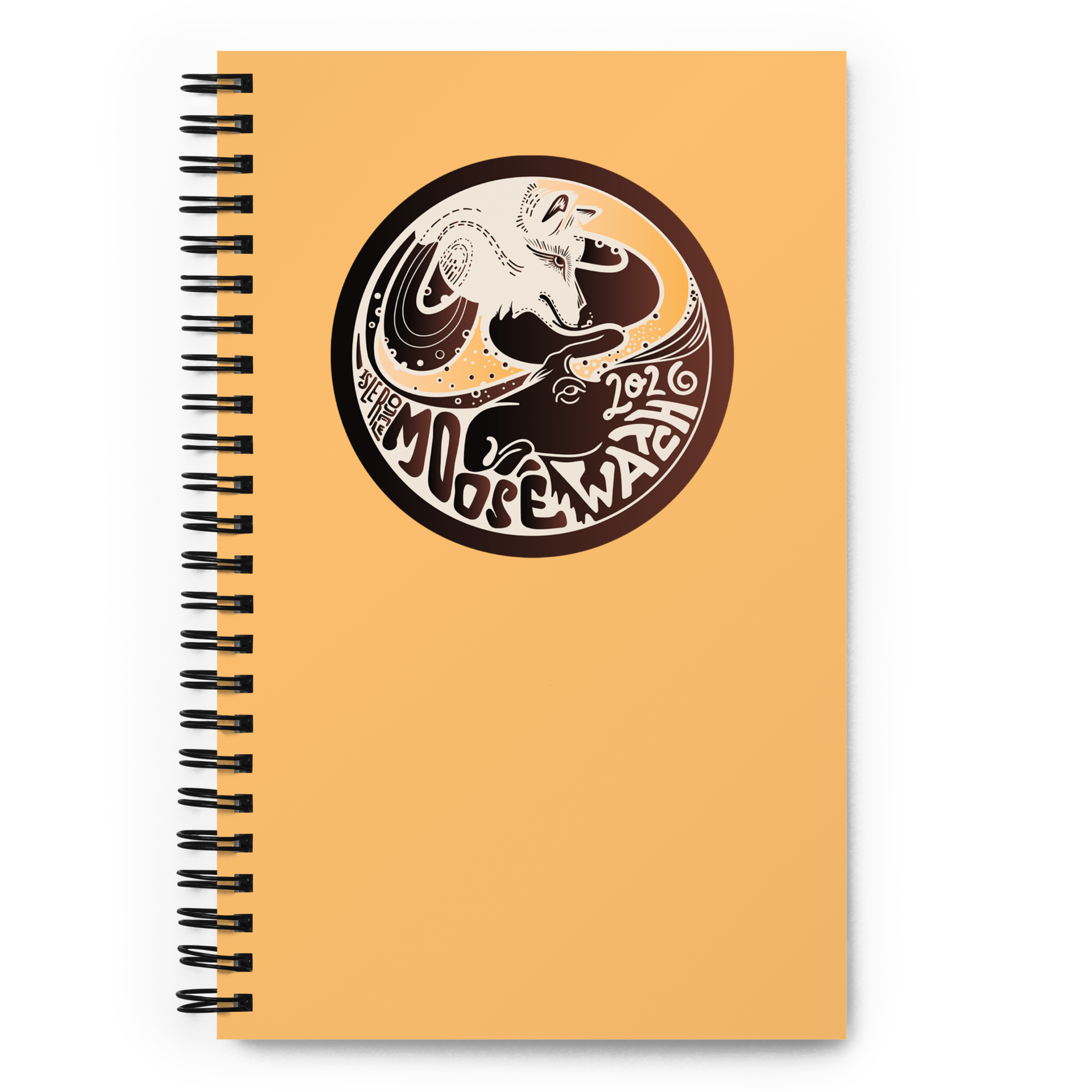
For those who never do the bare (or wolf, or moose) minimum, Moosewatch 2026 has just the thing. Artist Matt Brass of Smoky Outfitters created this year’s Moosewatch logo, which appears on a limited-edition line of gear celebrating the stories, the mud, the early mornings, and the type-2 fun that make Moosewatch what it is.
From a soft tri-blend t-shirt that feels lived-in from the very first wear, to a cozy fleece zipper hoodie built for field-season adventures, to a spiral-bound notebook perfect for sketching, jotting notes, or recording the moose bones you photographed that day, to a set of five whimsical pins—each a tiny piece of Moosewatch flair featuring Matt’s 2026 design alongside iconic Wolf-Moose imagery—this collection is designed to keep up with you, whether you’re bushwhacking through alder, scanning a foggy bog at sunrise, or telling exaggerated moose stories back in civilization.
Soft, sturdy, and full of character, these limited-run items won’t stick around long. Visit the Wolf-Moose Store now and grab your limited-edition 2026 Moosewatch gear before it wanders off! Matt’s designs are as bold, clever, and unforgettable as the adventures they represent. |
|
|
| Dr. John Vucetich Wolves and the U. S. Endangered Species Act Date: Tuesday April 7, 2026 TIme: 8:00 PM - 9:00 PM ET Location: Virtual |
|
|
For more than two decades, wolves have moved on and off protection under the U.S. Endangered Species Act, exposing the challenges of defining what it means for a species to be endangered. In this presentation, Dr. Vucetich will explore what wolves teach us about conservation, policy, and our relationship with nature.
Dr. Vucetich has co-led research on the wolves and moose of Isle Royale since 2000. He is a Distinguished Professor at Michigan Technological University, where he teaches population biology and environmental ethics. He has authored over 200 scientific papers and two books: Restoring the Balance: What Wolves Tell Us About Our Relationship With Nature (2021) and The Biology and Conservation of Animal Populations (2024). Vucetich has written for the New York Times, Natural History, and the Huffington Post, testified before Congress on wolf conservation, and is frequently consulted by governments and NGOs worldwide on carnivore conservation.
|
|
|
Join Us for Dr. Vucetich’s Talk – Registration Now Open! |
Seating is reserved for Wolf-Moose Foundation members--secure your spot today! |
|
|
Welcome to “In the News”—your front-row seat to the latest on wolves, moose, Isle Royale, and beyond. From surprising scientific discoveries to bold conservation efforts across the globe, we’ll keep you informed, intrigued, and maybe even a little amazed by the wild world of wildlife research.
|
|
|
-
Tolerance for wolves increasing, study shows: “Instead, the way people encounter wild wolves makes most of the difference. And most of those encounters take place on a visit to somewhere like Yellowstone National Park, where seeing a wolf ranks among the top-sought experiences among tourists.”
-
5,000-year-old wolves found on remote Swedish island challenge conventional views of domestication: Researchers have uncovered wolf remains dating back thousands of years on a small and remote island in the Baltic Sea. Because the island is naturally isolated, the animals could only have arrived there with human involvement.
-
Coyotes mate for life — and grieve when their partner dies: Coyotes, an often demonized canine, are one of the few species that truly mate for life. Scientists hope their inquiries can build compassion for these oft-misunderstood carnivores and perhaps guide the development of new mental health treatments for humans.
-
Lynx could return to Scotland — but can rewilders win over wary highlanders?: Lynx, extirpated from Scotland over 1,000 years ago by humans, could be successfully returned to the landscape. “My question is: can we get an animal like this back into the Scottish landscape and coexist with it, which we’ve forgotten how to do?”
-
Wolf advocates want to make it harder to kill introduced wolves: The Center for Biological Diversity said, “Nonlethal coexistence measures involve ‘proven tools that protect rural livelihoods and support predictable wolf behavior,’ but CPW’s current rules aren’t clear enough about what reasonable conflict minimization measures are.”
-
Scientists work to decode wolf howls in Yellowstone with AI technology: In movies and literature, a wolf’s haunting howl can signify danger or untamed nature. In real life, researchers in Yellowstone National Park are analyzing those howls with cutting-edge AI technology to better monitor and track wolves.
-
Can mountain lions survive as humans close in? California is trying to find a way: Creatures big and small are suffering as humans increasingly dominate the planet, taking away habitat that species need to survive. The power and majesty of apex predators like mountain lions can capture the human psyche, helping inspire conservation work, but also come with controversy because of the danger they can pose to people, pets, and livestock. What happens to California’s mountain lions could hold lessons for the world.
- Researchers see similar trend of declining moose in Isle Royale’s Winter Study: Observations from this winter’s survey indicate that moose populations are low and wolf populations are high. “That’s the way it’s been for several years,” Peterson said. “And that’s probably going to continue.”
- Joint research team continues moose survival study effort: A total of 56 collars have been deployed on Upper Peninsula moose in the last two years, providing hope for better understanding of moose population numbers based on tracking collared individuals.
-
Aerial surveillance and memory give ravens an edge in Yellowstone’s wolfscape: “The beauty of Yellowstone in this modern era of restoration is that it’s not only an iconic ecosystem with ecological resilience and high societal value, but it provides a unique opportunity for long-term science. Monitoring of ravens’ relationship with wolves has now spanned nearly 30 years, and we’re still making new discoveries about animal relationships, intelligence, and the importance of large, wild landscapes for species persistence.”
|
|
|
Collared Bull Moose, Winter Study 2026
Photo Credit: Sarah Hoy |
|
|
Our Contact Information
*{{Organization Name}}*
*{{Organization Address}}*
*{{Organization Phone}}*
*{{Organization Website}}*
*{{Unsubscribe}}* |
| The Wolf-Moose Foundation is a 501(c)(3) tax-exempt charitable nonprofit organization. Our Federal Tax Identification Number is 93-4654981. |
|
| |