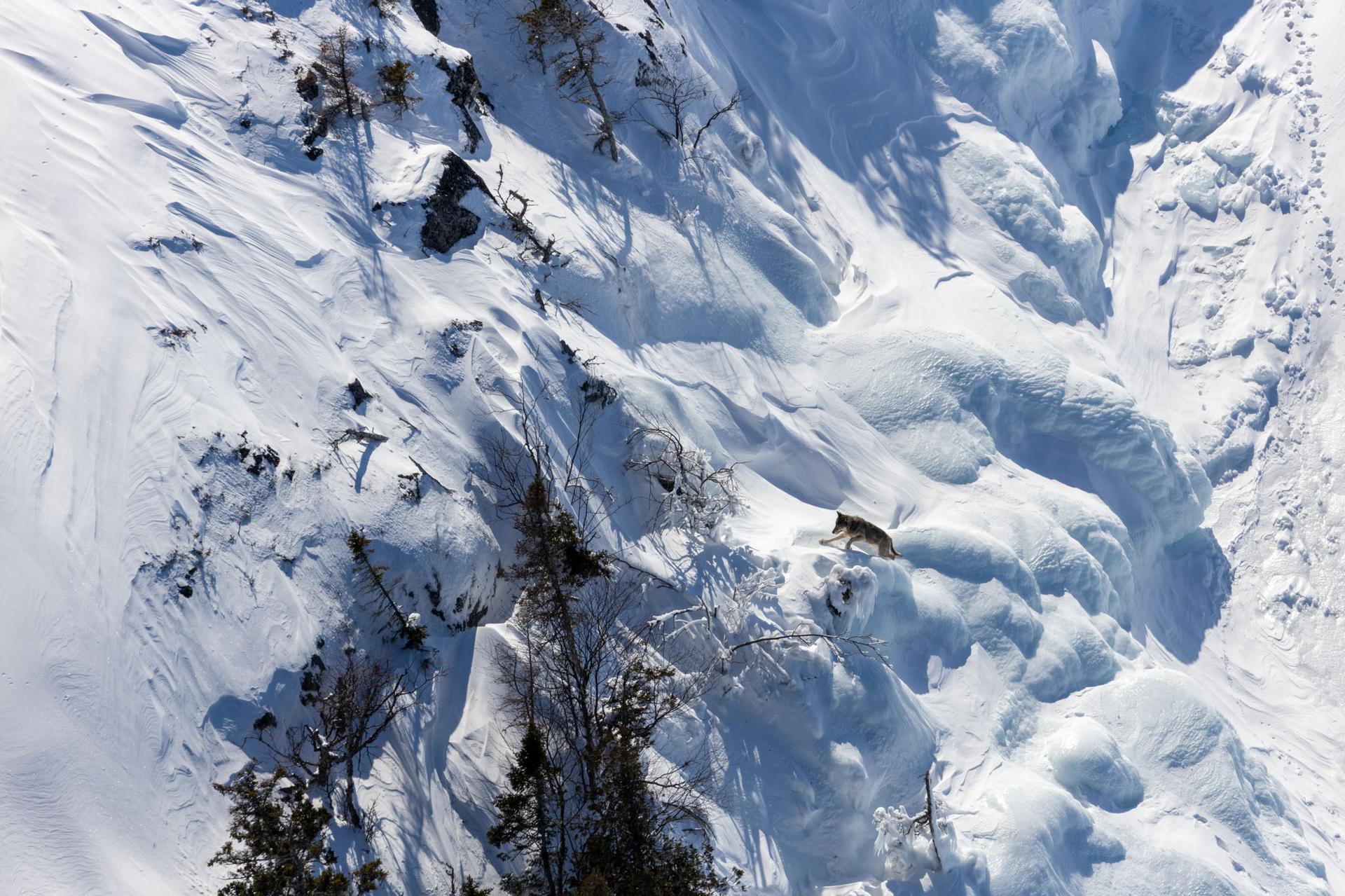
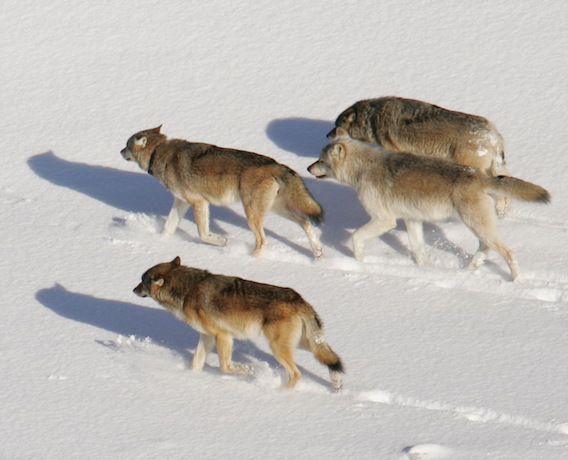
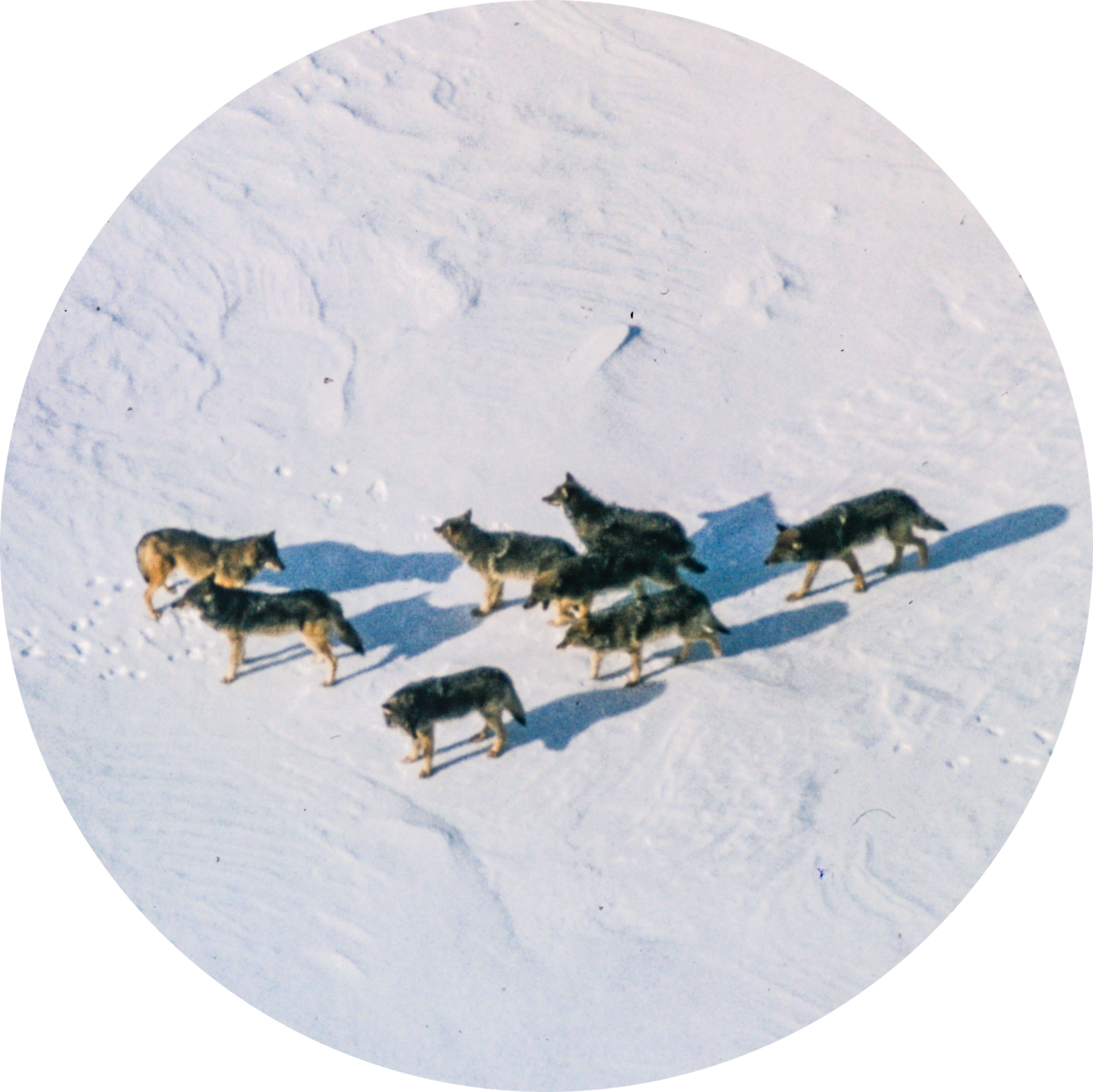
Aerial View of Wolf in Snow Photo Credit: Wolf-Moose Project |
|
|
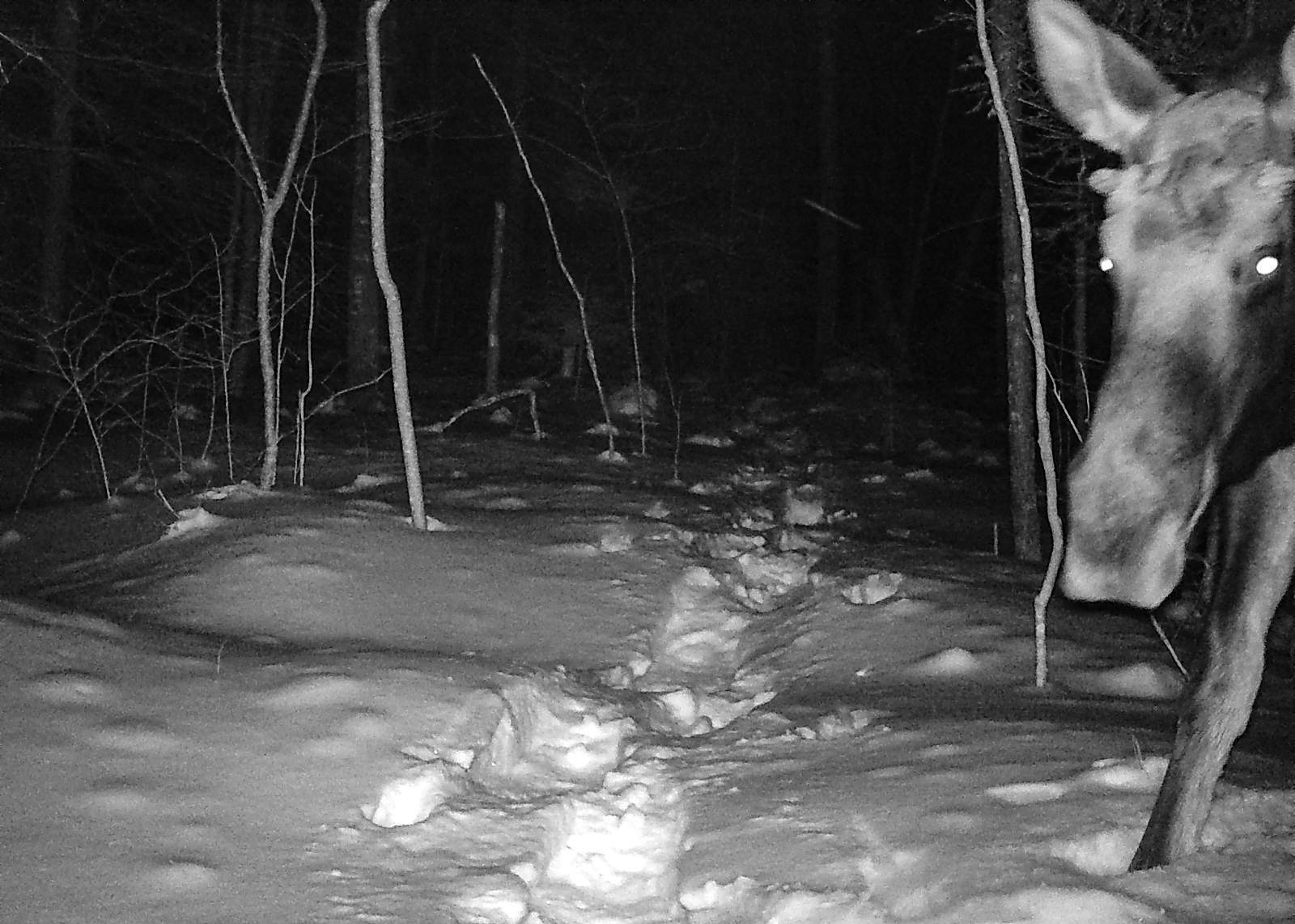
| | Moose and Tracks on Ice Photo Credit: Wolf-Moose Project |
|
|
Letter from the President |
|
|
|
Jeffrey Holden has been supporting the Wolf-Moose Project since 2002 leading groups searching for moose bones with Moosewatch. Jeff is the author of the recently published Dead Moose on Isle Royale: Off Trail with the Citizen Scientists of the Wolf-Moose Project from Michigan State University Press. Jeff loves the Island and meeting all of the people associated with the Project. Professionally, Jeff was a mild-mannered data guy in healthcare in southeast Michigan.
|
|
|
It is the start of 2026 - The end of one year and beginning of the next is often a time of reflection, and the Wolf-Moose Foundation is no different. We’ve been around for two years now and have been fundraising for about 20 months. We’re still figuring things out, but we think we’re making progress, building an endowment, and the results of our work are encouraging.
In 2025, we learned that our photo contest was a big success. We had hundreds of great submissions, and many of you got involved. In the fall, we developed and launched our online store, and since then we’ve sold hundreds of items that all support the Wolf-Moose Foundation and the mission of the Wolf-Moose Project.
Another thing we learned in early 2025 was that our Winter Seminar Series was a success. It was a great way to attract new supporters, raise a little money, and reward long-time friends of the Wolf-Moose Project. Hundreds of you attended the three virtual seminars to learn from and be entertained by some of the world’s foremost experts on wolves. Topics included wolves in Yellowstone, red wolves in Texas and Louisiana, and wolves in Isle Royale National Park.
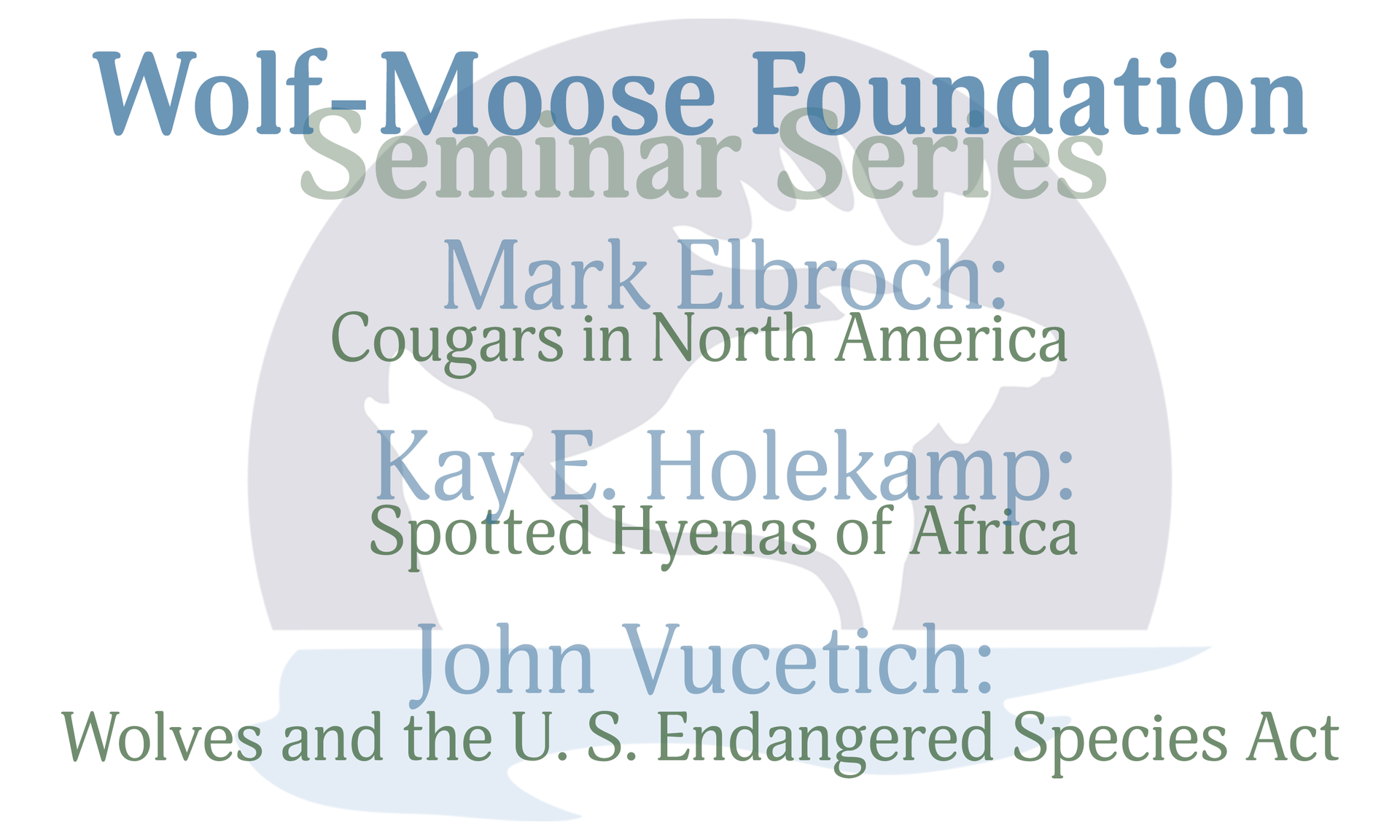
Because it was such a success, we’re doing it again in 2026. We have another series of three virtual presentations from world-renowned experts on mountain lions, hyenas, and wolves. If you’ve contributed to the Foundation or Project in the past, we hope you’ll join us as our way of saying thank you for your support. If you’re new to the Foundation, please consider making a small contribution (we suggest $35… or more) and attending one or all of the seminars.
Click here to learn more about the seminars, sign up, and donate. Each seminar must be signed up for individually. We look forward to seeing you at the seminars, and we wish you a wonderful holiday season. By Jeffrey Holden |
|
|
The Science of Isle Royale |
|
|
|
Ken Lemieux first visited Isle Royale in 2009. Despite a 36-hour storm, he was smitten and has returned several times. He began participating in Moosewatch in 2022. He’s a husband, father of three, tech writer, and lover of the outdoors. |
| |
Part One: A Struggling Wolf Population This is the first article in a three-part series explaining the wolf situation on Isle Royale.
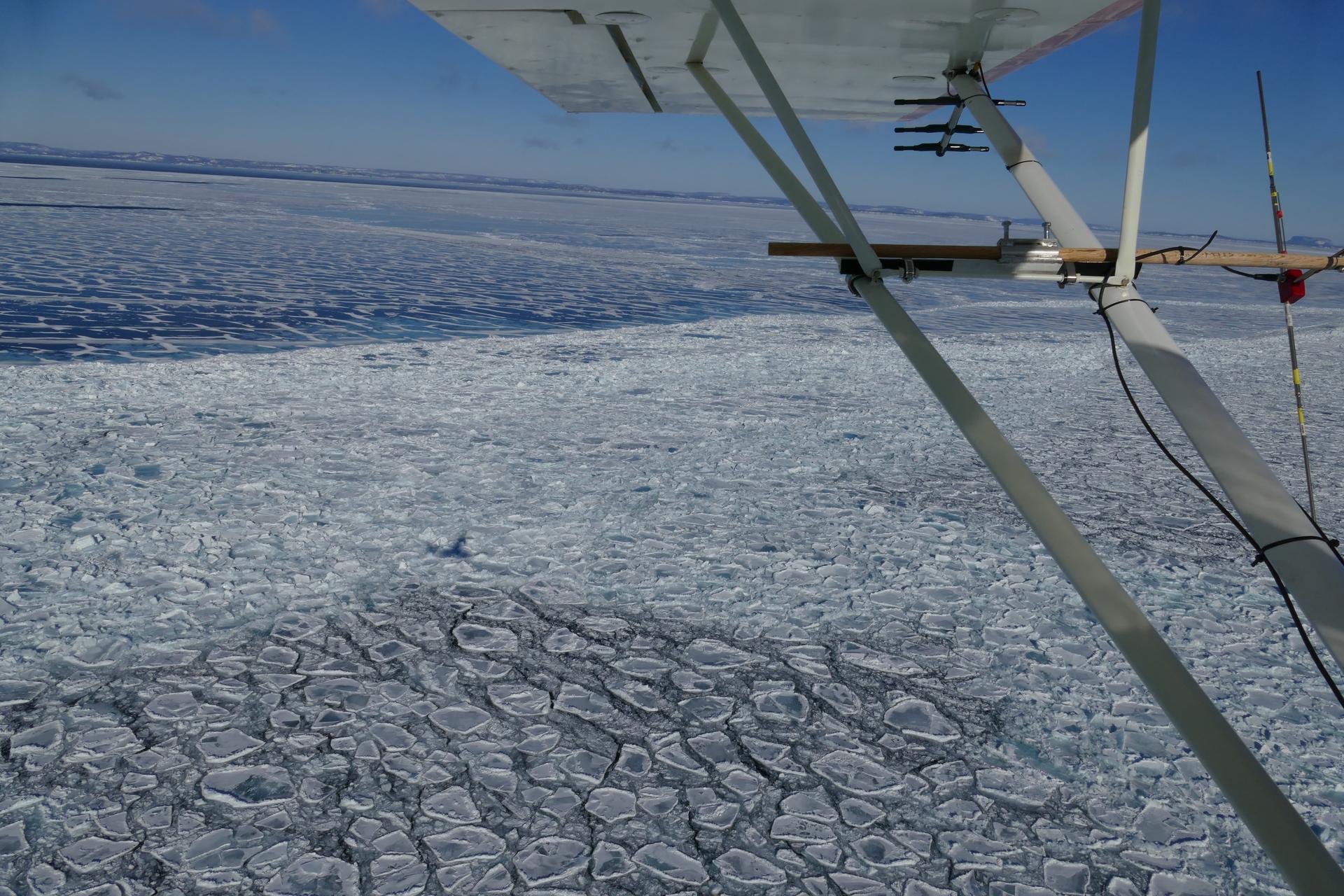
In the 1990s, the wolf population was struggling. The reason for this was unknown at the time. Later research showed that inbreeding depression — a phenomenon where the offspring of two closely related individuals are less likely to survive or to reproduce successfully — was the cause. High levels of inbreeding occurred on Isle Royale because the wolf population was largely isolated from the mainland population. Ice bridges are the only way for wolves to reach the archipelago; they do not form every year and may only last a few days.
|
|
|
Ice Bridge Between Canada and The United States, 2022
Photo Credit: Wolf-Moose Project |
|
|
Balsam Browse by Moose Photo Credit: Wolf-Moose Project |
|
An example of what can happen when wolf abundance on Isle Royale is very low and moose numbers skyrocket occurred in 1996. The changes in moose abundance led to changes in the rate at which moose browse on forest vegetation, most notably on balsam fir. It’s a common and essential species in Isle Royale’s forests. Big changes in the number of moose can quickly cascade to impact forests because moose are large animals, with an average weight of 800 pounds, and consume massive amounts of vegetation — up to 30 pounds a day. The winter of 1995–96 was colder and longer than usual. The result was a massive moose die-off as the population dropped from 2,500 to 500.
|
|
|
In 1997, a wolf later known to scientists as “M93” crossed the 15-mile ice bridge from the mainland to Isle Royale. Outside of scientific journals, he is affectionately nicknamed “The Old Gray Guy.” This wolf boosted the gene pool, and for about a decade, the wolf population did well. M93 produced 34 pups during the eight years he was an alpha male. |
|
|
Unfortunately, the benefits that accompanied M93’s arrival were short-lived and started to fade by 2008. His great success as a breeder meant he quickly became related to the majority of wolves on the island — and after the death of his original mate, he began mating with his daughter. Concurrently, M93’s other offspring started breeding with each other. The strong genes M93 contributed to the wolf population's eventual downfall. For example, in 2008, it was estimated that 60% of the wolves’ gene pool was inherited from M93. As inbreeding became commonplace again, the population began to decline rapidly. |
| M93 (right), 2006
Photo Credit: Wolf-Moose Project |
|
|
When the genetic health of the wolf population deteriorated, so did the rate at which wolves preyed on moose. In turn, this led to a rapid increase in the moose population. In other words, the deterioration in the population's genetic health meant wolves were no longer able to fulfill their ecological role as the top predator in the ecosystem. In May of 2012, three wolf carcasses were spotted by a park biologist floating in the water of a deep 19th-century mine shaft near Todd Harbor on Isle Royale. It was revealed that during the past winter, before winter researchers arrived on the island for winter study, the wolves fell into the water-filled mine shaft. This event occurred at a critical time in the history of Isle Royale wolves. The loss of a young female, when there was already a shortage of females in the population, appeared to pose the greatest extinction risk to the population.
By 2015, only two highly inbred wolves remained — a father-daughter pair that were also half-brother and sister. Those two wolves were unable to successfully reproduce. With climate change and ice bridges no longer regularly forming between the island and mainland, the odds were slim that more wolves would cross over. The NPS faced a difficult decision: intervene by bringing more wolves over, or let them die out. To be continued in the next Newsletter — Relocation: The capture of wolves from 4 locations and the actual introduction.
By Ken Lemieux |
|
|
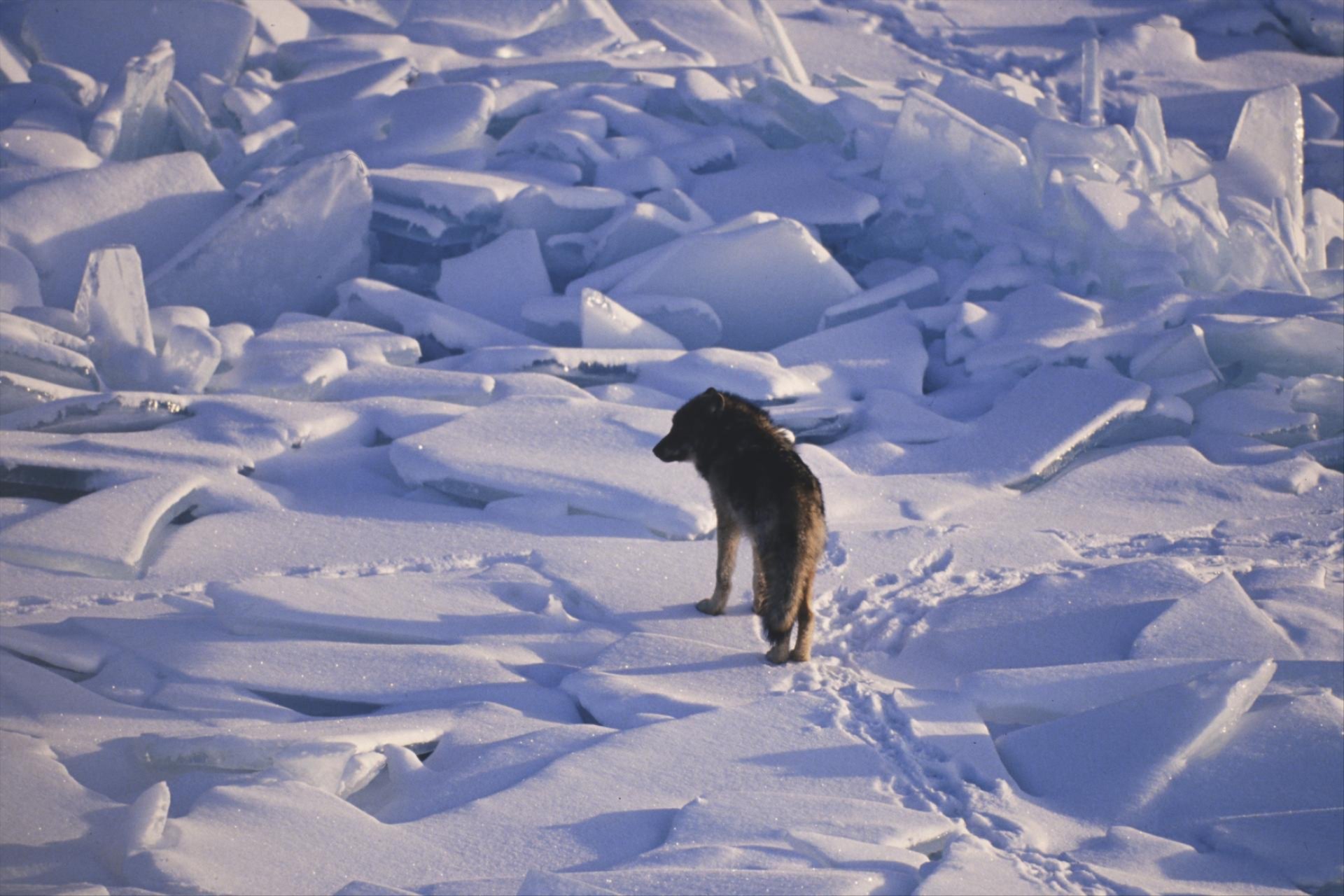
Middle Pack Pup on Ice Floes, 1994 Photo Credit: Rolf Peterson |
|
|
|
Rolf Peterson began leading the Isle Royale Wolf-Moose Project in the early 1970s and is recognized as a world authority on wolves and moose. Since retiring as a professor in 2006, he has devoted even more time to the project, now spending more of the year on Isle Royale than on the mainland. Rolf remains captivated by the island’s ever-unfolding scientific insights and surprises.
|
|
|
Planning for Moosewatch in 2026 was moving along nicely in the fall, with dates picked and leaders lined up in orderly fashion. Dates were announced, similar to those in 2025, and we opened applications in late October. Applications began to flow in. Then, suddenly, they started to flood in, by the hundreds (well, low hundreds). It turned out that a Detroit television station (WXYZ) had reposted our announcement on their website, and then other TV stations and media outlets jumped on the bandwagon. We were forced to shut down the application process so we could begin processing it all. We are fielding more than 250 applications, but giving priority to returning volunteers. There will be a long waiting line for new applicants who are otherwise capable and up for the adventure. We will only be able to accommodate a lucky few.
|
|
|
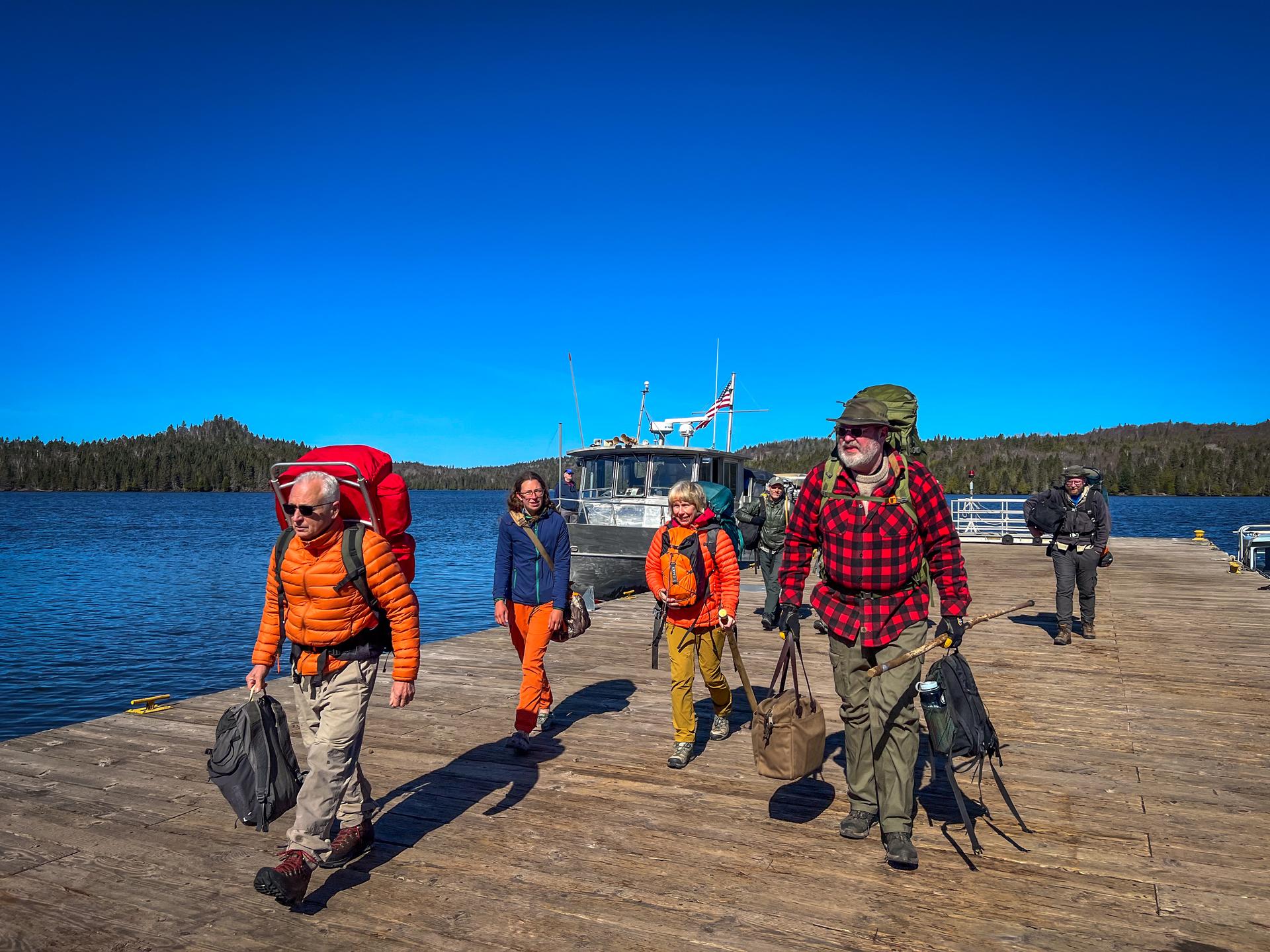
Moosewatch Team 1 Arrives at Windigo, 2025 Photo Credit: Amanda Griggs |
|
|
Moose in Wisconsin: A Hidden Resident? |
|
|
|
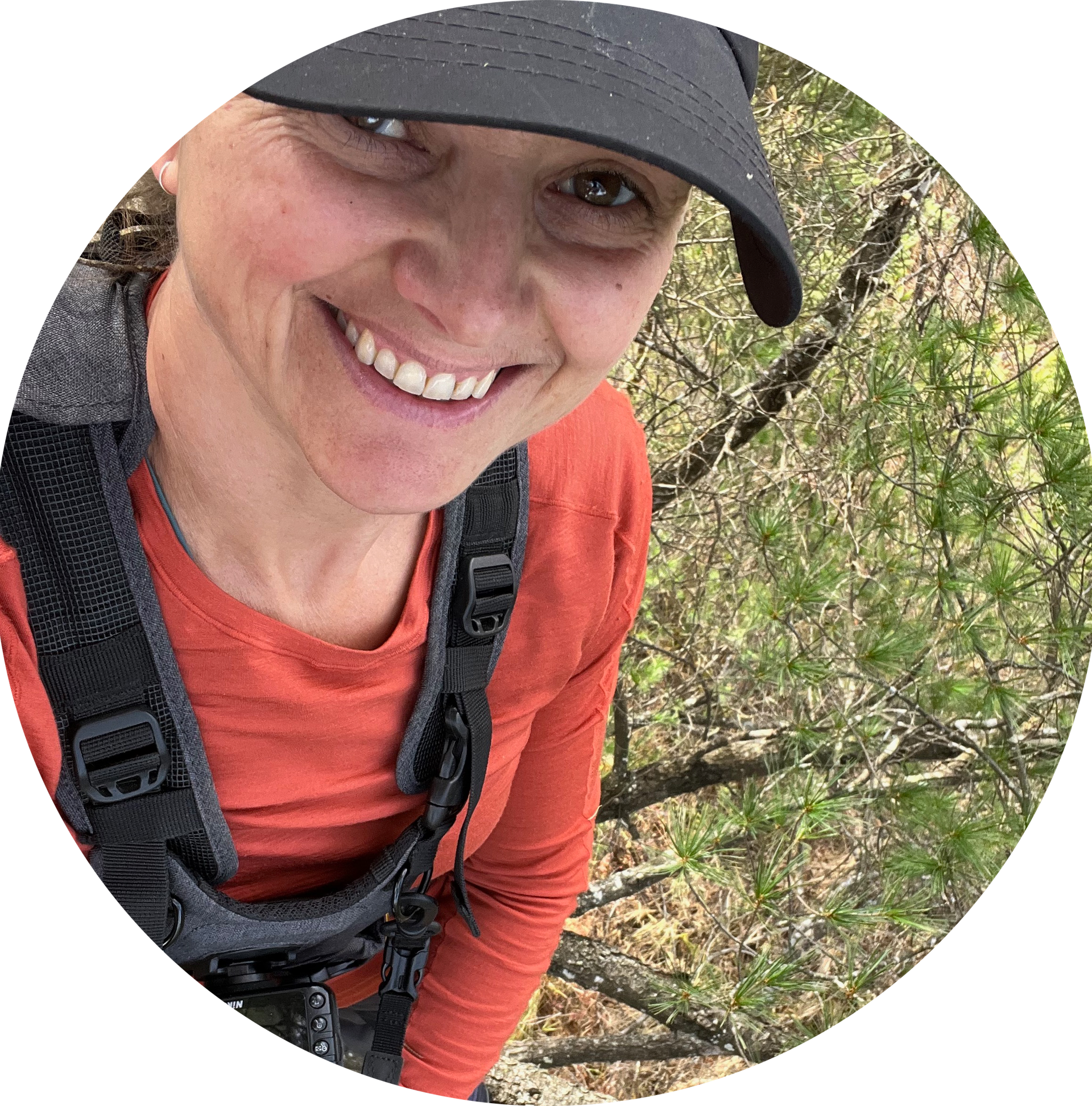
Amanda Griggs is a founding member of the Wolf-Moose Foundation and serves on its board. Passionate about moose, wolves, and all things wild, she volunteers each spring with Moosewatch expeditions on Isle Royale and spends the rest of the year exploring Wisconsin’s wild places, documenting wildlife and advocating for conservation. |
|
|
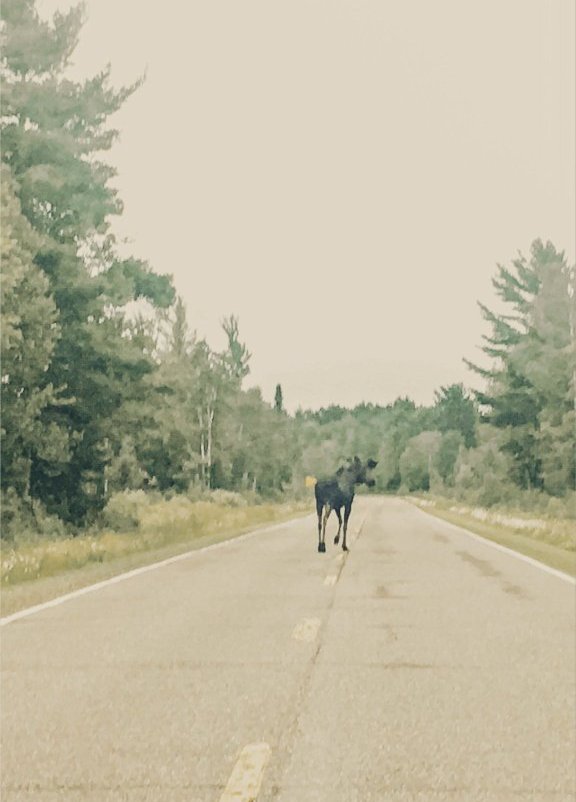
Few wildlife encounters leave a lasting impression like seeing a moose in the wild. Their sheer size and quiet majesty make them unforgettable. In Wisconsin, sightings are not overly common but real—each year, reports surface of moose moving through forests, wetlands, and even roadways of northern and central Wisconsin, reminding us they are part of our landscape. |
|
|
My own first encounter came several years ago, when I rounded a bend and found myself face-to-face with a moose. The moment was awe-inspiring, but it raised a question that stuck with me: how could such a large animal live among us and remain mostly hidden? That curiosity turned to surprise when I learned that, officially, moose are not considered a resident species in Wisconsin—and without that recognition, they receive no dedicated conservation attention.
That realization sparked what has since become my project, Hidden Moose of Wisconsin. For nearly ten years, I’ve worked to gather evidence that moose are more than occasional wanderers—that they represent a resident population worthy of conservation attention. What began as a personal passion has grown into a long-term research effort.
|
| Wisconsin Moose Encounter Photo Credit: Amanda Griggs |
|
|
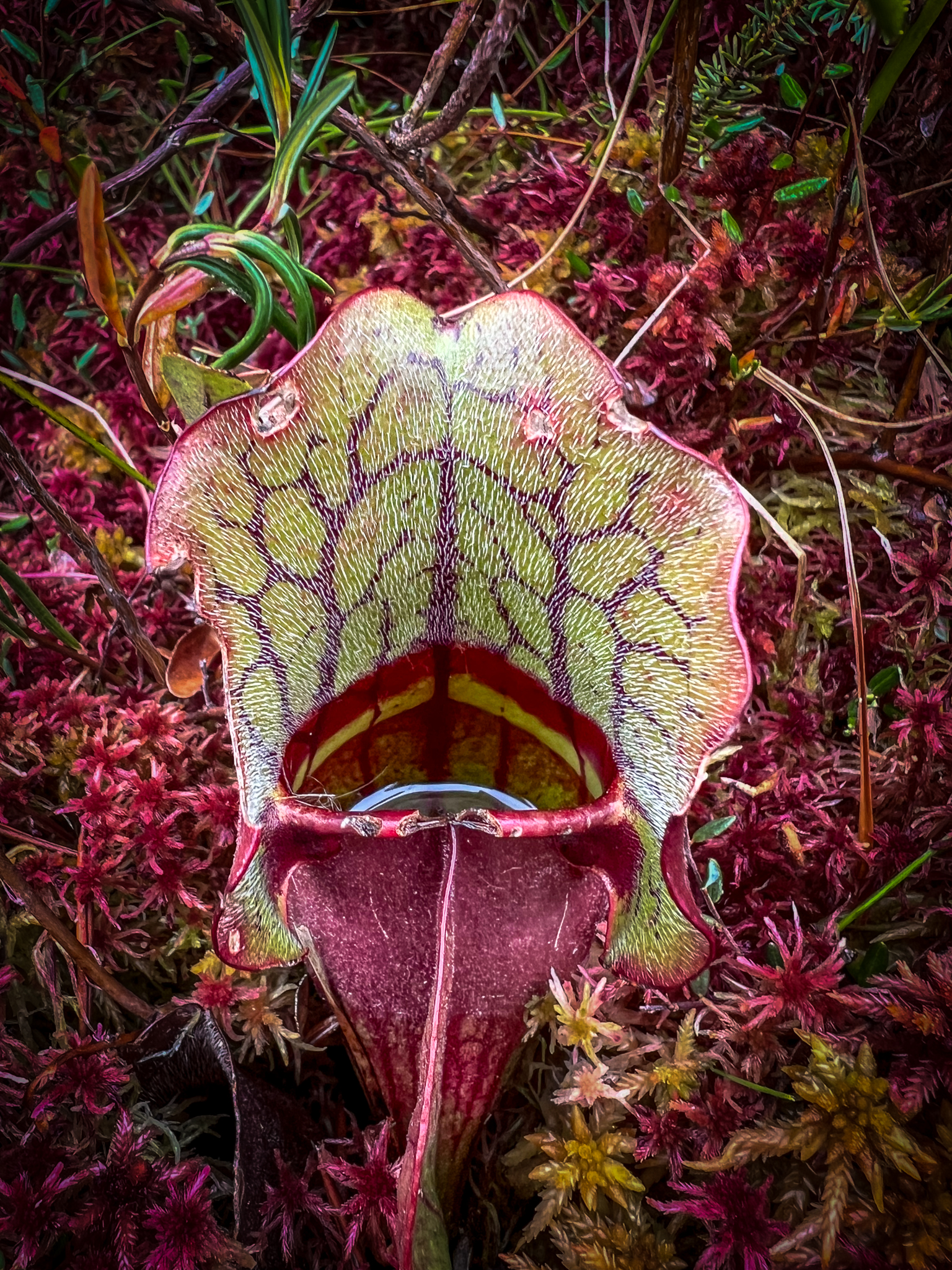
This work, fit into off-hours and long weekends, has been an adventure. It has taken me scrambling up white pines for a better view of a marsh, and picking my way through black spruce and tamarack bogs rich with sedges, moss, and pitcher plants. These forays have brought extraordinary encounters—not only with moose, but with the rare plants and wildlife that share their world—leading me into corners of the Northwoods few people ever see. |
|
|
Pitcher Plant
Photo Credits: Amanda Griggs |
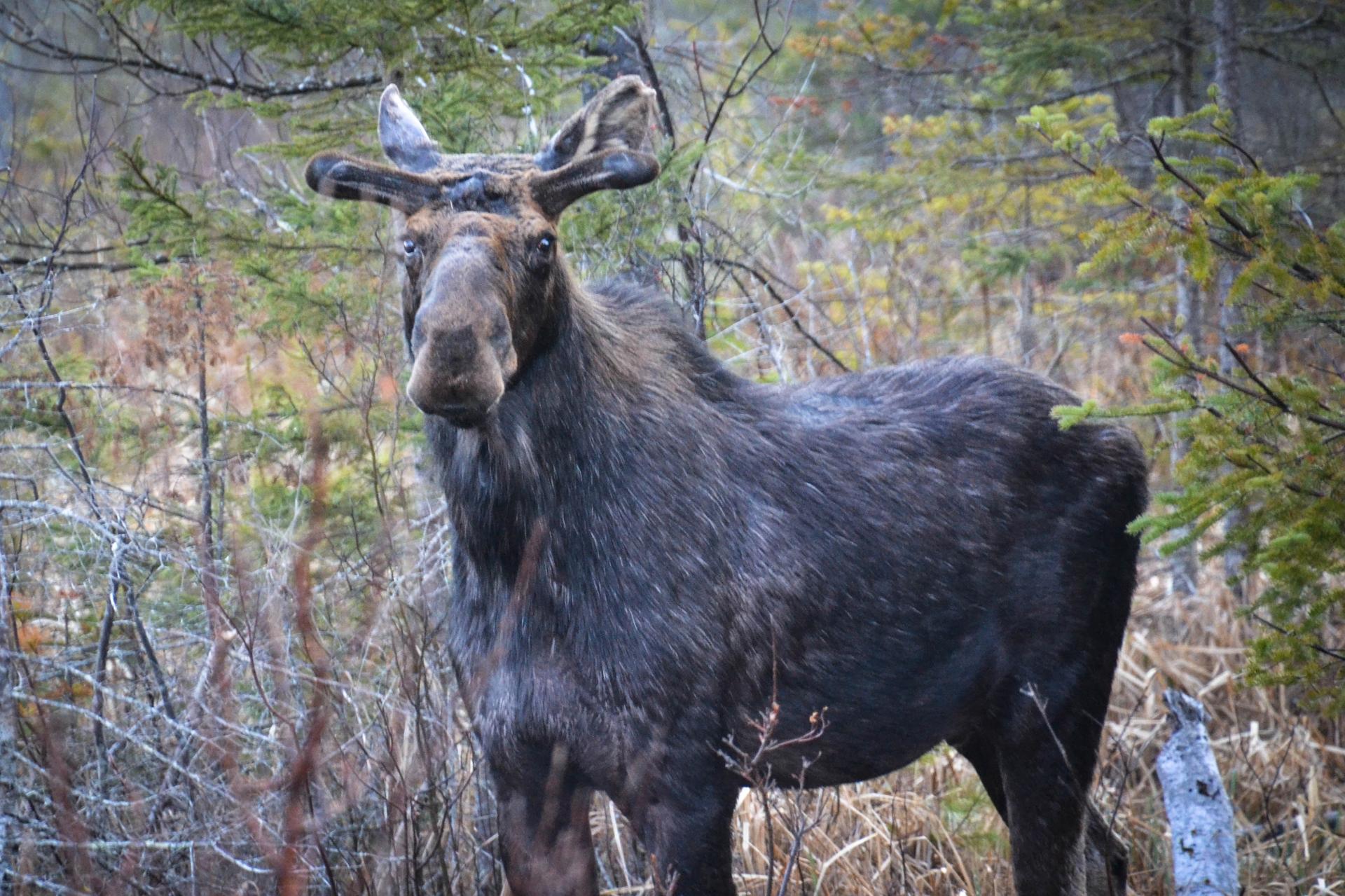
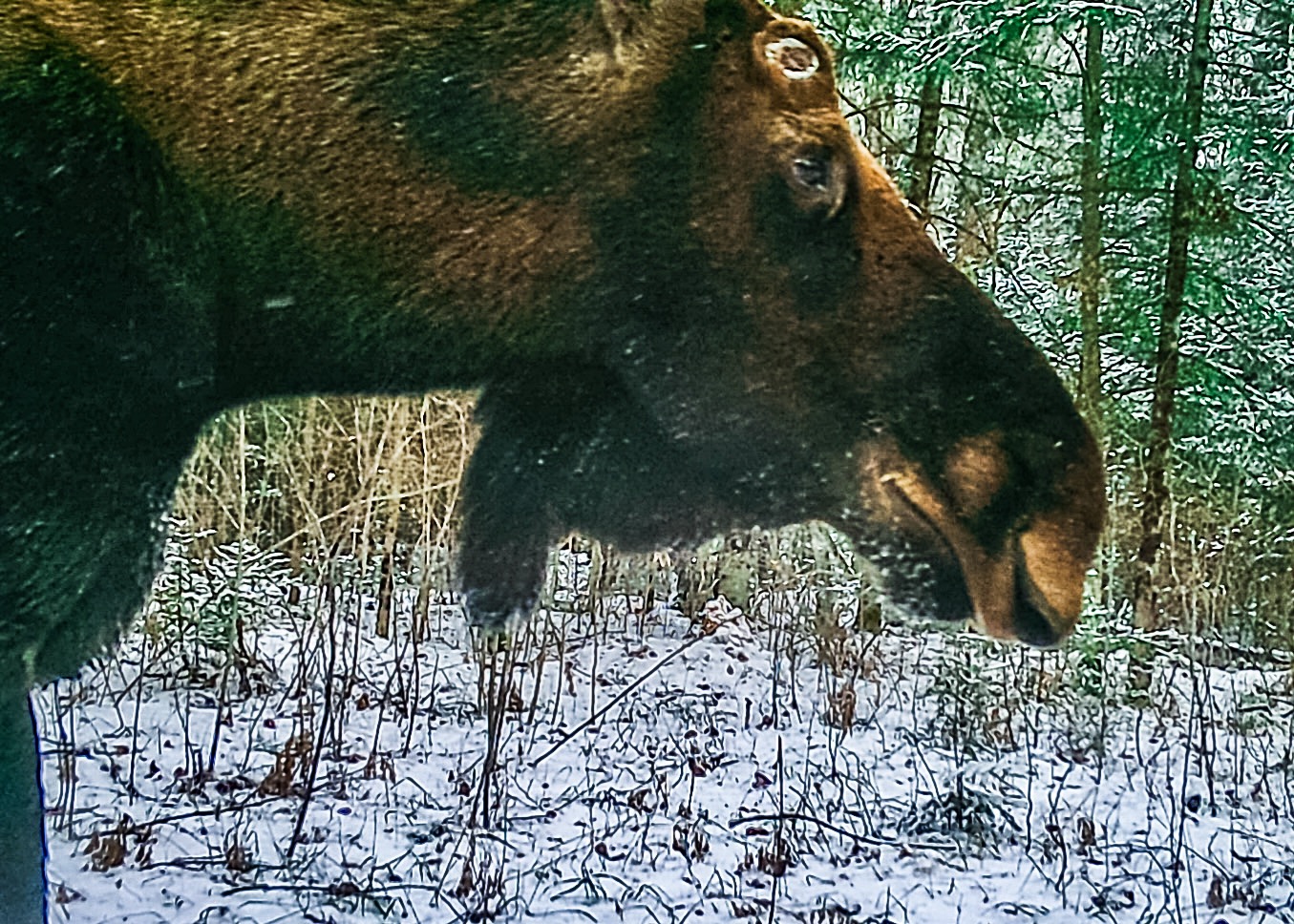
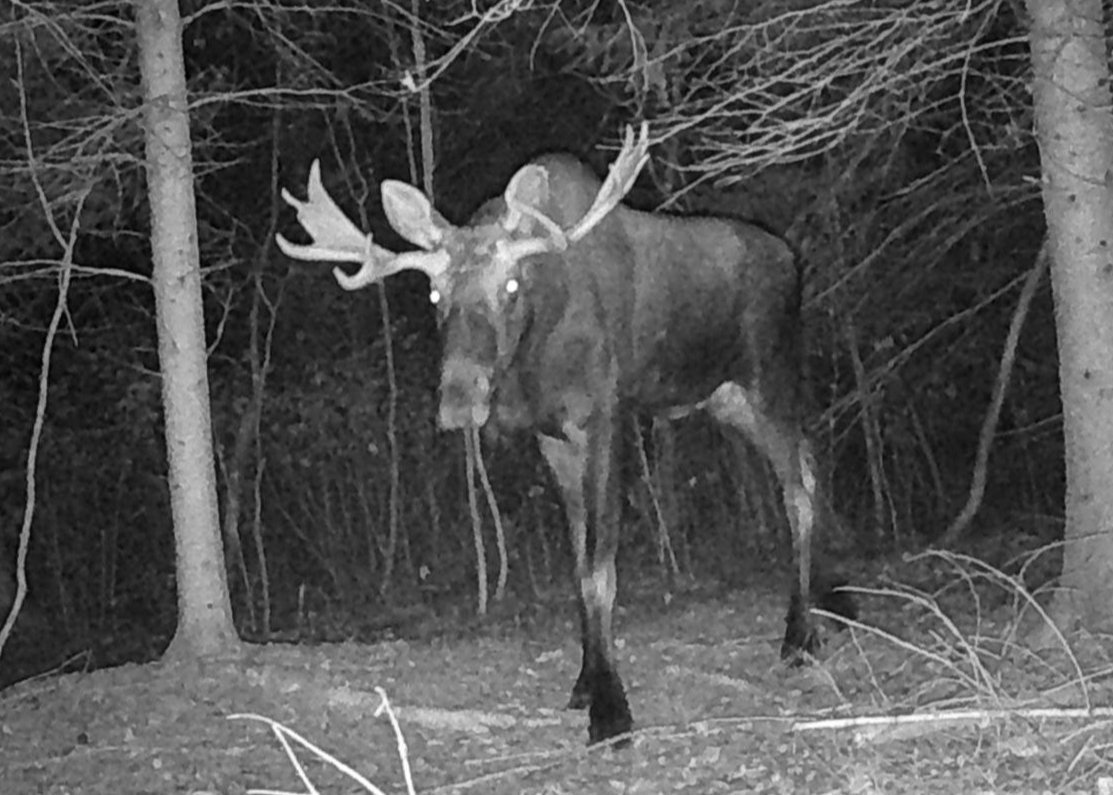
| Wisconsin Bull Moose in Velvet Photo Credits: Amanda Griggs |
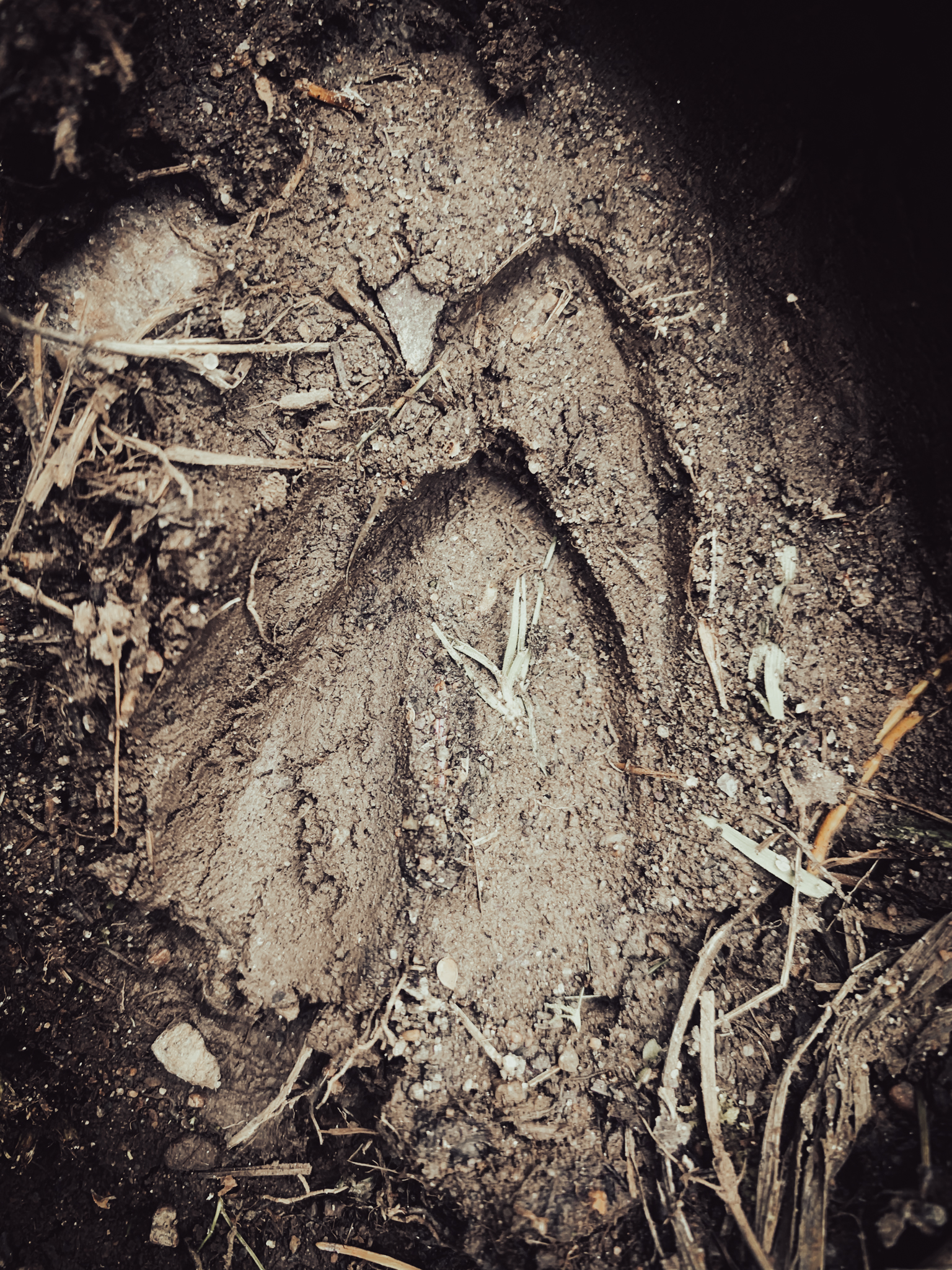
| Moose Tracks
Photo Credits: Amanda Griggs |
|
|
Alongside this fieldwork, I’ve maintained a network of trail cameras across northern Wisconsin, documenting moose whenever they appear. Over time, I’ve also become known locally as “the moose lady,” with reports arriving whenever someone spots a moose—from grainy driveway photos to short trail videos. Together, these sources have produced more than 600 unique sighting records, documenting nearly 700 moose across 31 counties.
To distinguish residency from wandering, I developed criteria that look for patterns such as calves during birthing season, bulls present outside the rut, and repeated use of the same areas across years. Taken together, these records begin to outline resident ranges within Wisconsin (the longer, nerdier explanation lives here). |
|
|
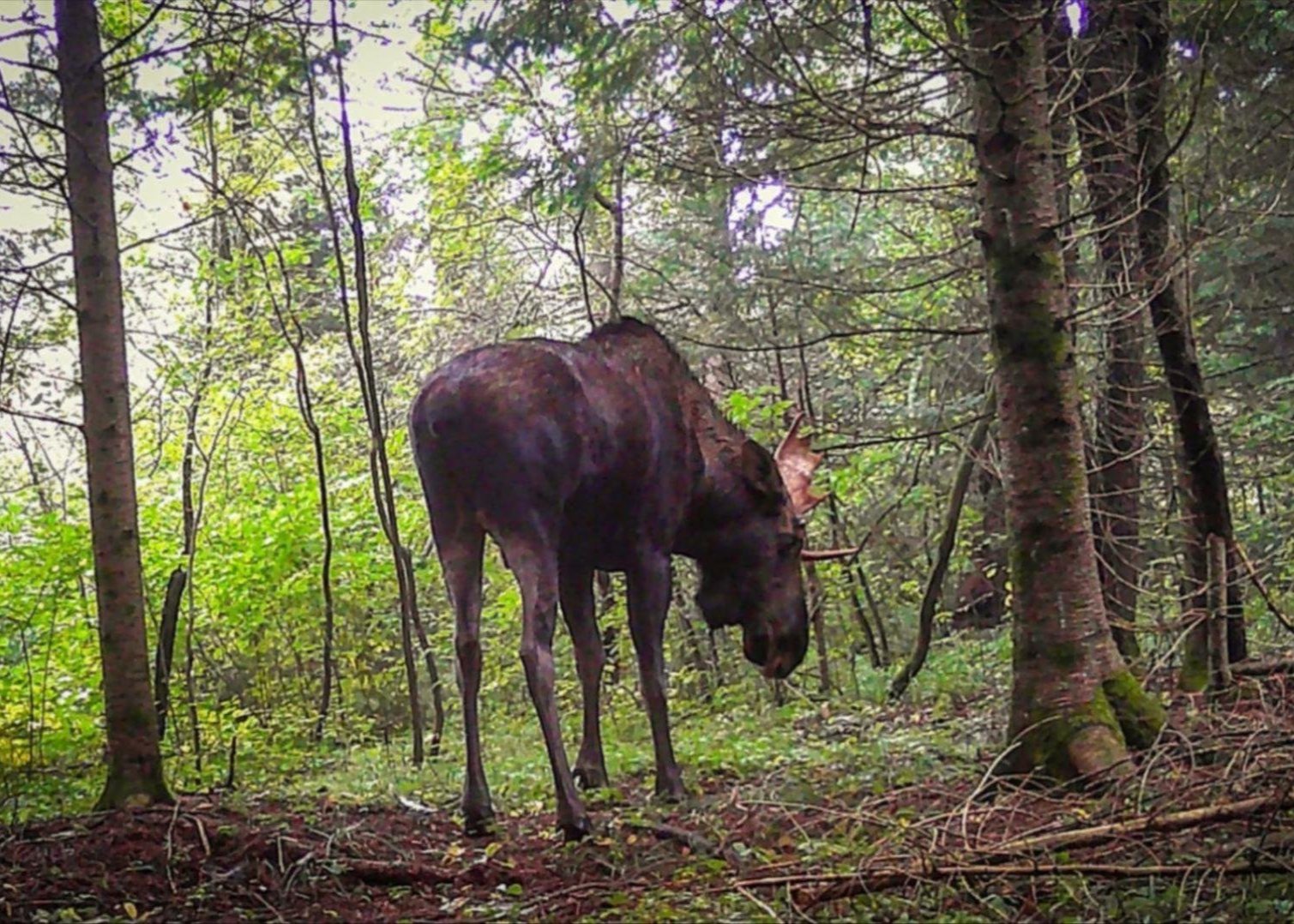
Wisconsin Moose, Across the Years Photo Credits: Amanda Griggs |
|
|
Like many grassroots efforts, this project began small and was self-funded for years, until Wisconsin’s weather claimed more than a few cameras. That led to a crowdfunding campaign on Experiment.com, which was fully funded by November 2024 thanks to supporters who believed in this work..
Recognition as a resident species would open the door to focused conservation planning, research collaboration, and public awareness—crucial for a species living at the southern edge of its range.
This project remains a labor of love—camera by camera, season by season, through long winters and buggy northern summers. It is both science and story: documenting a species’ presence, and tracing how one unforgettable encounter ignited a lifelong fascination. Each sighting and quiet moment in the marsh has deepened my commitment to ensuring moose are seen, valued, and protected in Wisconsin. By Amanda Griggs |
|
|
| East Pack with Six Pups, 1972 Photo Credits: Rolf Peterson |
|
|
Dr. Elbroch is Director of the Puma Program for Panthera, a global organization dedicated to conserving wild cats and their habitats. His work has been featured in the BBC film Big Cats in High Places and Nat Geo Wild’s Cougars Undercover. |
|
|
Join Us for Dr. Elbroch’s Talk – Registration Now Open! |
Seating is reserved for Wolf-Moose Foundation members--secure your spot today! |
|
|
Join Us for Dr. Vucetich’s Talk – Registration Now Open! |
Seating is reserved for Wolf-Moose Foundation members--secure your spot today! |
|
|
Hosted by the Quiet Adventures Society, the Symposium brings together long-time Moosewatch participants and Wolf-Moose Foundation board members for presentations, demonstrations, and exhibits focused on non-motorized recreation and conservation. Visit our booth to learn more about the Project and connect with those actively involved. |
|
|
Canoecopia 2026 Date:s March 13 - 15, 2026 Times:
Friday: 3 PM – 8 PM
Saturday: 9 AM – 6 PM
Sunday: 10 AM – 4 PM Location: Alliant Energy Center, 1919 Alliant Energy Way, Madison, Wisconsin |
Canoecopia is the world’s largest paddlesports consumer event, showcasing 250,000 square feet of kayaks, canoes, paddleboards, and outdoor gear. Stop by our booth to learn how you can support and get involved with the Wolf-Moose Foundation. |
|
|
Welcome to “In the News”—your front-row seat to the latest on wolves, moose, Isle Royale, and beyond. From surprising scientific discoveries to bold conservation efforts across the globe, we’ll keep you informed, intrigued, and maybe even a little amazed by the wild world of wildlife research.
|
|
|
-
Cougar sightings in Michigan already breaking records: With a month still left in the year, Michigan residents are capturing unprecedented images and video of cougars using trail cameras.
-
Reimagining our relationship with wolves: “We ought to support ranchers trying to make a living, hunters who act with integrity, and the wolves themselves.”
-
Research shows wolf population changes follow trends in deer, not the other way around: Severe winters and deep snow reduced deer numbers, while trail cameras and GPS-collared wolves help reveal the real drivers of change.
-
Tracking collars reveal unusual ways moose are moving across the UP: Collared moose are showing unexpected long-distance travel and unusual movement patterns across Michigan’s UP.
-
Biologists heartened by red wolf programs recent successes: “We cannot recover this species on our own… our work depends on a complex network of organizations, agencies, communities, and individuals.”
-
Video reveals how far wolves will go to steal a meal: Wolves have been pulling apart grab traps to eat European green crabs in British Columbia, the first documented observation of wolves using tools.
-
Here’s what Colorado’s gray wolves are up to as they establish territories across the Western Slope: Two years after reintroduction began, wolves are forming packs, dispersing into new areas, and successfully raising pups.
-
Surveying success: Geospatial engineering students test skills on Isle Royale National Park: When the surveying club asks for an assignment at Isle Royale, their work benefits everyone from park staff to visitors.
-
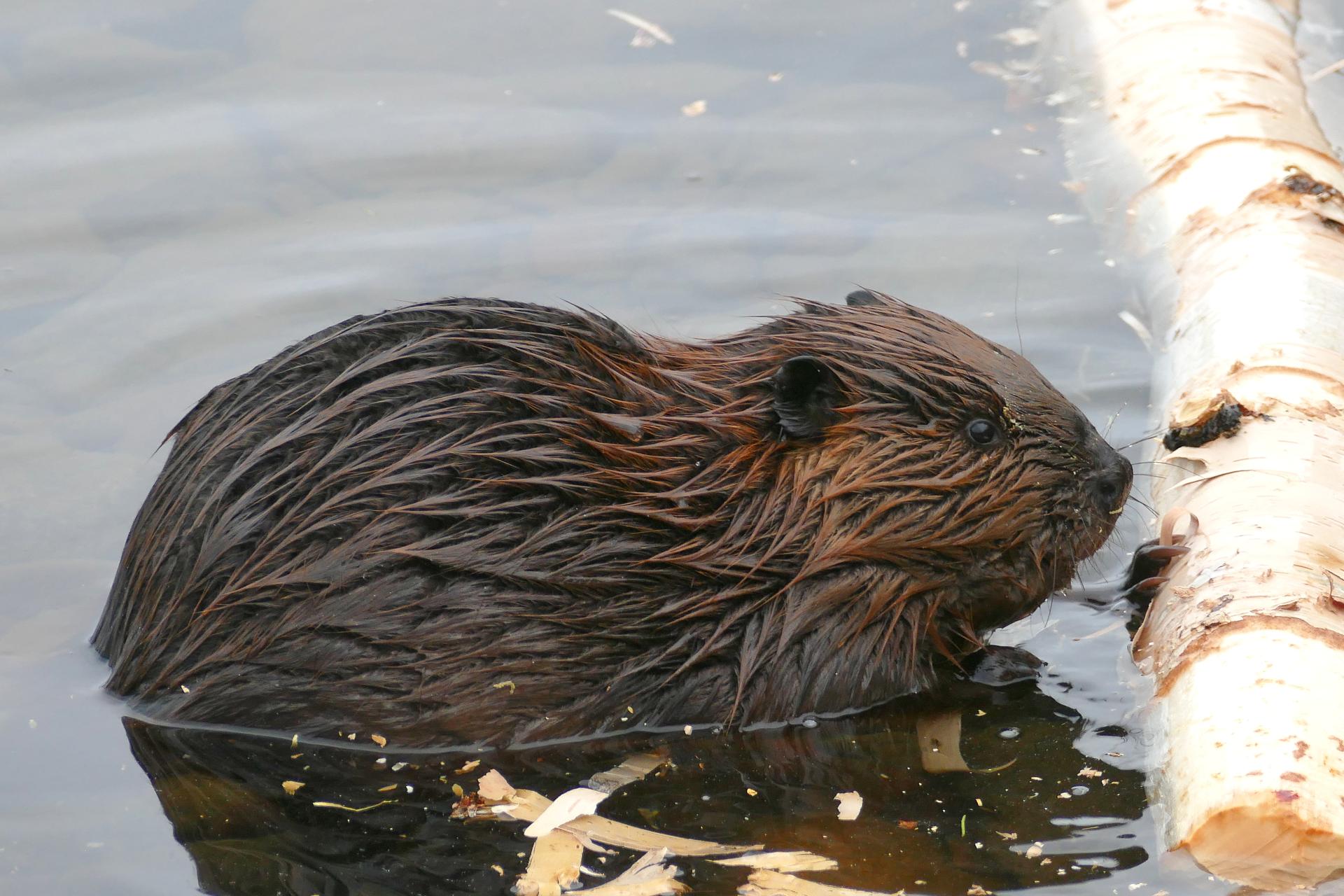
Wolves hunting beavers on Isle Royale changing ecosystem: “We found that wolves are really dynamic in how they’re looking for prey and selecting prey throughout our study.”
-
Trail camera shows baby mammals ‘after a century’s absence’ in the UK. See them play: European pine martens, a shy predator, has been reintroduced to southwest England after being extirpated 100 years ago.
|
|
|
Isle Royale Beaver
Photo Credit: Wolf-Moose Project |
|
|
Our Contact Information
*{{Organization Name}}*
*{{Organization Address}}*
*{{Organization Phone}}*
*{{Organization Website}}*
*{{Unsubscribe}}* |
| The Wolf-Moose Foundation is a 501(c)(3) tax-exempt charitable nonprofit organization.
Our Federal Tax Identification Number is 93-4654981. |
|
|
|