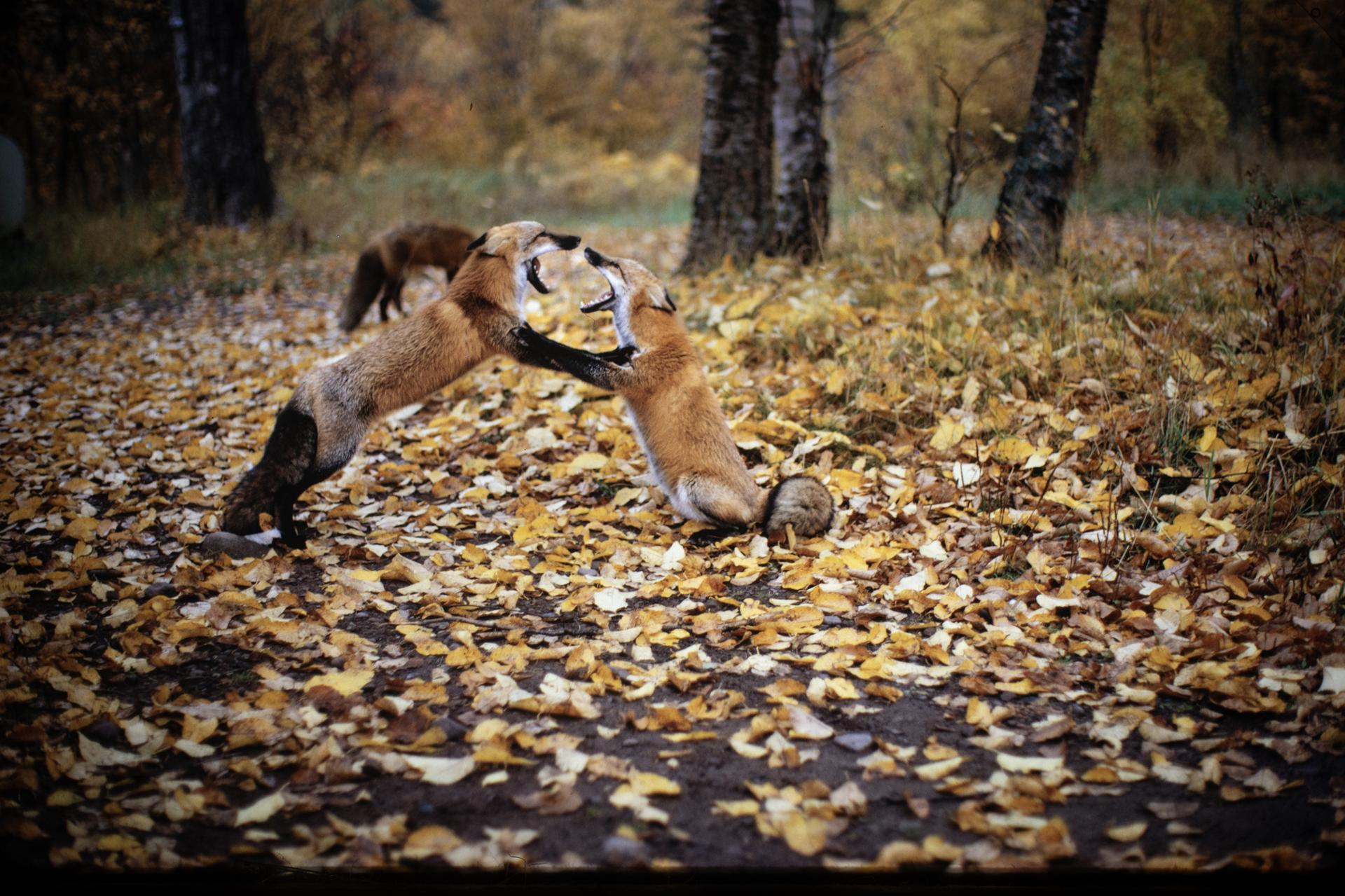
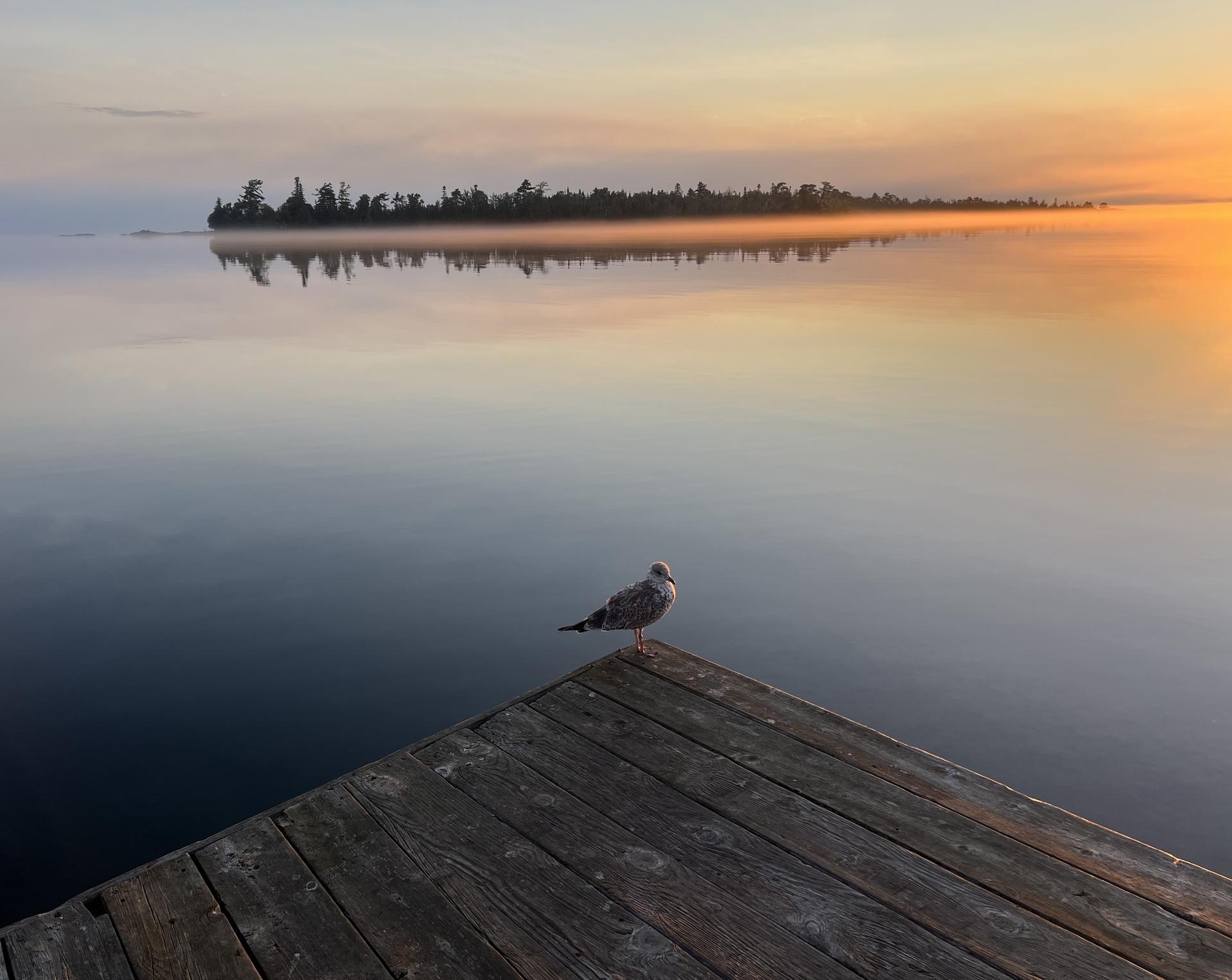
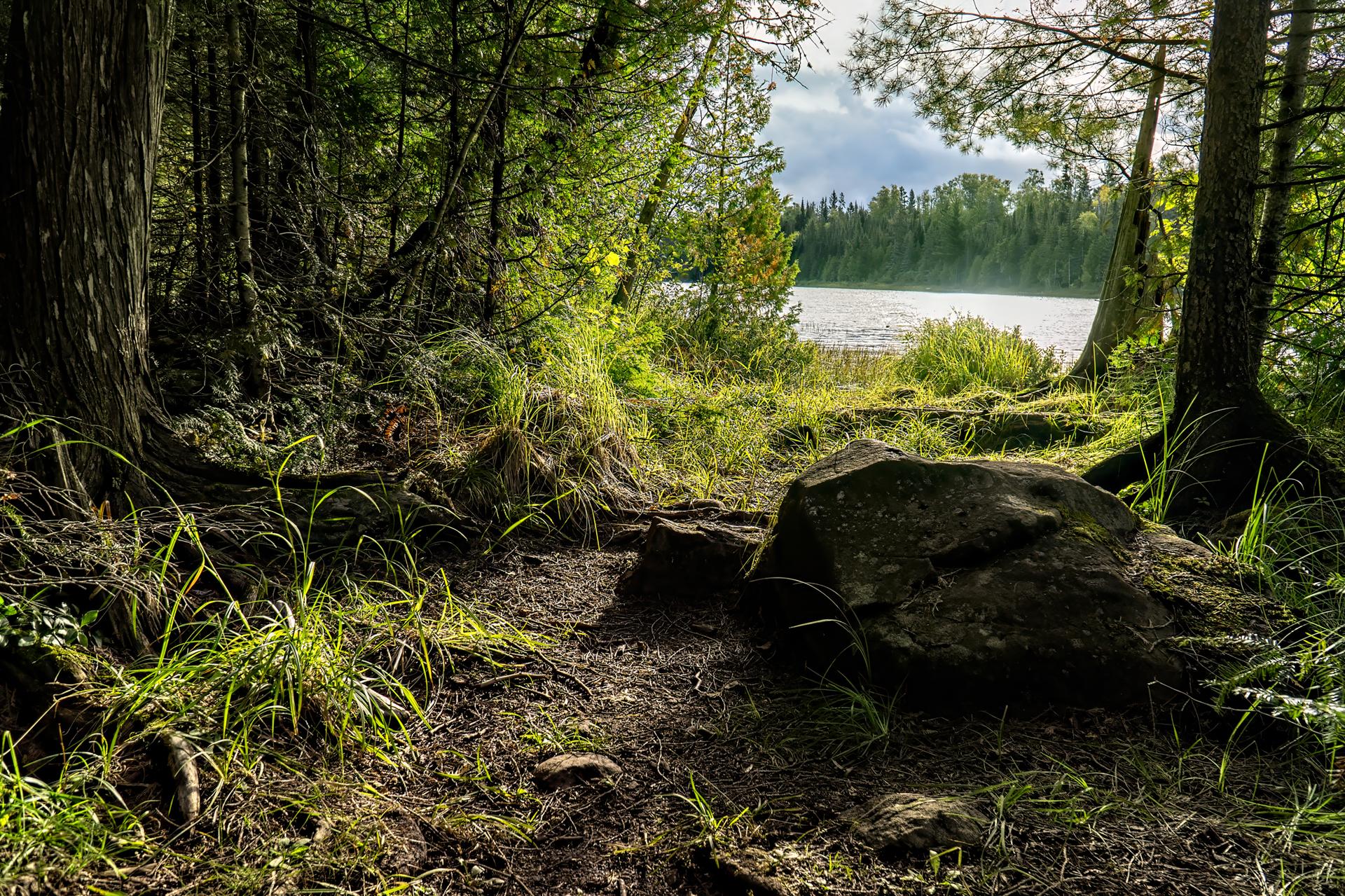
Two Foxes Sparring, Windigo, 1972 Photo Credit: Rolf Peterson |
|
|
| | Squirrel in Fall Photo Credit: Wolf-Moose Project |
|
|
Letter from the President |
|
|
|
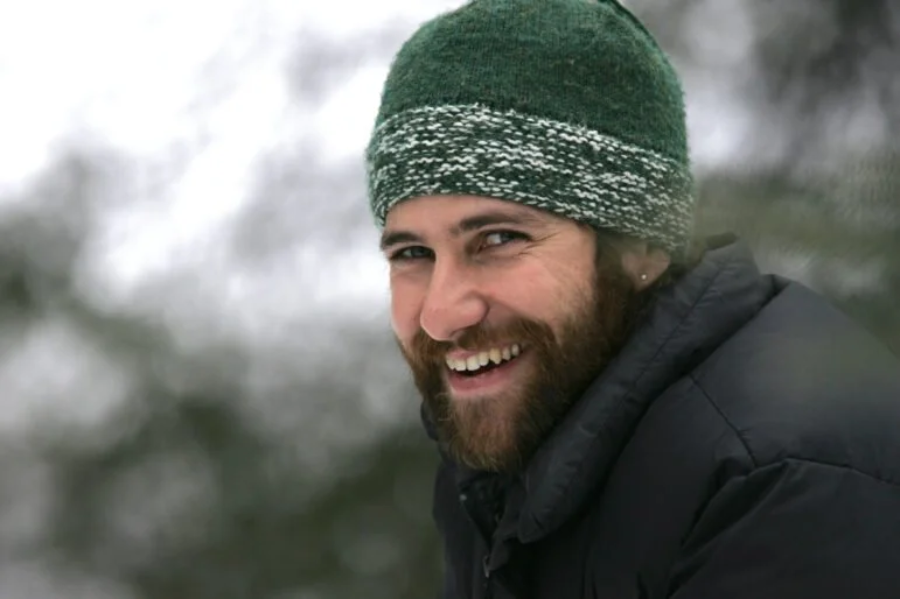
Jeffrey Holden has been coming to Isle Royale for nearly half-a-century. He's been working with and supporting the Wolf-Moose Project since 2002. For the last 20 years he has been leading groups searching for moose bones with Moosewatch. Jeff is the author of the recently published Dead Moose on Isle Royale: Off Trail with the Citizen Scientists of the Wolf-Moose Project from Michigan State University Press. Jeff loves the Island and meeting all of the people associated with the Project. In real life, Jeff used to be a mild-mannered data guy in healthcare in southeast Michigan ... Apparently that didn’t work out so he is concentrating on the Wolf-Moose Project these days.
|
|
|
The Wolf-Moose Foundation is not yet 2 years old. We began actively fundraising only 18 months ago. An original goal of the Foundation was to raise funds to build a $2.2 million endowment for the Wolf-Moose Project.
All academic and scientific projects must spend significant time and resources finding money, usually in the form of grants, to support research. The time required to locate and the uncertainty of funding can negatively impact the science and often result in short studies (e.g., 5 years or less). An endowment of $2.2 million would enable the Wolf-Moose Project, now in its 66th year, to be financially independent, so it wouldn’t need to continually chase grants year after year.
Where is the Foundation’s fundraising at? In the 18 months since fundraising began, the Foundation has raised nearly $420,000*. Most of that money – $370,000 or 88% – has gone to or is earmarked for the Wolf-Moose Project and the endowment. The remaining 12% helped establish the Foundation (e.g., one-time upfront fees for legal work, building websites) as well as funding day-to-day operations (e.g., cost of several software packages, internet assets). Meaning the Foundation is doing okay, we’re making progress, but we have a long way to go.
The Wolf-Moose Project is approaching a frightening time. It's expected to run out of funds by mid-2026. The project leaders are applying for funds from the National Science Foundation (NSF). Funds from the NSF have been vital to the project's continuance for decades. Unfortunately, it is unclear whether NSF will grant the necessary funds. We are unlikely to know more about NSF funding until about the time when the project's existing funding is exhausted.
The Foundation, in conjunction with the Project, is working to develop more ways to increase revenue and increase donations. |
|
|
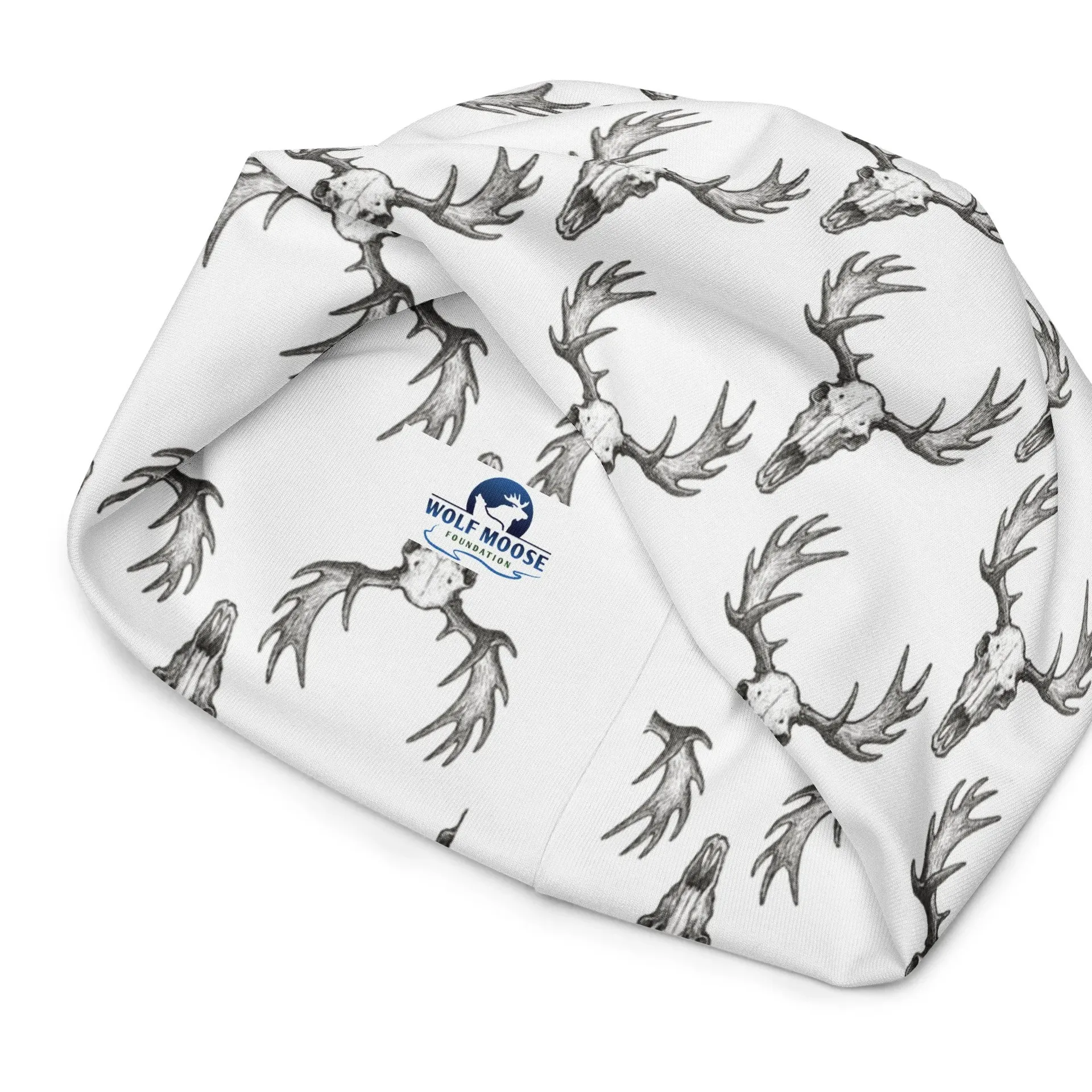
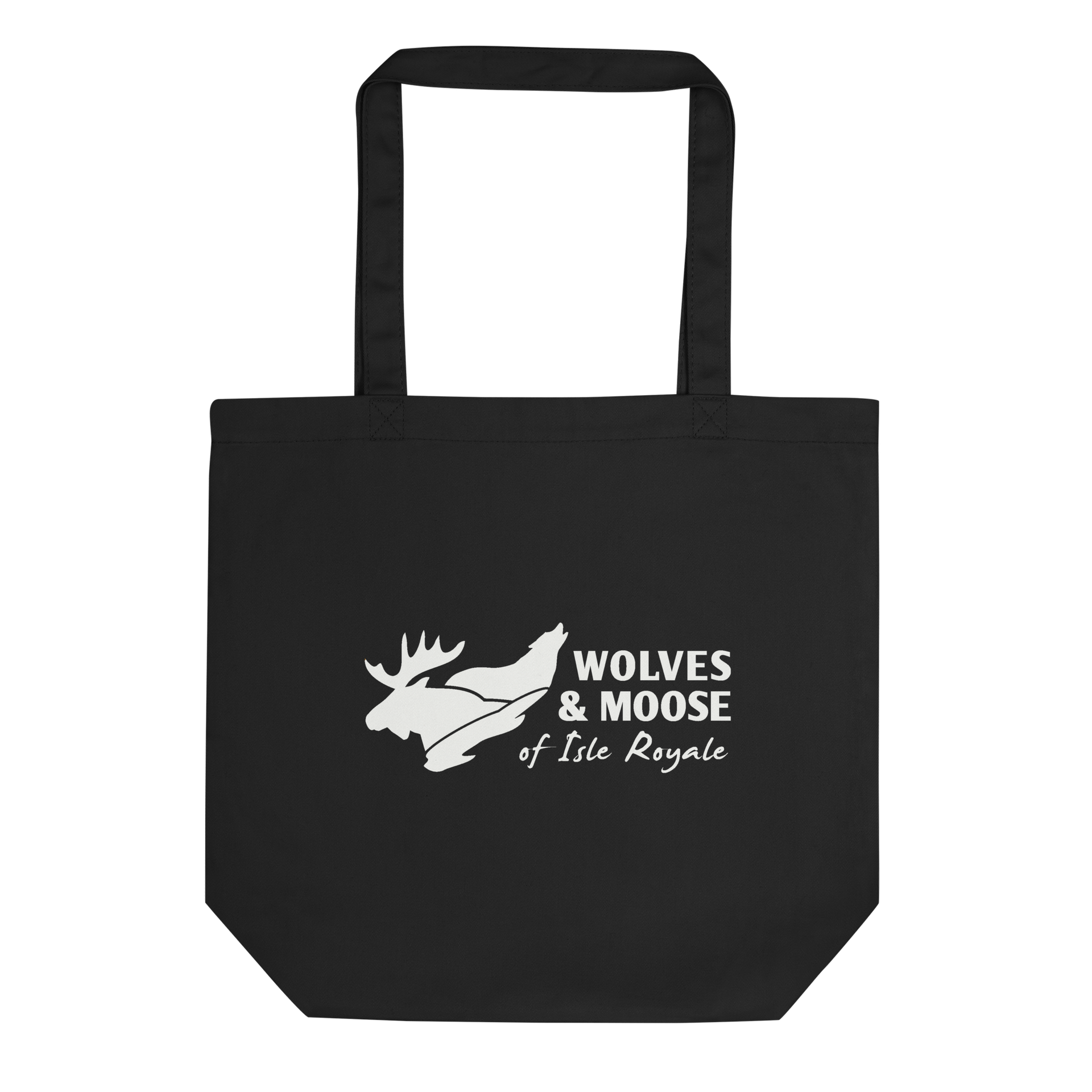
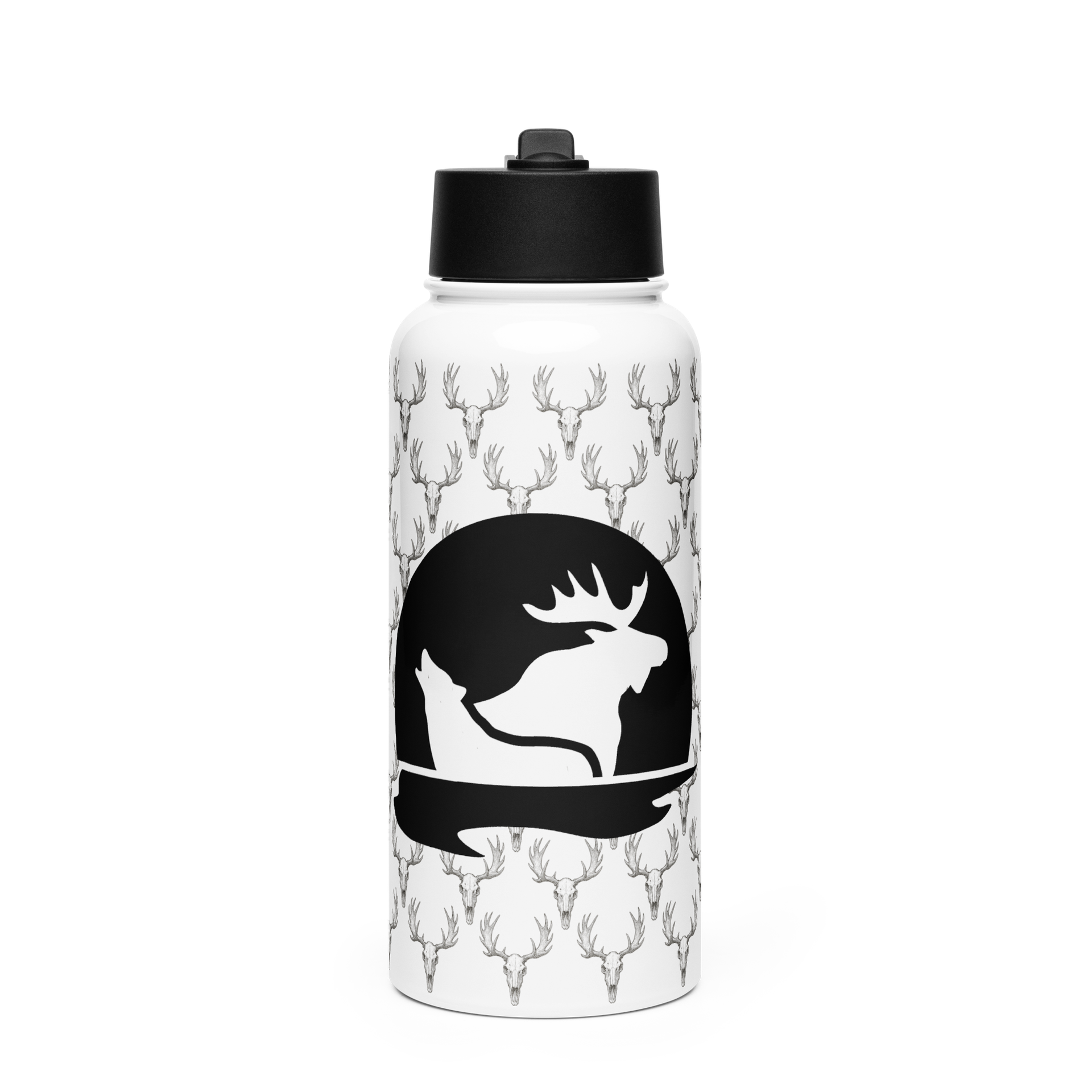
Online Store – One of the new ways we have to raise money is our online store. We’re pretty excited about rolling it out and hope our supporters like what they see. Some of the items have been designed specifically for the upcoming holidays.
Please show your support by donating here, or by visiting our new online store and purchasing a Wolf-Moose product (I’ve already purchased a moose skull beanie). And let us know what you think of the store. And as always – thank you for your continued support!
|
| |
|
* Note – Figures are current as of September 8, 2025. Raised means both money in hand as well as money pledged to the Foundation. By Jeffrey Holden |
|
|
The Science of Isle Royale |
|
|
|
Ken Lemieux first visited Isle Royale in 2009. Despite a 36-hour storm, he was smitten and has returned several times. He began participating in Moosewatch in 2022. He’s a husband, father of three, tech writer, and lover of the outdoors. |
| |
Ecological Studies of Wolves on Isle Royale: 2024-2025 Annual Report Summary
Earlier this year, the Ecological Studies of Wolves on Isle Royale: 2024-2025 Annual Report was released. This article is a summary of the 20-page document. Summary
Typically, a summer and winter study is conducted each year on Isle Royale. Unfortunately, due to unforeseen circumstances, the pilot was unable to fly, and the winter study had to be canceled. Therefore, this year's report does not include estimates of wolf and moose abundance. The report instead focuses on the field research conducted between May and August of 2024.
College students, citizen-scientist volunteers known as “Moosewatchers,” and educators conducted the summer research. |
|
|
Moosewatch
In 2024, 82 volunteers participated in Moosewatch expeditions, hiking approximately 1,131 km and discovering the carcasses or skeletal remains of 115 moose, three beavers, a wolf, a fox, a pine marten, and a white-tailed deer. For each moose carcass found, information cards were completed, specific bones were collected and brought back to the scientists, and then shipped to Michigan Technological University (MTU) for further study. |
| Moosewatch Team 1, 2024
Photo Credit: Wolf-Moose Project |
|
|
Of the moose carcasses discovered this year, only 22 died in 2024. Eight of those moose were calves, six were adult males, and seven were adult females. All but three of those moose were thought to have been killed by wolves. In other words, 86% of those moose died from wolf predation. For context, wolf predation was thought to be the cause of death for 92% of the moose we examined that died in 2023. Therefore, wolf predation remains an important source of mortality for moose in 2024.
|
|
|
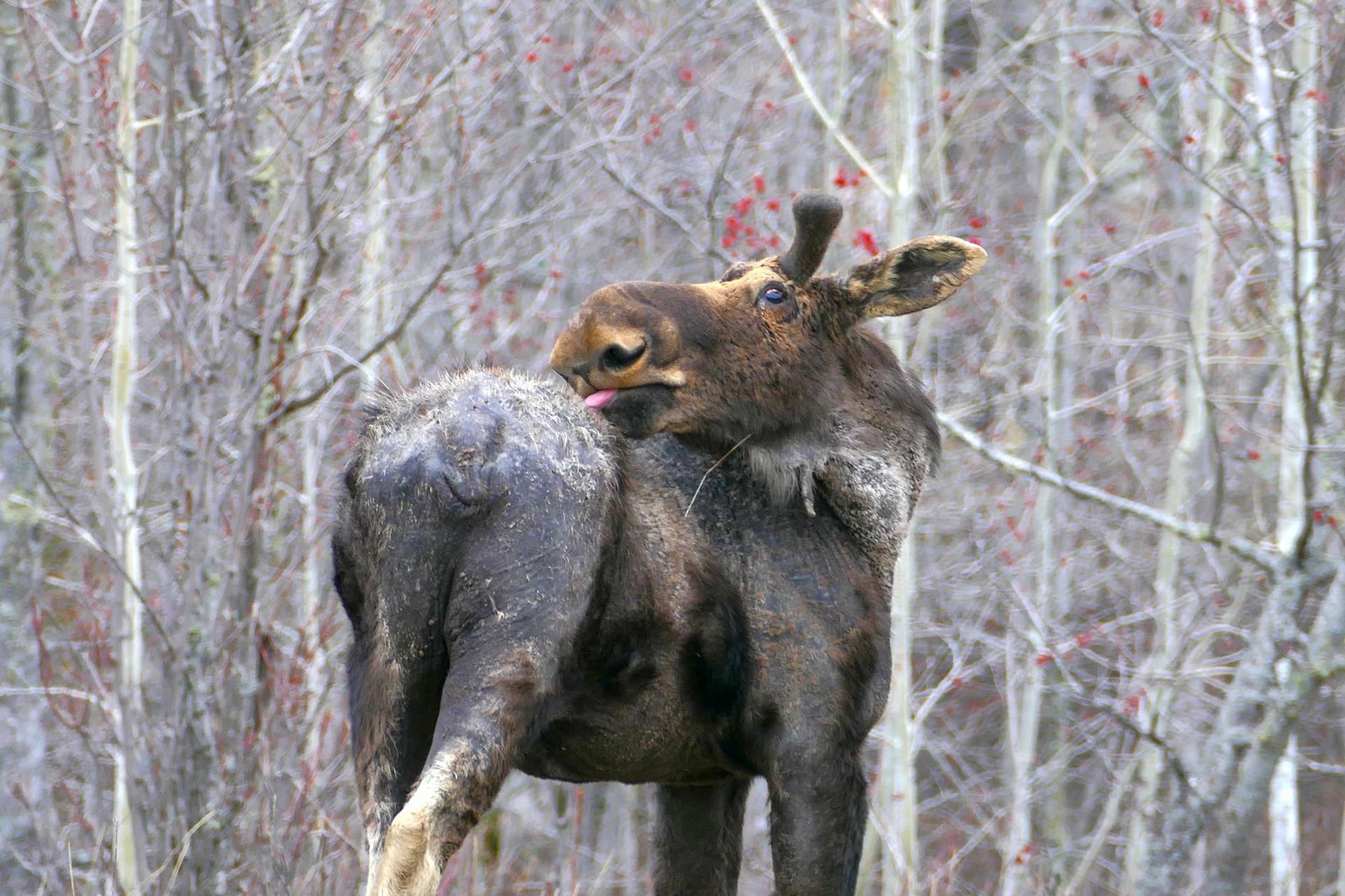
Bull Moose Removing Ticks, , April 2024 Photo Credit: Wolf-Moose Project |
|
Ticks
Analysis of photographs collected in summer revealed that some moose had damaged as much as 98% of the hair on their bodies and neck, whereas other moose had damaged as little as 11% of their hair. On average, moose photographed in 2024 had damaged 57% of their hair, which is close to the long-term average of 51% that we observed for moose on Isle Royale. |
|
|
Vegetation
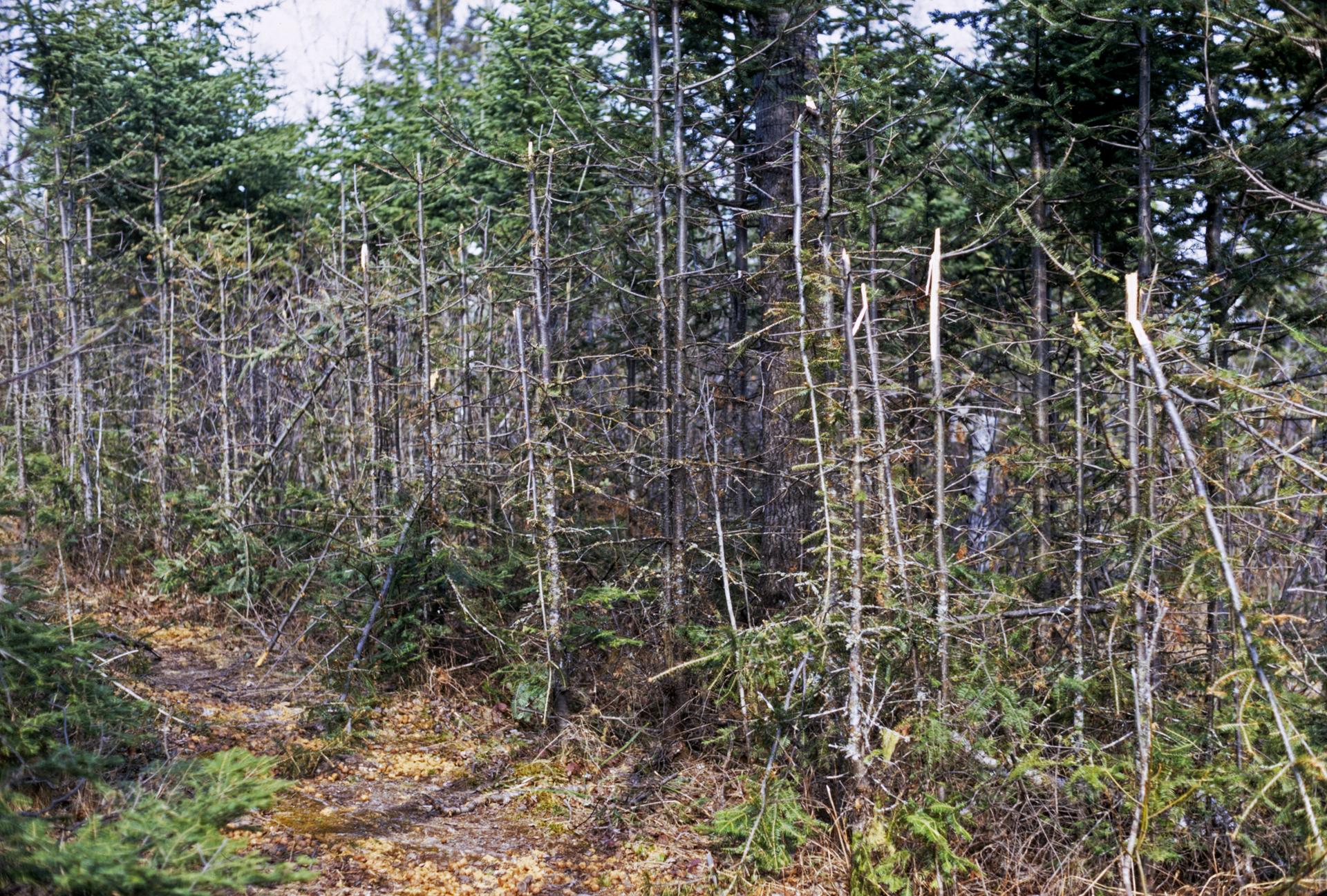
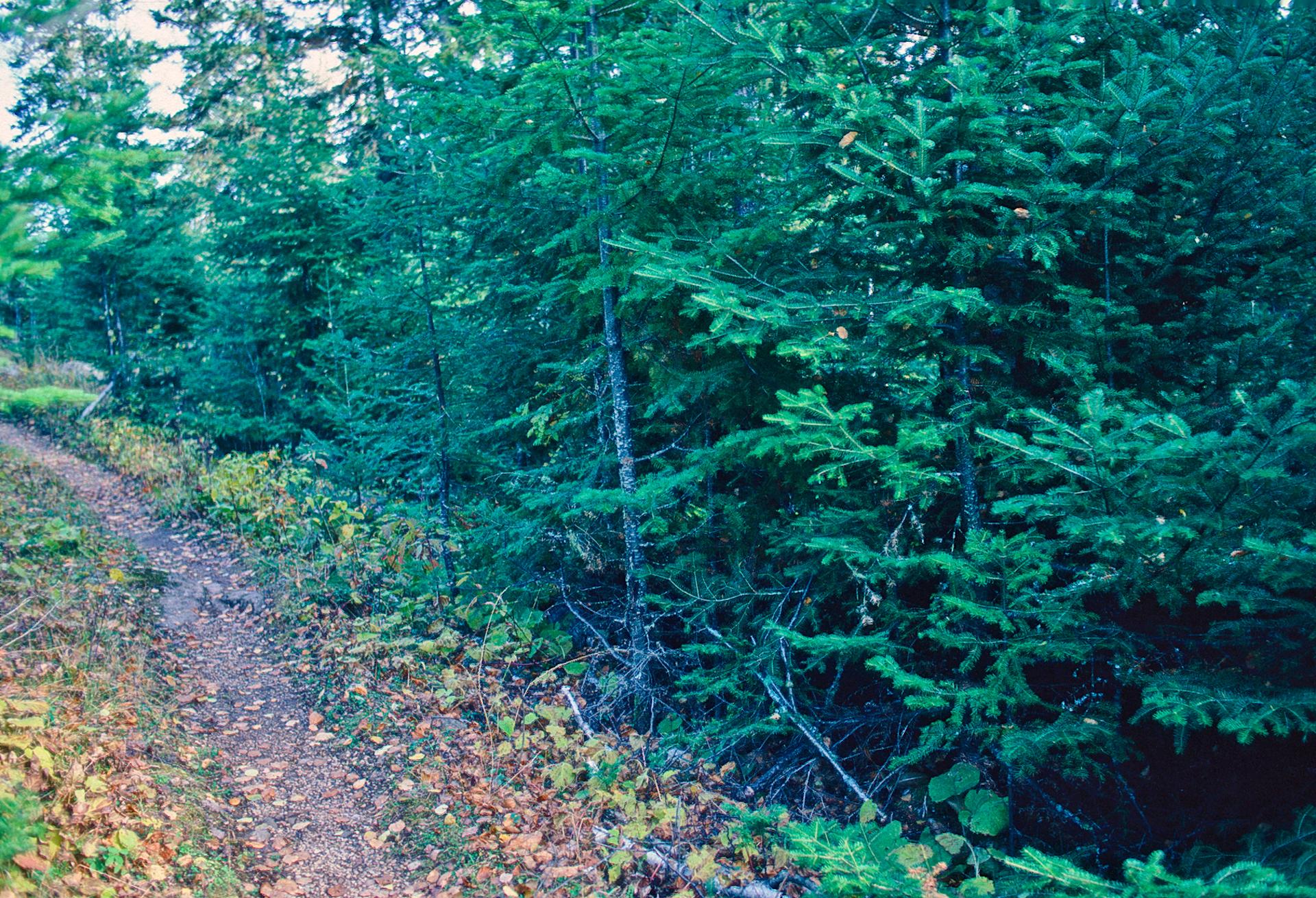
Data collected in summer suggest that the condition of balsam fir saplings remains especially poor, as the annual height growth and survival of tagged saplings were at the lowest level ever observed. Specifically, the terminal leaders of fir saplings grew an average of only 3.5 cm in height in 2024, and less than 80% of tagged fir saplings that were alive in May 2023 survived until May 2024. In summary, moose browsing pressure on fir has started to decline over the past three years, but insufficient time has passed for fir trees to recover and attain the high growth and survival rates that they once exhibited. |
|
|
Severe Moose Browsing Damage, Moskey Basin, 1972
Photo Credit: Wolf-Moose Project |
| Fir Regenerated After Declining Moose Pressure, 1987 Photo Credit: Wolf-Moose Project |
|
|
Research Highlights
For centuries, scientists and engineers have been enthralled—some knowingly, others unwittingly—by a view that nature is like a machine, whose rules are to be discovered for the betterment of humanity. Key elements of that worldview are reasonable, as some empirical evidence partially supports these ideas, and some of the ethical implications are acceptable. But that worldview is also likely responsible for humans’ overbearing relationship with nature. Decades of observation from the wolves and moose of Isle Royale suggest that nature is essentially shaped by a series of historical contingencies—deeply consequential events, random in their timing and the type of event that occurred. This understanding of nature is valuable for explaining why “ecological surprises” are common. It also explains why ecologists are so good at explaining ecological phenomena of the past, but far less good at predicting future states of nature. In doing so, this view of nature prompts us to be more humble in our decision-making about how to treat nature.
|
|
|
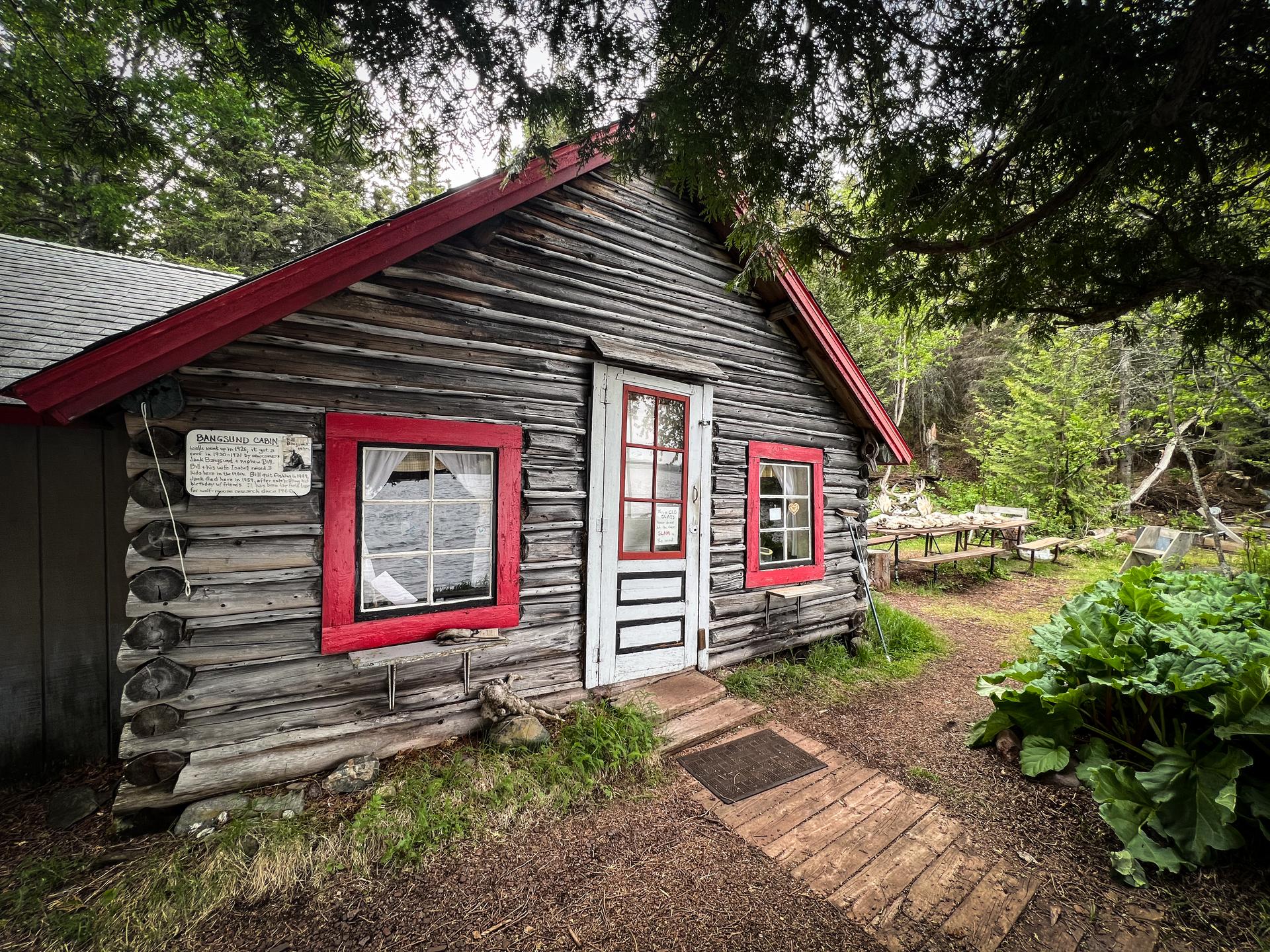
Bangsund Cabin, June 2023 Photo Credit: Amanda Griggs |
| Bangsund Cabin
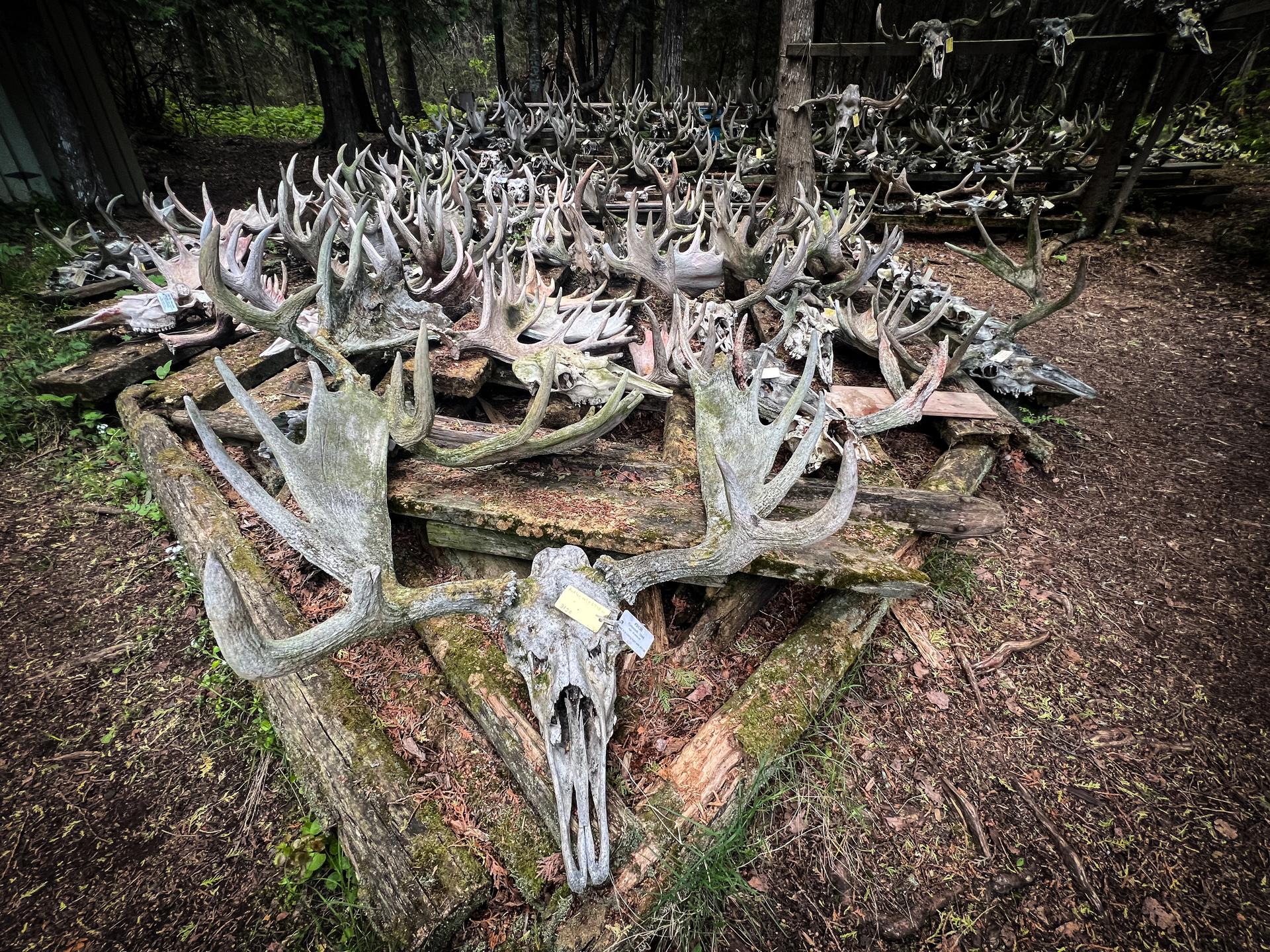
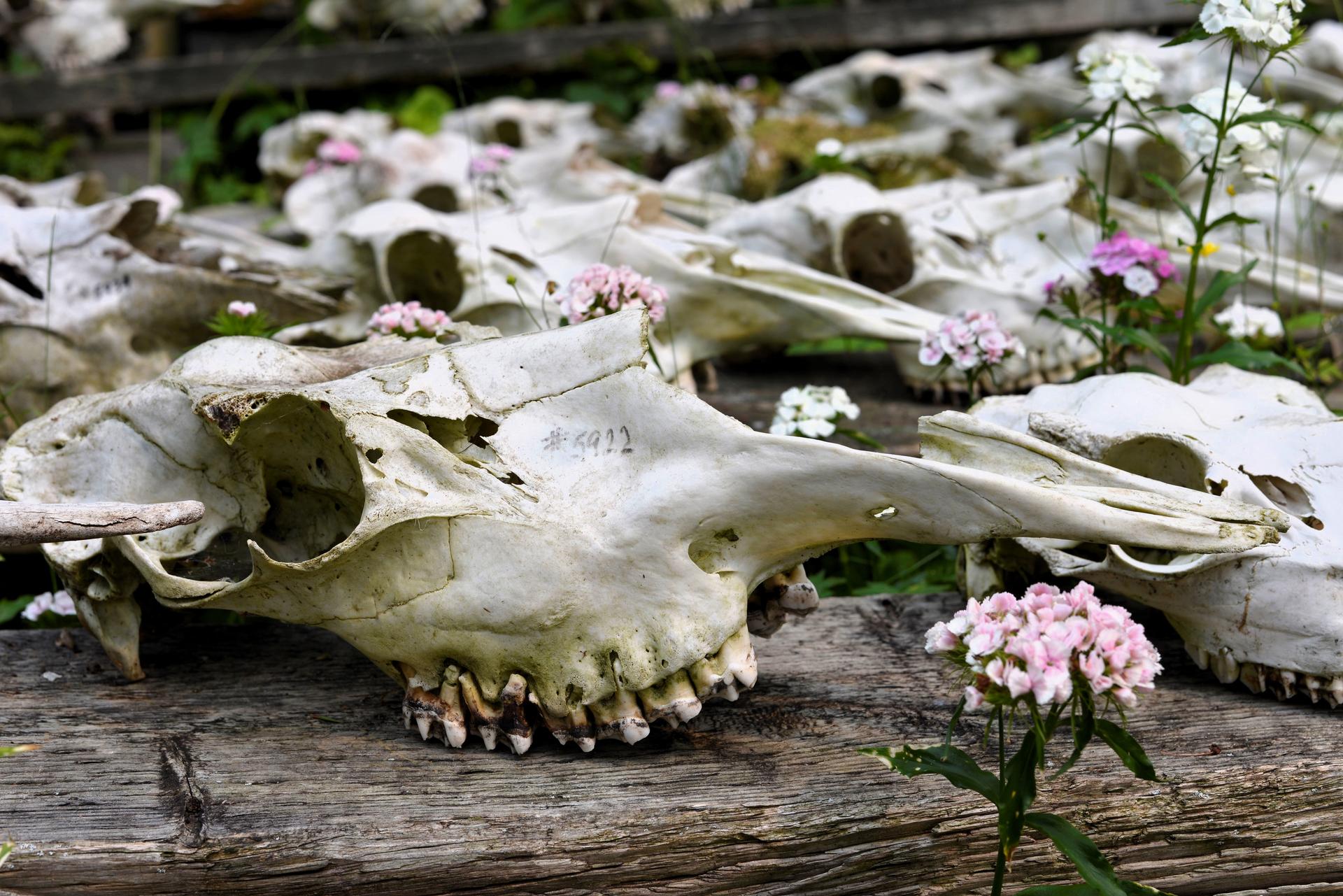
Bangsund Cabin remains an invaluable summer research base for the Wolf-Moose Project to this day. Each summer, field crews meet at the cabin so that the data they collect can be collated and samples can be carefully inventoried, processed, and labeled before being taken to labs on the mainland for further processing and analysis. Outside of the cabin is a display of the most unique and interesting antlered bull skulls that field crews have discovered over the years. |
|
|
In addition to serving as an invaluable research base, Bangsund Cabin is also a place where researchers share their scientific knowledge and discoveries with park visitors. Over the past decade, more than 10,000 visitors have visited Bangsund Cabin to view the unique collection of antlered bull skulls on display and learn about the natural history of Isle Royale, as well as the latest research discoveries. By Ken Lemieux |
|
Bangsund Cabin "Mooseum" Photo Credit: Amanda Griggs |
|
|
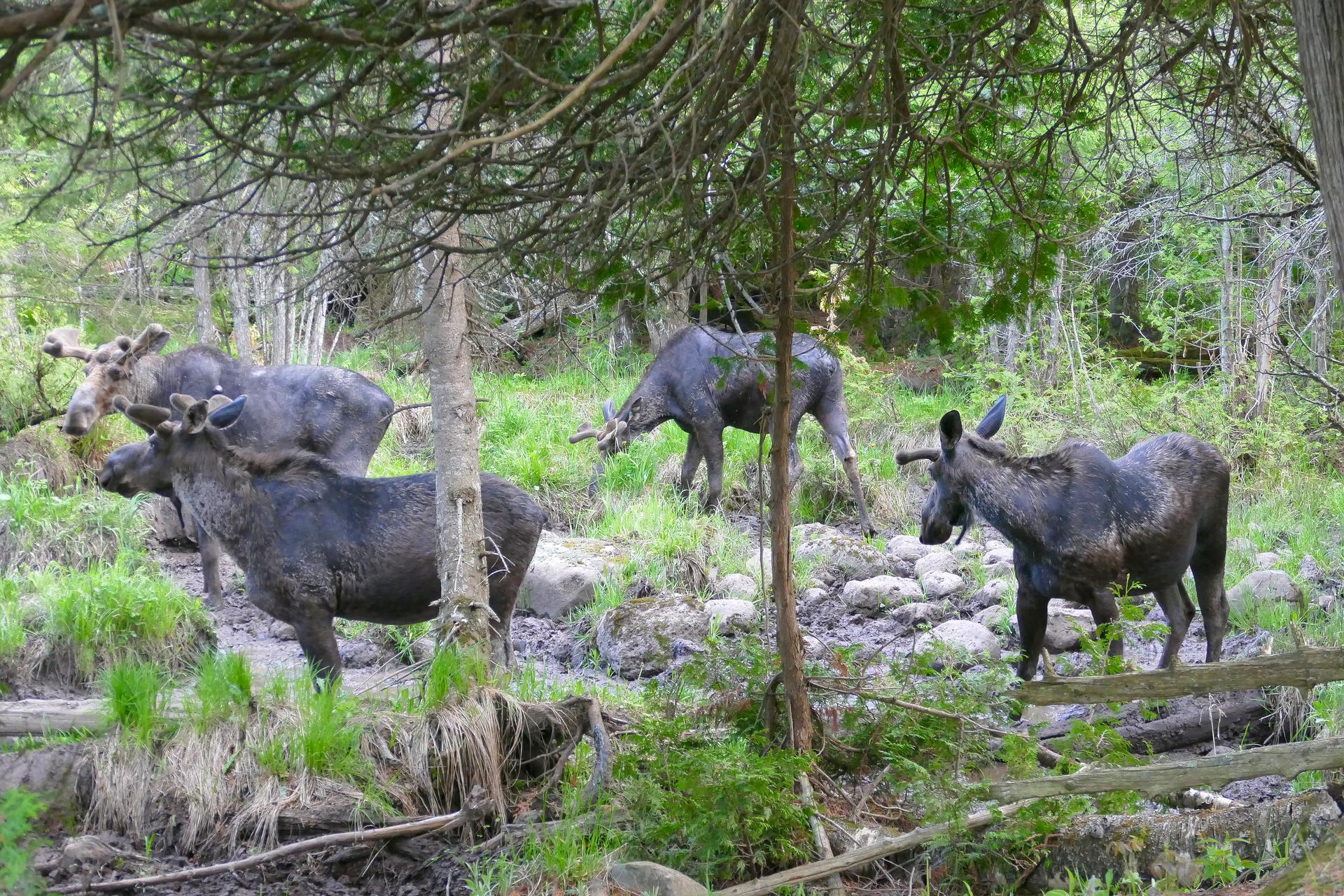
A Busy Day at the Salt Lick
Photo Credit: Wolf-Moose Project |
|
|
|
Rolf Peterson began leading the Isle Royale Wolf-Moose Project in the early 1970s and is recognized as a world authority on wolves and moose. Since retiring as a professor in 2006, he has devoted even more time to the project, now spending more of the year on Isle Royale than on the mainland. Rolf remains captivated by the island’s ever-unfolding scientific insights and surprises. |
|
|
John Vucetich, board member of the Wolf-Moose Foundation and long-time co-leader of the Isle Royale wolf-moose research at Michigan Technological University, received important honors not once but twice (so far) in 2025. This summer it was announced by The Wildlife Society (TWS), the primary body of professional wildlife biologists in North America, that John received the Authored Book Award for 2025 for his book entitled The Biology and Conservation of Animal Populations published in 2024 by Johns Hopkins University Press. This is a book that will see application in university courses in population biology as well as serve as an important synthesis of recent science in population ecology and management by professionals and others interested in wildlife conservation.
|
| John Vucetich Photo Credit: Wolf-Moose Project |
|
|
|
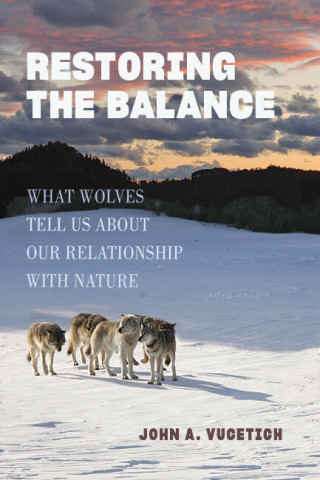
In spring 2025 it was announced by Michigan Technological University (MTU) that John will be awarded the MTU Research Award for 2025, awarded annually to one member of the MTU faculty with an exceptional, career-long record of research in their field. To those familiar with the wolf-moose study on Isle Royale, it will come as no surprise to hear that John is among the planet’s most important scholars of wolf conservation. That importance rises from perhaps the most distinctive feature of Vucetich’s work, which is its breadth. He has published more than a dozen papers each in predation ecology, population genetics, environmental ethics, conservation social psychology, and conservation policy. That breadth indicates Vucetich’s ability to bring diverse disciplinary perspectives to real-world problems, also evident in his recent book highlighted by The Wildlife Society, as well as his 2021 book (also published by Johns Hopkins University Press), Restoring the Balance: What Wolves Tell Us About Our Relationship With Nature. This breadth is also building Vucetich’s global reputation more broadly as a scholar of carnivore conservation, including significant contributions to the conservation of cougars, grizzly bears, and African lions. His research experiences are also brought directly to our students through his courses in Population Ecology, Human Dimensions of Wildlife, and Environmental Ethics (offered as part of a forthcoming Essential Education minor).
|
|
|
Some of his work is of significant value well beyond carnivore conservation. Understanding this broader impact is aided by observing some general features of carnivore conservation:
Among the Earth’s diverse fauna, carnivores are particularly diminished with respect to species endangerment and range loss. This diminishment is largely due to carnivores being a real and perceived threat to human safety, livestock, and large ungulates (deer, elk, moose) that humans hunt. Those threats cause carnivores to be a poor fit to the most important umbrella approach for conserving natural resources, i.e., the theory of conserving common pool resources. An assumption of this theory is that the “resource” to be conserved is fundamentally valued, almost always for its utility. Most carnivores seem—fundamentally—not valued in this way. Survey research (conducted by Vucetich) indicates that most conservation experts think that much or most of the planet’s biodiversity violates this assumption of the theory. If so, alternative reasons and means of conservation are required.
|
|
|
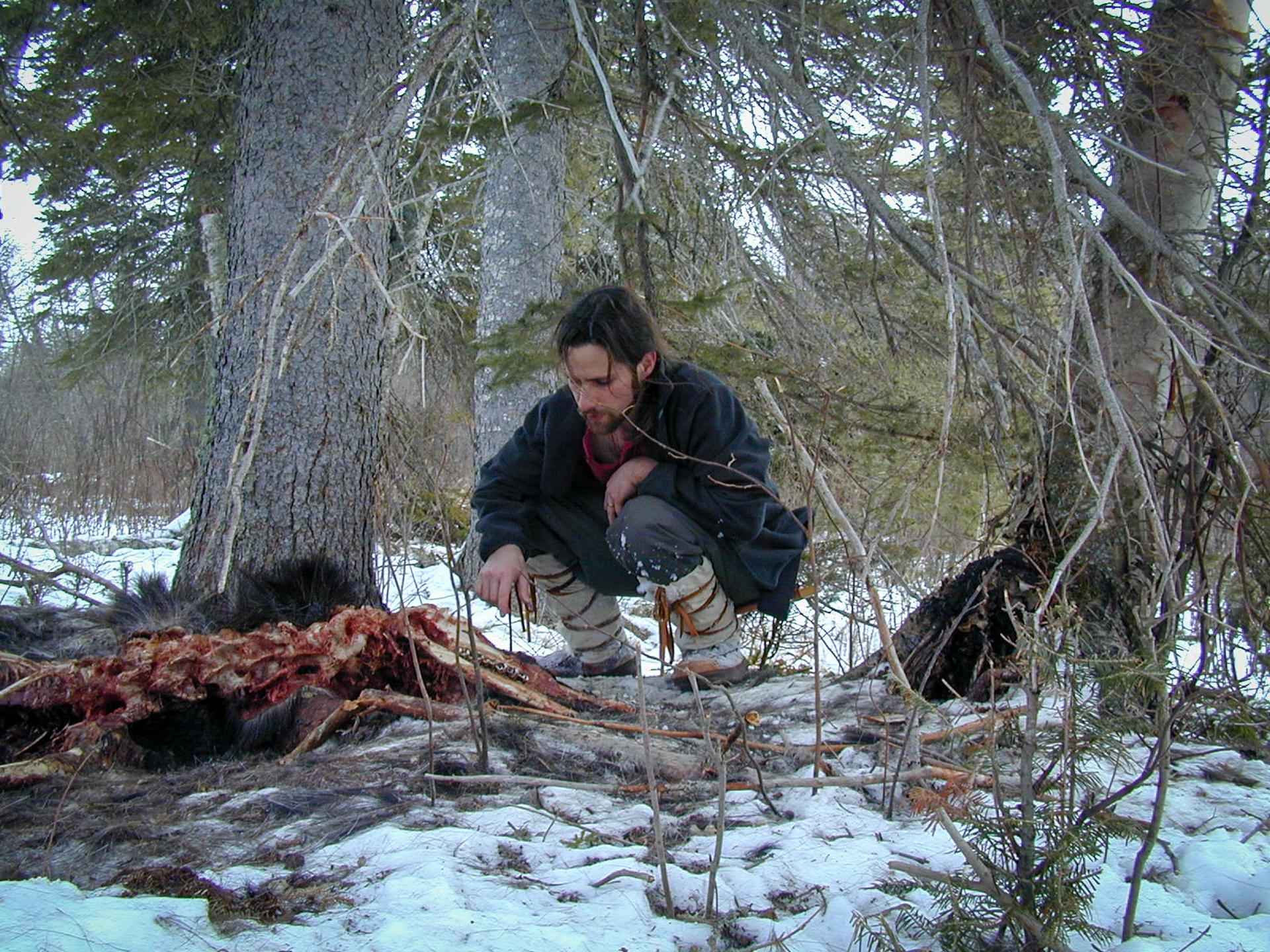
John Vucetich at a Moose Carcass Photo Credit: Wolf-Moose Project |
|
|
Examples of John’s diverse technical contributions include the following:
Carnivore ecology: Vucetich JA, Smith DW, Stahler DR. 2005. Influence of harvest, climate and wolf predation on Yellowstone elk, 1961‐2004. Oikos, 111: 259-270.
This paper—cited 271 times in other scientific and technical publications—is representative of Vucetich’s contributions to carnivore ecology. More specifically, he has made significant contributions to the understanding of trophic cascades, which are the positive effects that carnivores have on an ecosystem when they reduce the abundance of large herbivores. Because trophic cascades are routinely used as a science-focused reason to conserve carnivores, it is important to develop an accurate understanding of trophic cascades. Vucetich’s contributions to this understanding include showing: (i) how the intensity of trophic cascades can vary over time within a site, often unpredictably; and (ii) how one of the most celebrated cases of a trophic cascade (involving the wolves of Yellowstone) is a gross oversimplification and conflated with the influence of drought and humans harvesting elk.
Conservation genetics: Vucetich JA & TA Waite. 2003. Spatial patterns of demography and genetic processes across the species' range: null hypotheses for landscape conservation genetics. Conservation Genetics, 4, 639-645. This foundational paper, published early in John’s career, has been cited by others over 500 times. In particular, Vucetich has contributed significant theoretical and empirical knowledge on genetic rescue, which is the idea that an occasional immigrant can restore the genetic health of small and isolated populations. |
|
|
U.S. Endangered Species Act (ESA): Vucetich JA, JT Bruskotter, N Arrivo, M Phillips. 2023. A Proposed Policy for Interpreting 'Significant Portion of Its Range' for the US Endangered Species Act, 1973. Georgetown Environmental Law Review 36, 85.
Vucetich leads scholarship on interpreting the ESA’s legal definition of “endangered species,” which is arguably the most important element of the ESA as its interpretation is contested and determines which species receive ESA protections. This issue is of significance well beyond conservation law, because—as Vucetich has shown—the inability to develop a widely appreciated interpretation is an indication that we, as a society, cannot provide an adequate answer to a particularly basic question: “What is an endangered species?”
|
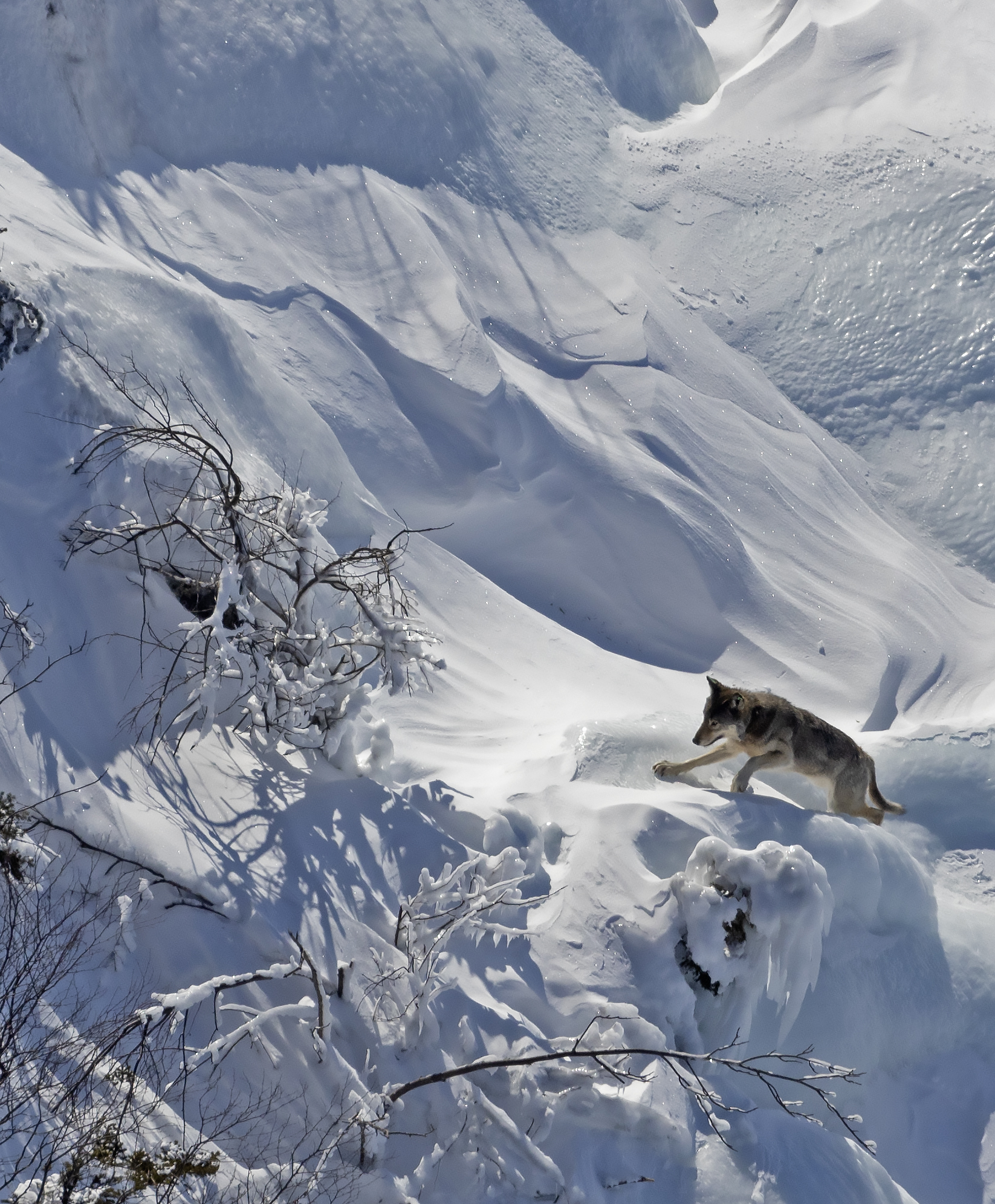
| Wolf in Snow
Photo Credit: Wolf-Moose Project |
|
|
Environmental ethics: Vucetich JA, JT Bruskotter, MP Nelson. 2015. Evaluating whether nature's intrinsic value is an axiom of or anathema to conservation. Conservation Biology, 29(2), 321-332.
Cited 272 times and considered required reading on non-anthropocentrism, which is the idea that at least some elements of non-human nature possess intrinsic value, i.e., deserve to be treated with moral consideration, quite aside from whether humans derive any benefit from such treatment. His work on this topic includes its rational foundations, implications for decision-making in conservation and sustainability, and its relationship to environmental economics. Vucetich has also written significant pieces on whether scientists should be advocates, conflicts between conservation and animal welfare, conservation triage, and how scientific understandings of nature inform environmental ethicists’ understanding of virtue ethics.
Conservation social sciences: Vucetich JA, Bruskotter JT, van Eeden LM, Macdonald EA. 2021. How scholars prioritize the competing values of conservation and sustainability. Biological Conservation, 257, 109126.
Other contributions to this field include showing how public support for the Endangered Species Act (ESA) has not waned over time or in response to controversial applications of the ESA, what social factors drive support for the ESA, the social factors that drive intolerance for carnivores, decision-making and governance as they pertain to carnivore conservation, and how the most common survey instruments that aim to quantify general beliefs and values about the environment lack content validity, i.e., do not measure what they purport to measure. Vucetich and his colleagues identified that gap in measurement by careful assessment of how psychometricians have (mis)interpreted ideas developed by environmental ethics.
Making ecological predictions: In a recent paper emerging from long-term research at Isle Royale [Vucetich JA, SR Hoy, RO Peterson. More reasons for humility in our relationships with ecological communities (2024). BioScience, volume 75, issue 2.
John and co-leaders of long-term wolf-moose research explore the significance of different approaches to understanding long-term dynamics of natural communities, specifically the “nature-as-machine” view that underlies many human activities to control and predict nature vs. “nature-as-history,” the view that “the world is best understood as being essentially shaped by historical contingencies—a series of randomly timed, disparate events of deep consequence.” At Isle Royale, two such events include the arrival of a mutant virus, canine parvovirus, in 1980, and the arrival of a new immigrant wolf in 1997. In the concluding paragraphs of this paper, the authors state:
|
|
|
“…the concern is that the nature-as-machine worldview has been given too much weight—sometimes in ways that are easy to overlook because that view is so normalized. The nature-as-machine worldview needs a substantial counterweight. That counterweight can rise from embracing a nature-as-history worldview…which offers more reasons for ecologists and users of ecological knowledge to analyze decisions about the environment in terms of humility and to favor humbler decisions.”
| |
|
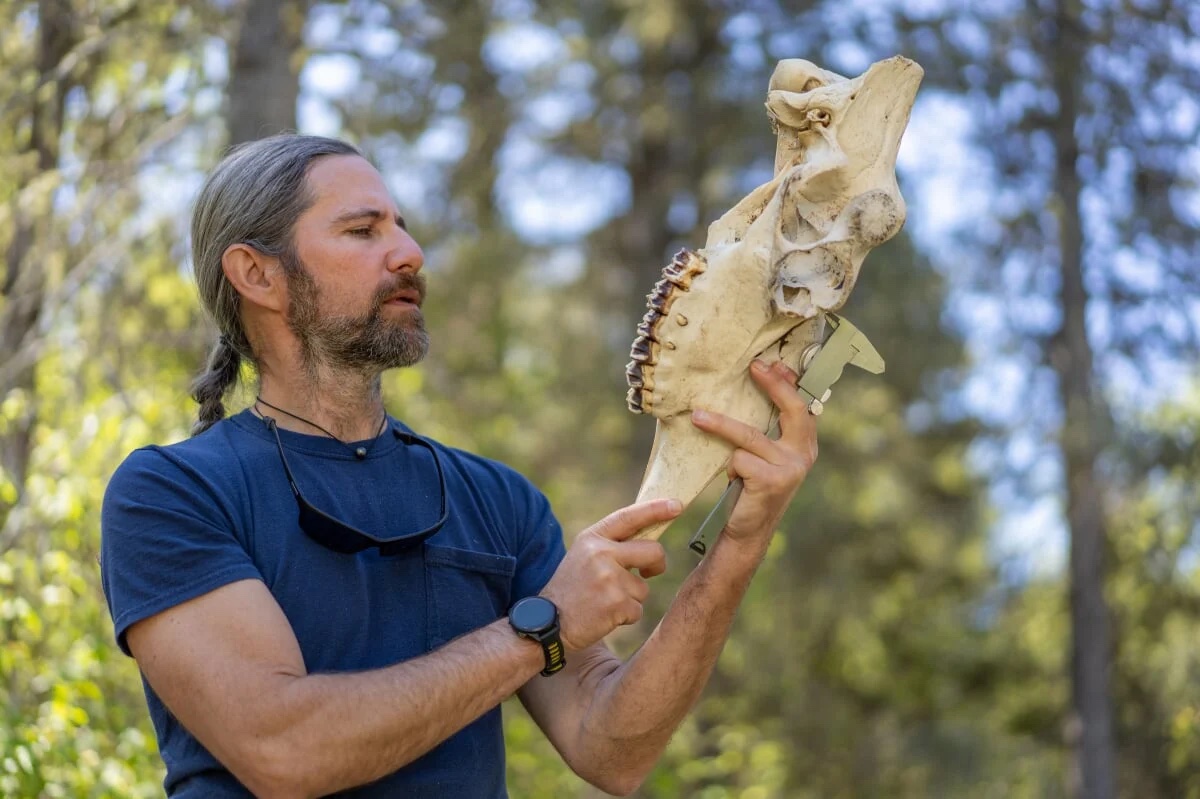
John Vucetich Measures Moose Skull
Photo Credit: Ron Porritt |
|
|
|
Moose 5914: The Tagged One |
|
|
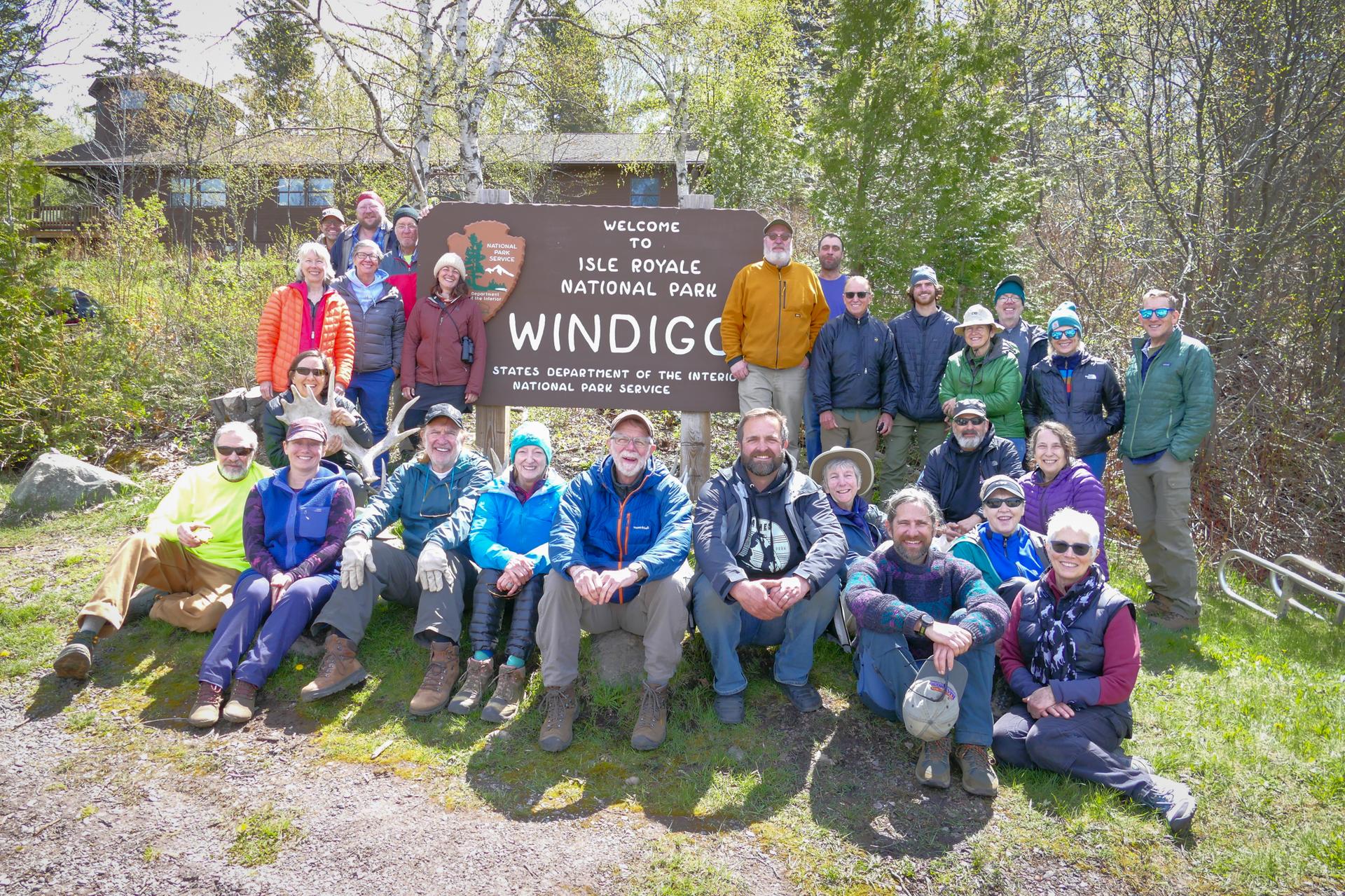
“How long do you think it has been dead?” Moosewatch participants often wonder about the backstory of a moose carcass they find—things like how long ago it died, how old it was (which can be determined in the lab by analyzing the teeth), and how far it roamed on Isle Royale. In the 2025 Team One trip, my group (the Amandibles) had the unique honor of locating a moose and learning some of its history.
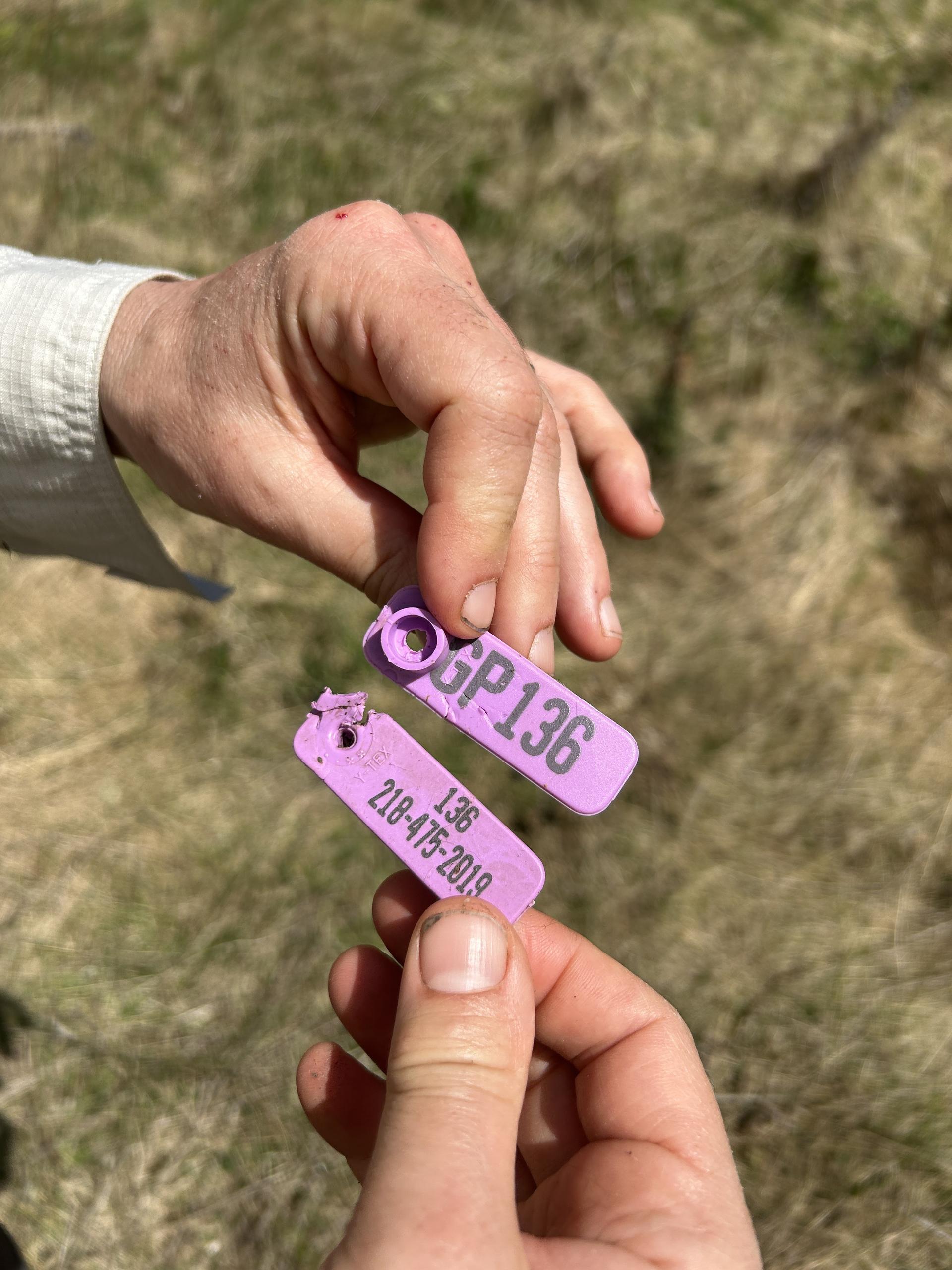
On May 14, we searched for bones in the Cumberland Point area on the west end of the island. Team leader Amanda Griggs spotted a leg bone, and we stopped to investigate. It was a solitary old bone, and we searched the area for more parts. We kept getting a whiff of something unpleasant, which piqued our interest (Moosewatch participants are like that). Laura Ruetsche located two purple objects, which we suspected were ear tags. Our excitement increased. There had to be a kill site nearby.
|
| Moose Ear Tags
Photo Credit: Ken Lemieux |
|
|
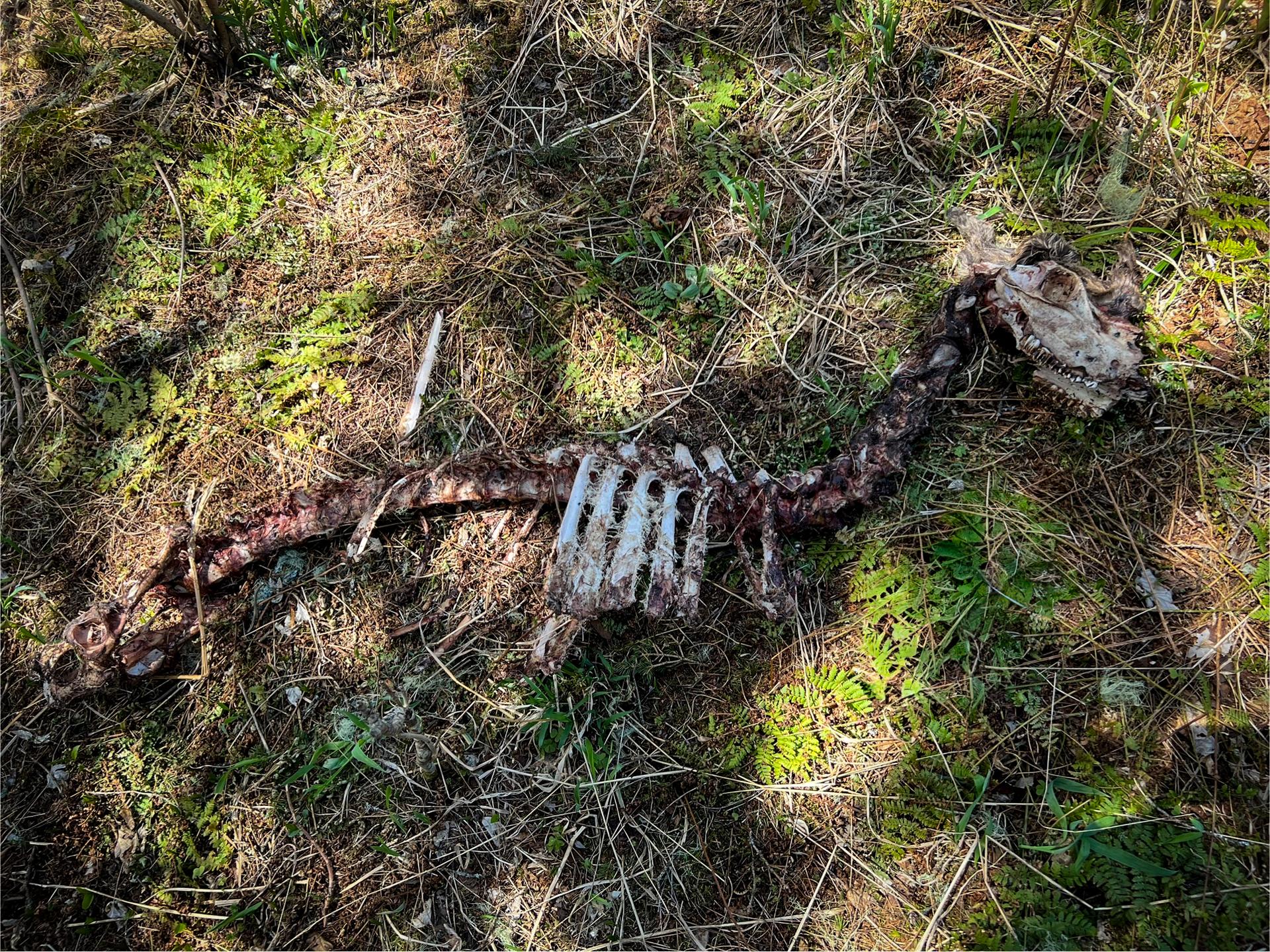
Francis DeRoos has a great sense of smell and tracked down the recently deceased carcass about 75 meters away. And wow, did it smell! While processing the site, Laura also found green ear tags near the hair mat, and the information on them matched what was on the purple ones. We knew we had found something interesting. When Matt Sanford was working on the body, he noticed the leg blood was not congealed. We speculated the moose had been dead for a few days, but that was just a guess, and we wondered about the details. And since this was a tagged moose, was there a collar somewhere nearby? We searched for a collar and the two missing legs but found neither. There were copious amounts of wolf scat in the area, and it was clear wolves had killed and feasted on this moose.
|
|
|
Moose Skeleton, Cumberland Pass, 2025 Photo Credit: Amanda Griggs |
|
|
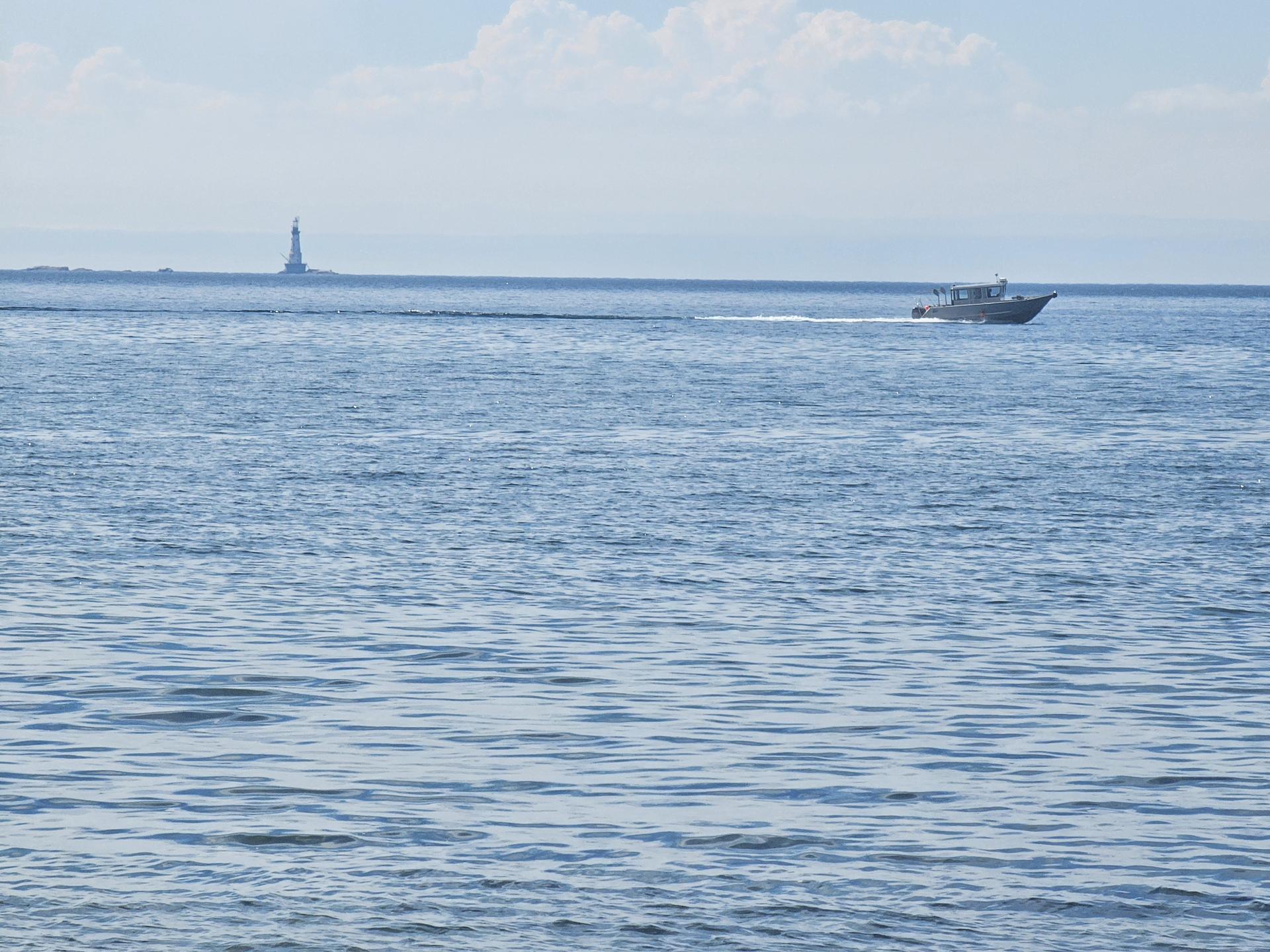
Seth Moore Cruising Past Cumberland Point. Photo Credit: Matt Sanford |
|
When we returned to Windigo, I discussed the tags with Rolf Peterson, the long-time leader of the Moosewatch program. Rolf directed me to Seth Moore, the Grand Portage Band of Lake Superior Chippewa Director of Natural Resources (in an odd coincidence, Seth was the mystery man in a boat that saw us on the shore at Cumberland Point shortly after we had processed the carcass; we had wondered who he was, and he, in turn, wondered who could be in this remote area of Isle Royale). Seth provided details about the bull yearling that eventually became Moose #5914 in the necropsy series.
|
|
|
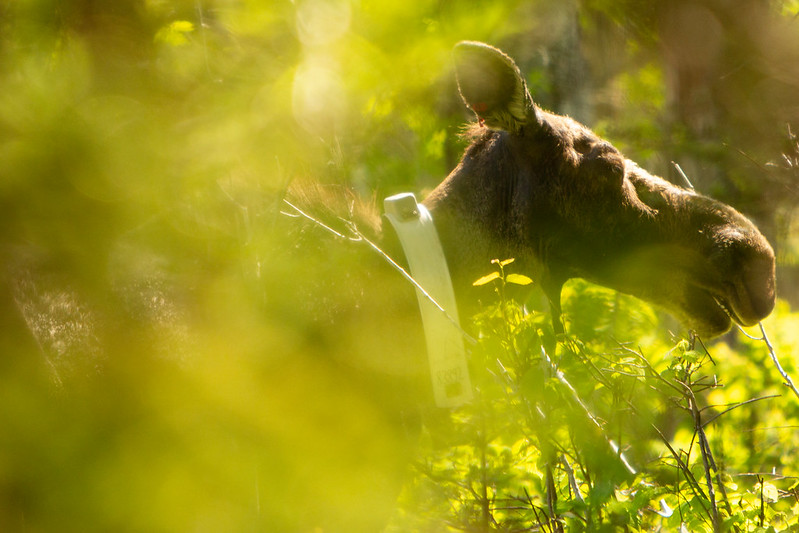
In recent years, the Grand Portage Band of Lake Superior Chippewa has collared 15–25 moose on the island and, including their tribal lands, 50–55 moose a year. Since 2010, they have captured and collared about 500 moose. The Band works with the National Park Service and other agencies to restore wildlife populations, including moose, in their tribal lands. |
| Collared Moose (Not the moose we found) Photo Credit: Garrett Craig |
|
|
The helicopter they use for collaring the moose takes off from a field in Windigo and doesn't stray far due to fuel restrictions. On March 6, 2025 (very much still winter), Moose #5914 and its mother were darted from a helicopter near the Cumberland Point area on the west end of Isle Royale. Various samples were drawn from the moose, and its overall health was checked. At that time, it appeared to be a healthy young moose. It was then fitted with a GPS collar, its ears tagged, and it was released. It was determined that the yearling’s mother was pregnant.
The second year of life is tough for a moose, as it is often their first experience of being on their own. They stick with their mother during their first year, and the cow protects them. But if the cow gives birth again the following year, she typically leaves the yearling to fend for itself while she takes care of her newborn. On Isle Royale, April and May are usually when calves are born.
A mortality signal is sent when the collar senses no movement in six hours; Moose #5914’s collar sent such a signal on April 22. A biologist from the Grand Portage Band of Lake Superior Chippewa was promptly dispatched and located the collar about 200 meters from Cumberland Point. The collar belting contained wolf hair, a good indicator of a struggle. A search for the body in the immediate area was unsuccessful. The researchers did not know what happened to this moose, as bull moose are fitted with larger collars to accommodate their growth and sometimes slip out of them. Was the moose on the loose, or had it met its demise?
|
|
|
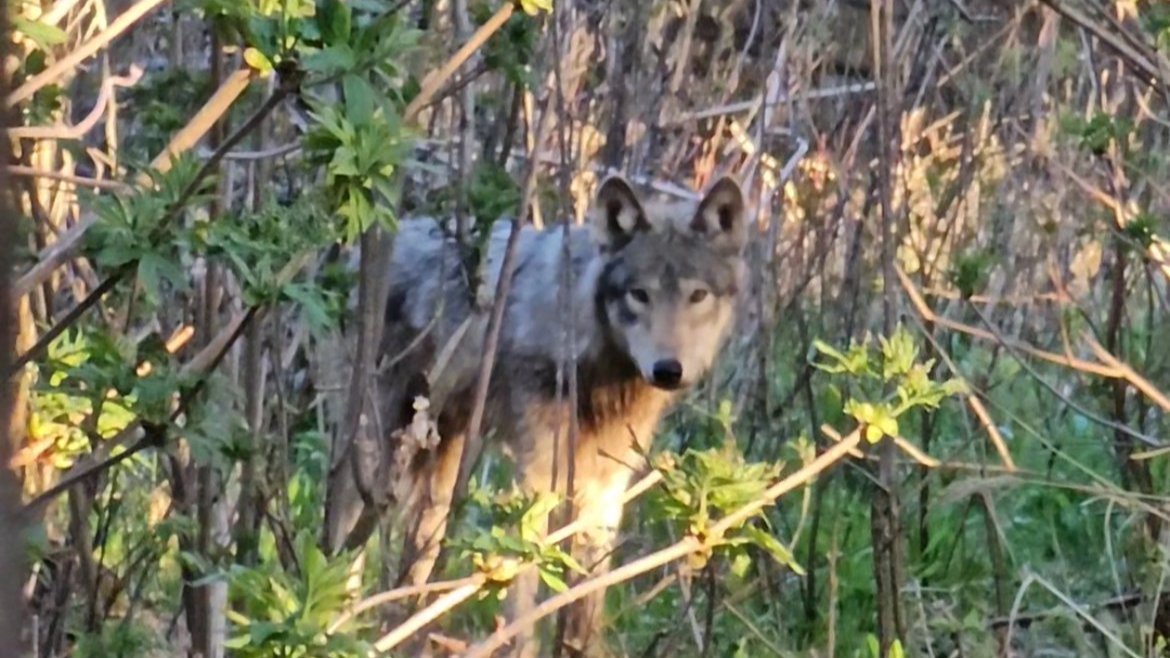
Wolf at Feldtmann Lake Campground. Photo Credit: Matt Sanford |
|
After chatting with Seth, we learned that Moose #5914 was found 235 meters from its collar, and a clearer vision as to what likely happened came into focus. The collar likely came off the moose during its struggle with wolves, and the moose ran a little ways before finally succumbing. I’d like to think the wolf that visited us at the Feldtmann Lake campground had something to do with this moose’s death. |
|
|
In this scenario, Moose #5914 had been deceased for 22 days when we found it. But why did it smell so ripe? It had been cold on Isle Royale during the first few weeks after it died, which had the effect of keeping its remains refrigerated (I remember looking at the snow on the Isle Royale National Park webcams and hoping it would melt). We arrived at Windigo on May 10 and spotted several snow piles. The days after our arrival, the island experienced an unusual heat wave, with temperatures getting into the 80s. That would have caused the moose to smell quite ripe the day we found it.
We also discovered that the green and purple ear tags we found have no specific scientific meaning. They help identify individual animals spotted or observed on trail camera images and can be purchased in any color.
Not realizing that one of the pedicles had been chewed off, we initially thought it was a cow, not a bull. Rolf pointed out our error. But hey, it was a very stinky moose, and we didn’t spend much time looking at it before we bagged the skull and bones we needed.
Even though Moosewatch teams go into the field each spring and summer specifically to support the Wolf-Moose Project, sometimes we help out other scientific efforts. This episode demonstrates how science can and should work together. That science isn't just one set of people investigating a phenomenon; other teams of scientists are also investigating, perhaps with a slightly different focus, but with overlap. With cooperation and communication, everyone benefits. By Ken Lemieux |
|
|
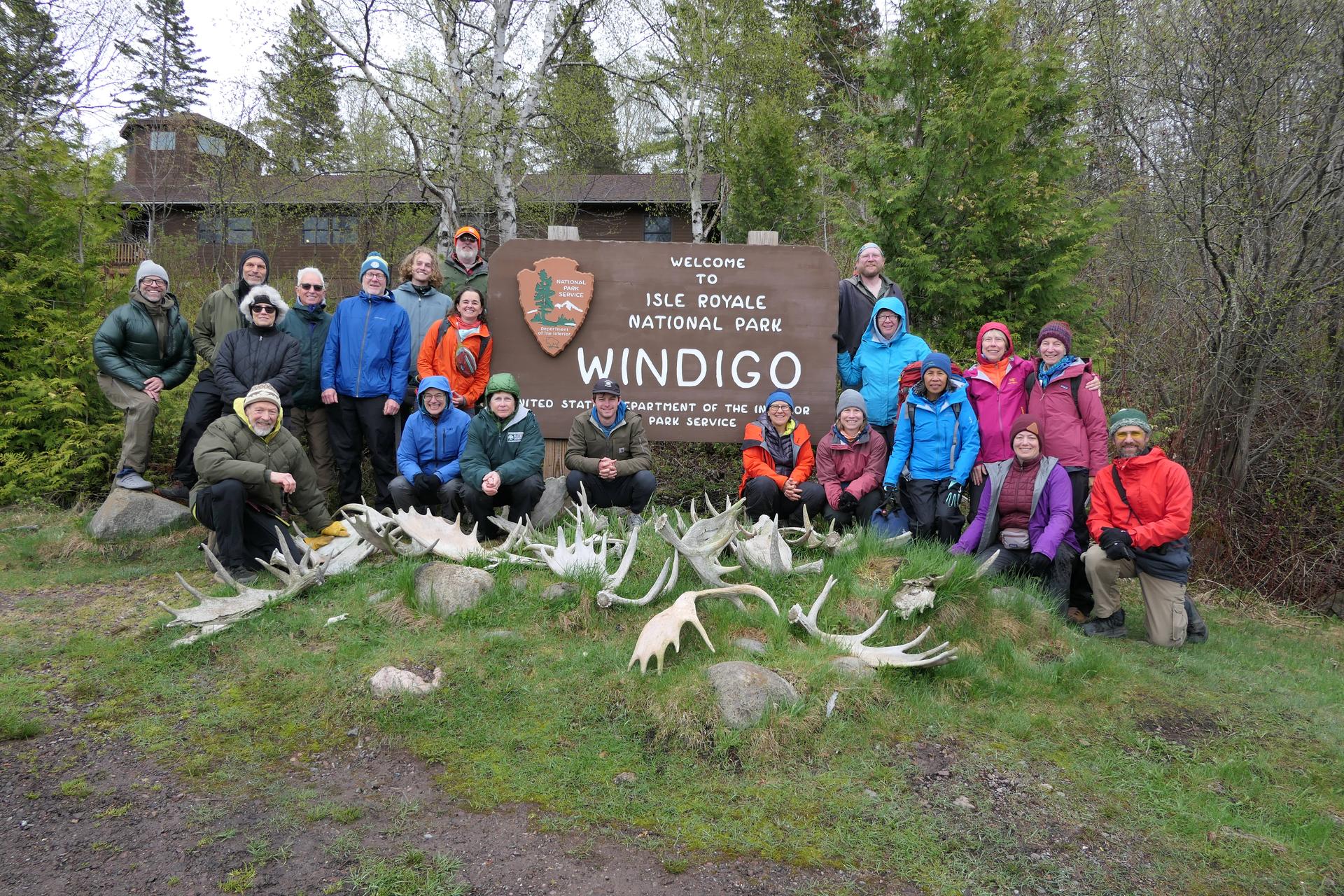
Moosewatch, Team 1, 2025 Photo Credit: Sarah Hoy |
|
|
Welcome to Solutions—the place where setbacks turn into stories. Maybe dinner took a tumble, maybe you made it to camp only to realize your tent poles stayed home, or maybe you managed to lose the functionality of not just one shoe but two. Whatever the challenge, backpackers always seem to find a way forward with a mix of resourcefulness, ingenuity, and a dash of wilderness mischief. This new segment celebrates those clever, quirky, and downright hilarious moments where we make do, patch it up, and keep the adventure rolling.
|
|
|
|
Lindsay Welbers is the author of Chicago Transit Hikes: A guide to getting out in nature without a car. Lindsay also runs the blog Third Coast Hikes, where she writes about her outdoor adventures in the Upper Midwest. Her 2024 trip to Isle Royale was as part of a Moosewatch Team, which she wrote about in the May/June 2025 issue of Discover Magazine. She lives with her husband, a Blue Heeler named Dixie, and has been to the island five times.
|
|
|
May 30, 2024 – Conversation between Lindsay Welbers and David "Davy Croc'in-it" on the Voyageur II to Grand Portage, Minnesota, after a Moosewatch Expedition. This conversation has been edited for brevity and clarity. |
|
|
DAVY: My name is Davy Croc'in-it. Formerly David.
LINDSAY: What shoes did you arrive in?
DAVY: I came to Isle Royale with 15-year-old Merrells. Best boot you can buy.
LINDSAY: Tell me what happened after that.
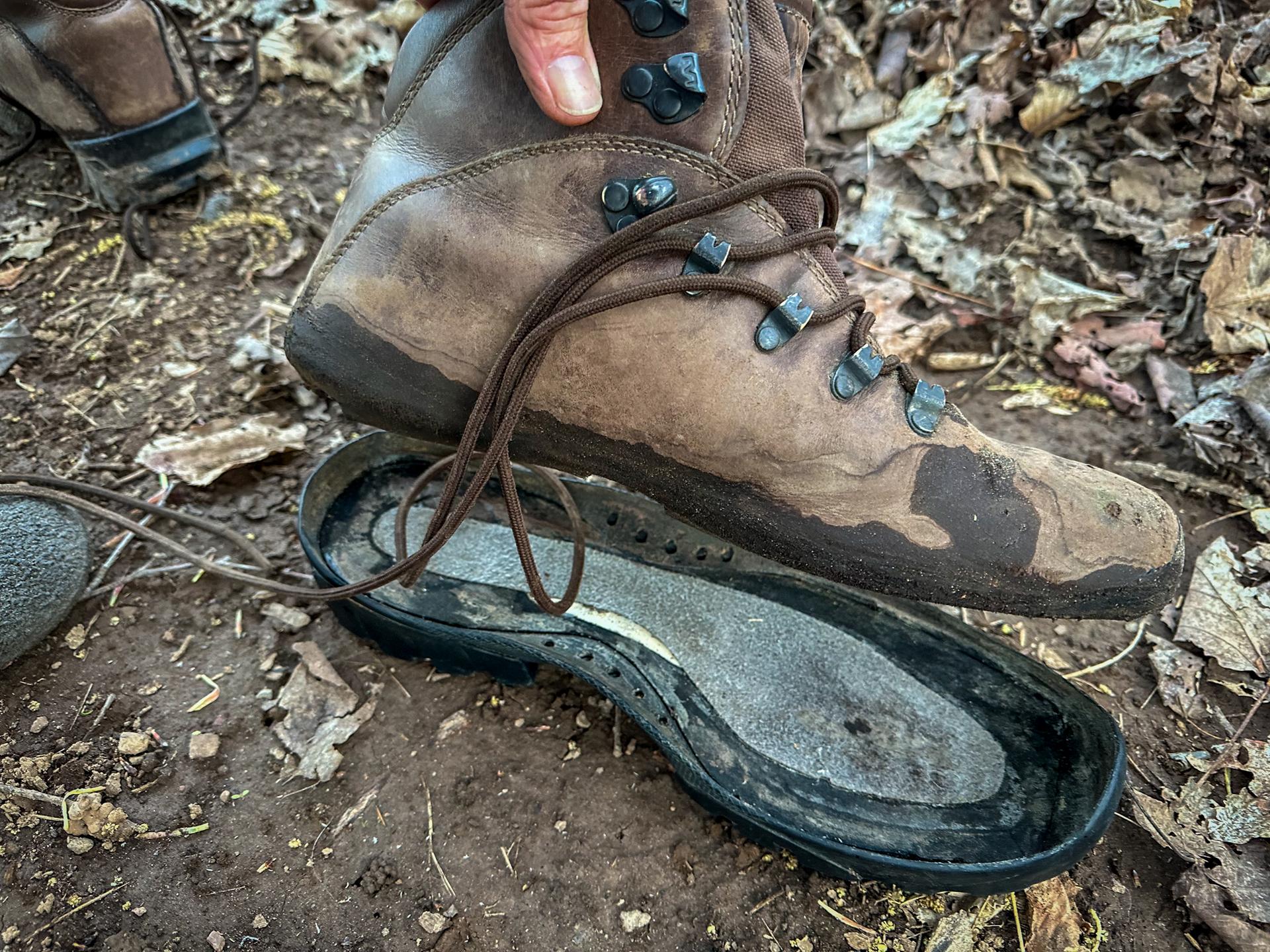
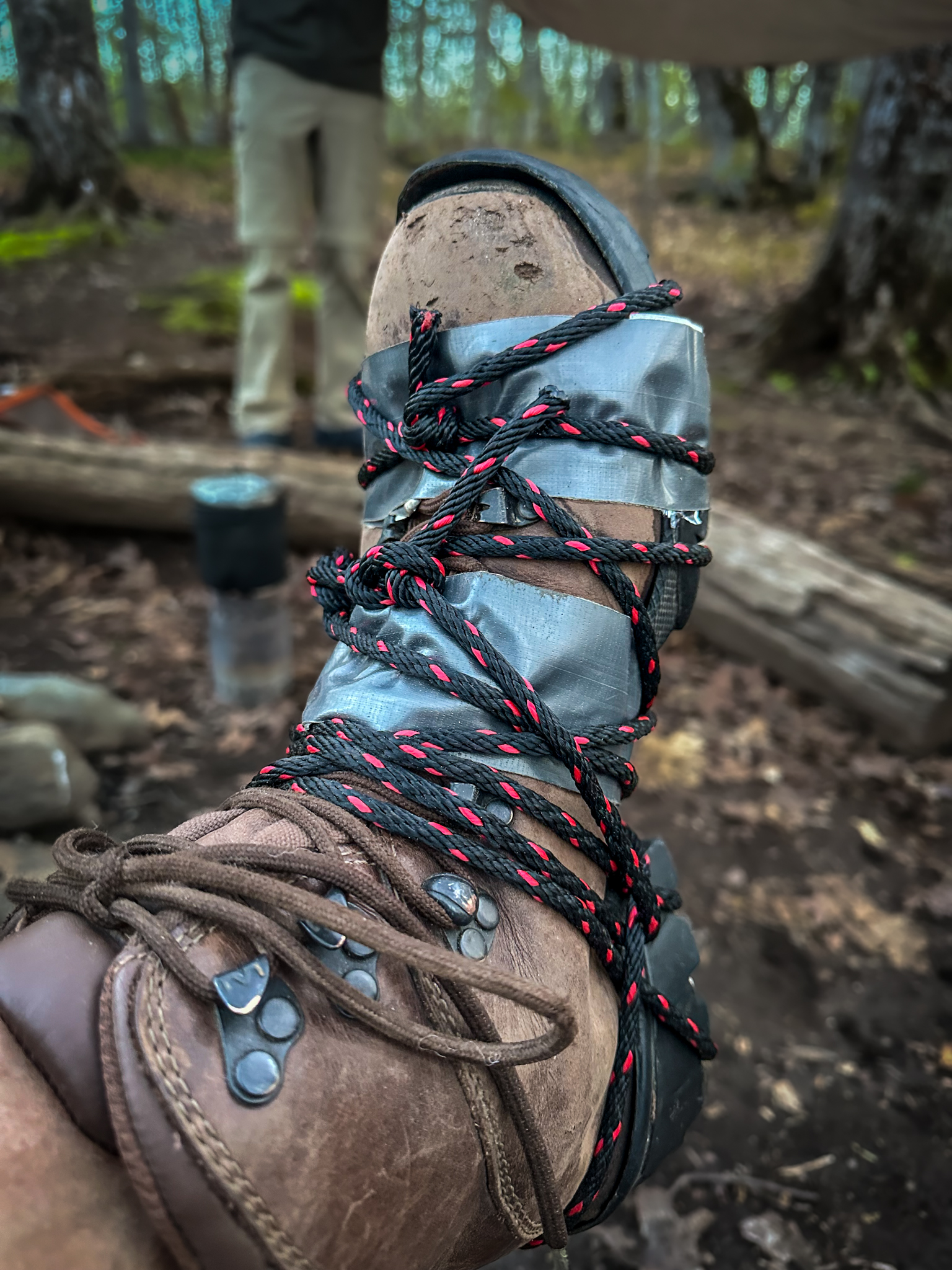
DAVY: Well, we had an eight-day hike, looking for moose bones. And on the first day, once my shoe got wet, the bottom separated completely from the shoe. So the rubber bottom was off my left boot. We took some duct tape and taped them up to see if that would work. And it was just rugged hiking. So over the rocks and through the water, they eventually came out again. And then the next thing we did, we'd come into camp. We tried to tie them up, tied them on with a lot of rope.
|
|
|
David's Delaminated Shoe Photo Credit: David Gibbs |
|
|
So my left shoe was the one that was a problem. We tied it up real good that day. We went hiking without packs. And probably halfway out, the bottom came off again. So I went back and decided this isn't gonna work. So I did tie it up one more time for another half-day hike. And it came off again. And my right one separated.
LINDSAY: And this is like 24 hours after you left civilization?
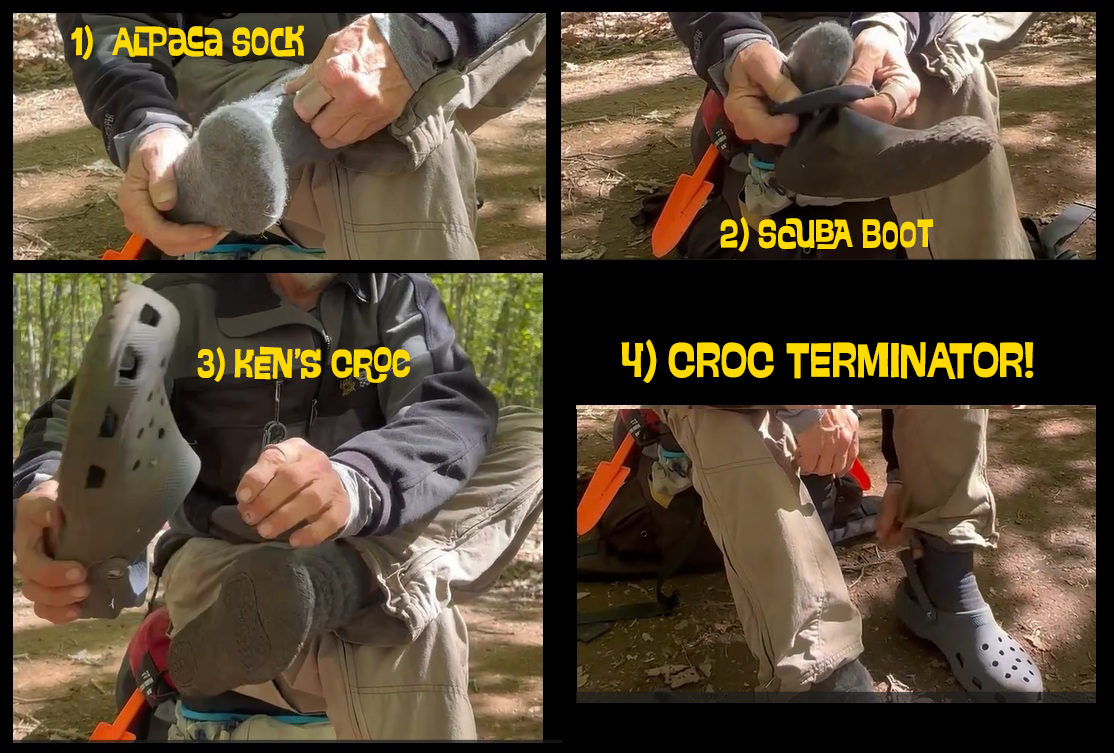
DAVY: Yeah… For a half a day I walked like that. We get back to camp that night, and it's like, got to come up with something better than this. I had a pair of water shoes, like a scuba boot with a big sole on it. And I'm thinking, well, maybe I can hike in that. But there's no way. Because if you get on the edge, it just slides on your foot.
LINDSAY: Which is just dangerous. |
| First Attempted Solution Photo Credit:David Gibbs |
|
|
DAVY: That's right. And the Crocs don't work by themselves because they do the same thing. So one of the people in my team, Ken.
KEN: That's me!
LINDSAY: That's Ken.
DAVY: Bigfoot Ken. Had a size twelve Croc. My shoes are size ten. It had to be a bigger shoe because I put that scuba boot on, and I had a sock underneath it. Alpaca socks, scuba boots. Slide the scuba boot, and it barely fit in there. I mean, I had to step on it.
So it was the sock, the boot, and the Croc on both sides. The next day, we did a hike with a day pack to make sure I could hike and keep up with everybody and all that kind of stuff. So we came back, put on, you know, full backpacks, did a half a day in full backpacks, looked at bones, doing the routine… And for the next six days, I hiked and collected. We were in full packs 80% of the time.
This is not just walking in Crocs through the woods. I had, like, a 55–60-pound pack that, you know, was getting heavier when we came out. I had a little over a 70-pound pack. That last day was 6 miles in the Crocs, and it worked. The shoe worked. So, I mean, it's valid.
We've named the solution… The solution is called the Croc Terminator. It's the alpaca sock in a wet shoe, semi-scuba boot, in a Croc equals the Croc Terminator…
|
|
|
The Croc Terminator: Step by Step
Photo Credits: David Gibbs |
|
|
DAVY: So I'm gonna write up a set of Croc instructions—how to use them, how to clean them, how to maintain them. I also intend to file a patent when I get back to the patent office for the design, and then I'm gonna send that to Croc. Tell them, you know, you need to make this shoe. I'm gonna make some money on this shoe. LINDSAY: I hope you do.
DAVY: But that's the Croc story. By Lindsay Welbers |
|
|
First Annual Wolf-Moose Foundation Photo Contest |
|
|
This fall we were thrilled to host our very first Wolf-Moose Foundation Photo Contest! A total of 169 wonderful images were shared by 78 talented photographers, and we had such a great time sorting through them. The creativity, perspective, and passion in these photos made the judging both a joy and a challenge.
To make it even more fun, we also held a People’s Choice Award on Instagram and Facebook—thank you to everyone who voted and helped us celebrate the beauty of wolves, moose, and wild places.
And the results are in: |
|
|
Category: People's Choice |
|
|
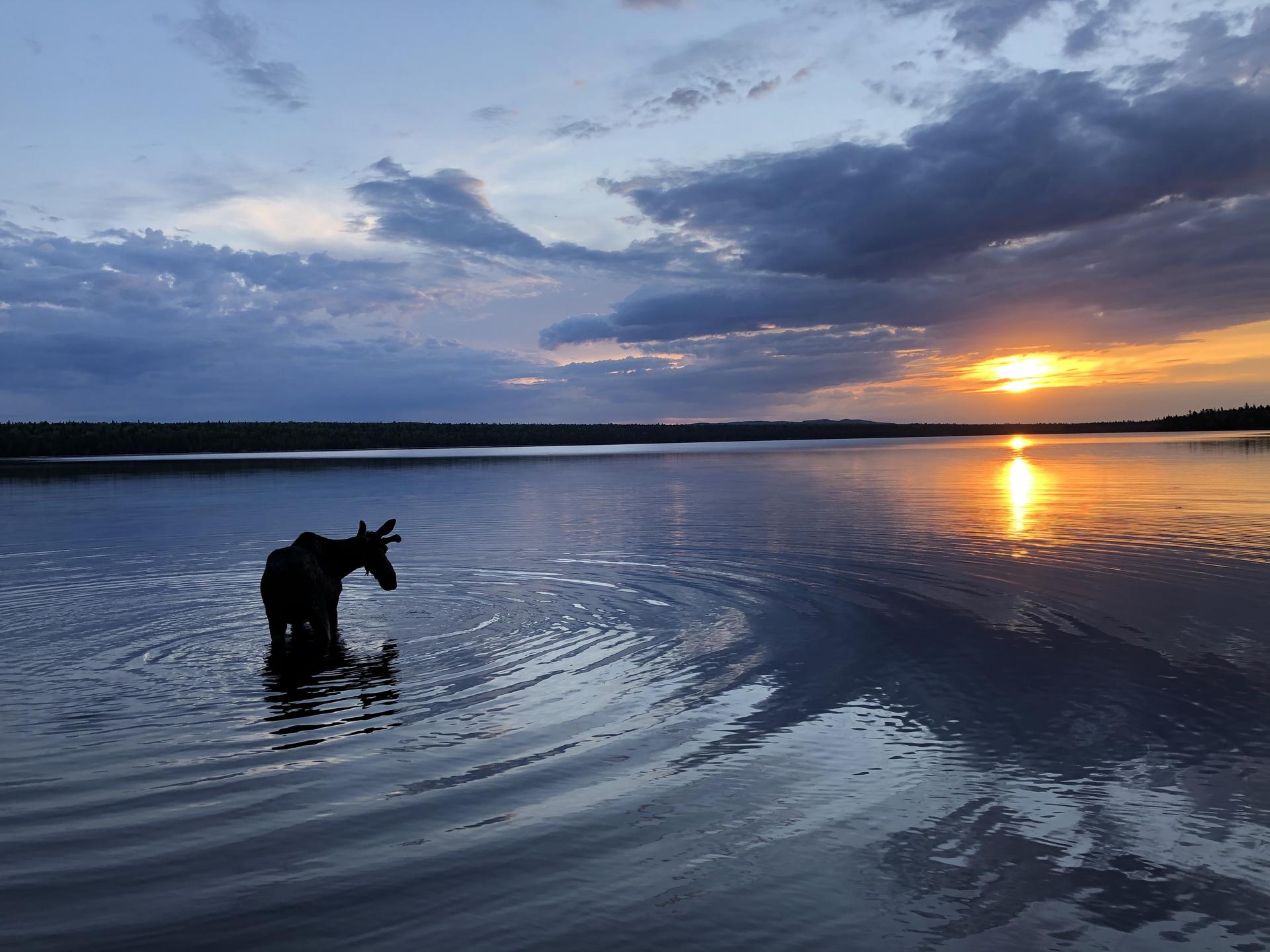
The wolves howled. The moose held their breath. The “likes” trickled in like ripples on—well—Feldtmann Lake.
When the sun rose and the final tally was done, only three votes stood between our People’s Choice finalists. It doesn’t get wilder—or closer—than that. |
|
|
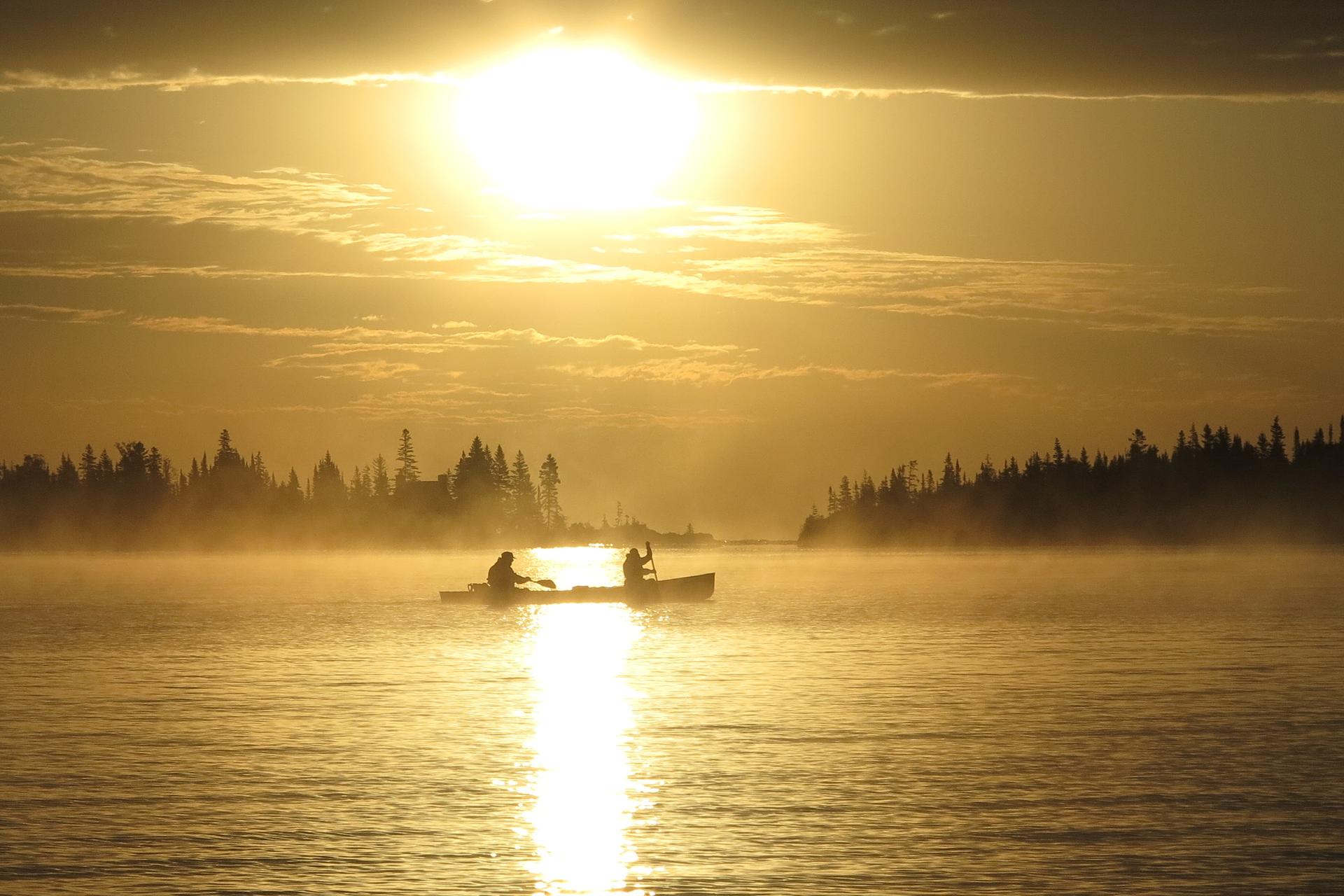
3rd Place: Morning Paddle off Three Mile Campground, by Charles Boumiea |
|
|
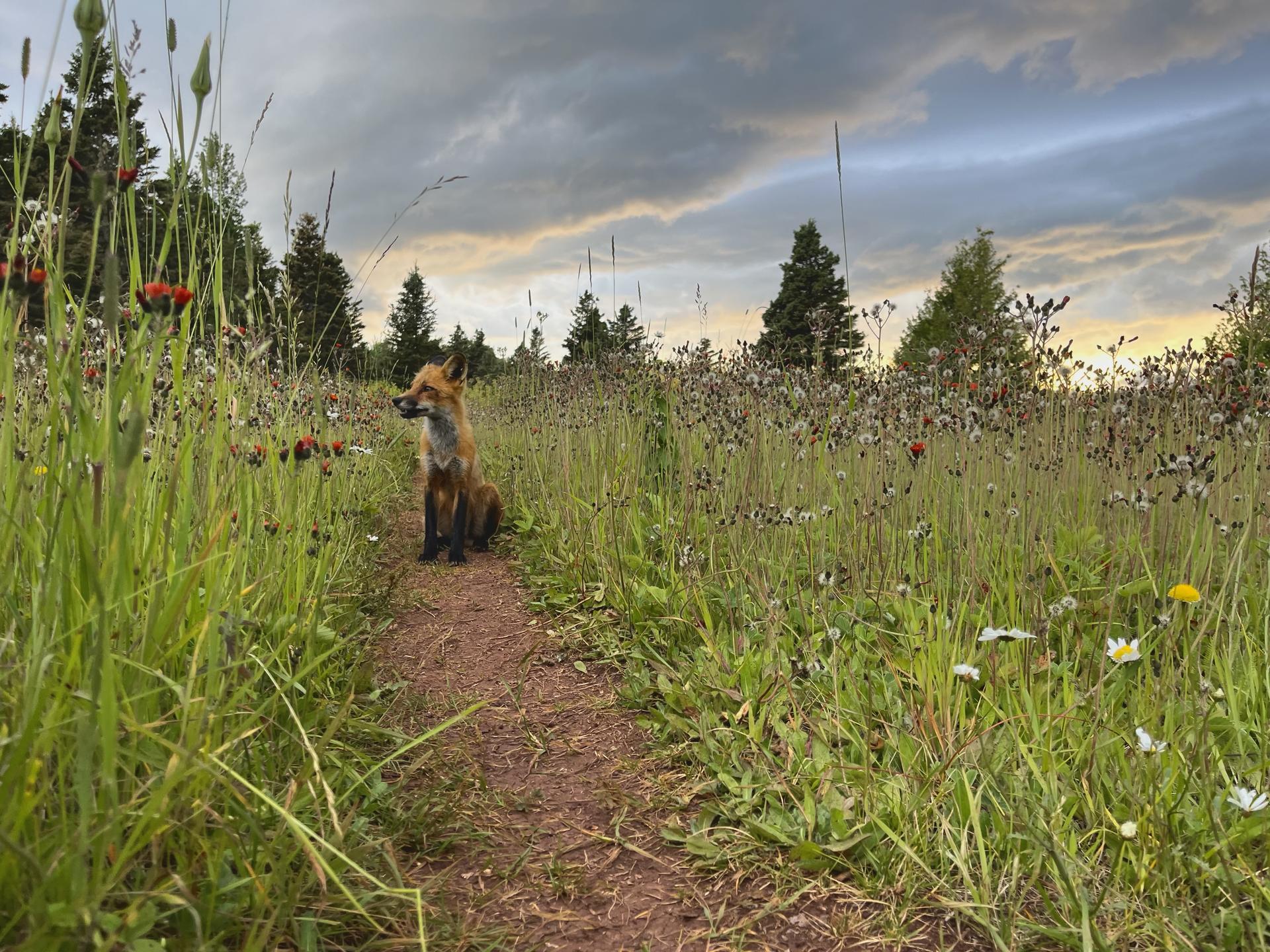
2nd Place: Get My Good Side, by Elizabeth Ernst |
|
|
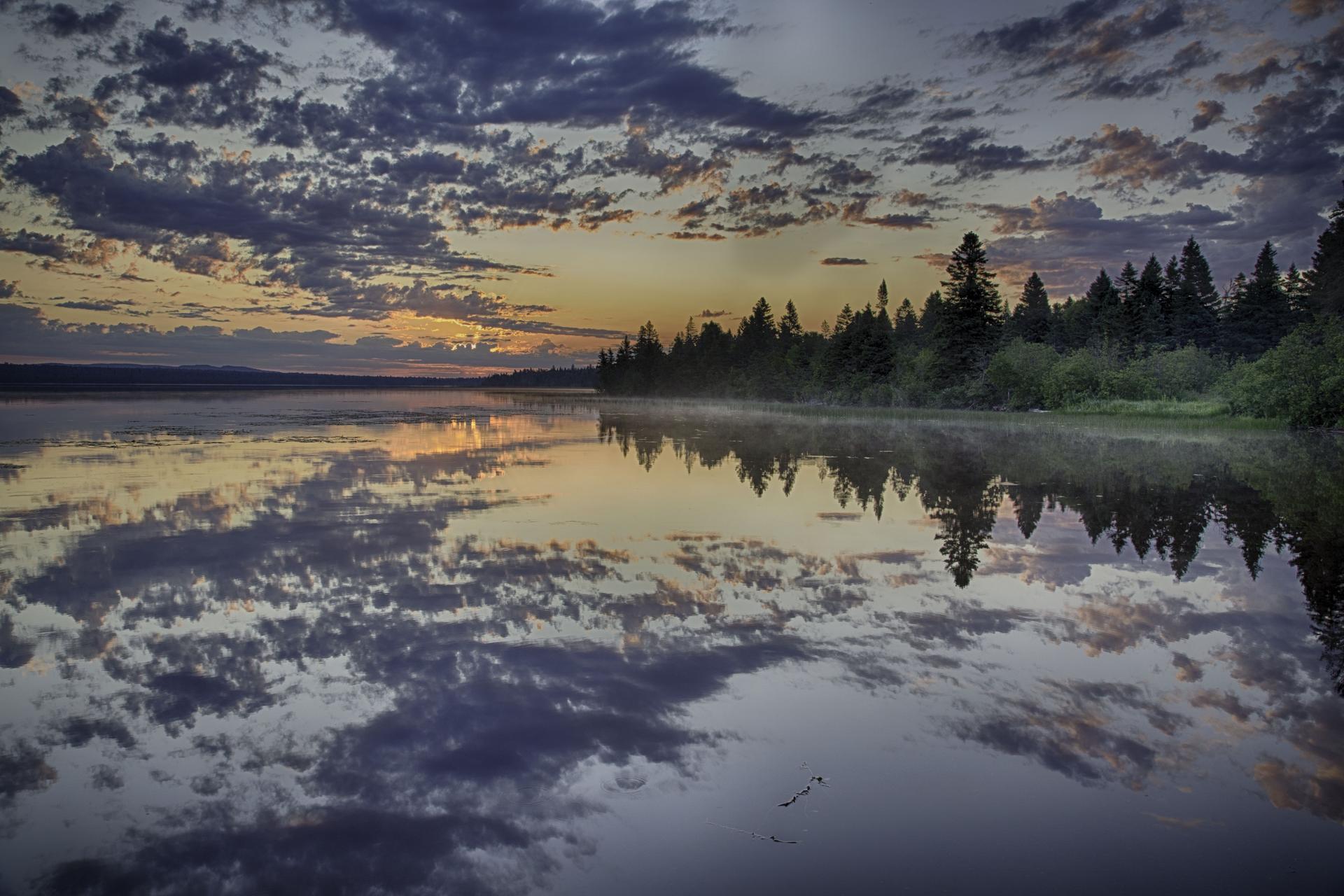
1st Place: A Morning at Feldtmann, by Tom Voigt |
|
|
When it came to the Novice category, the wild truly showed off. With a fantastic variety of submissions—from misty shorelines to curious critters—the creativity was as abundant as blueberries in July. Choosing just a few winners? Let’s just say it wasn’t easy. |
|
|
3rd Place: Morning at Feldtmann Lake, by Laura Ruetsche |
|
|
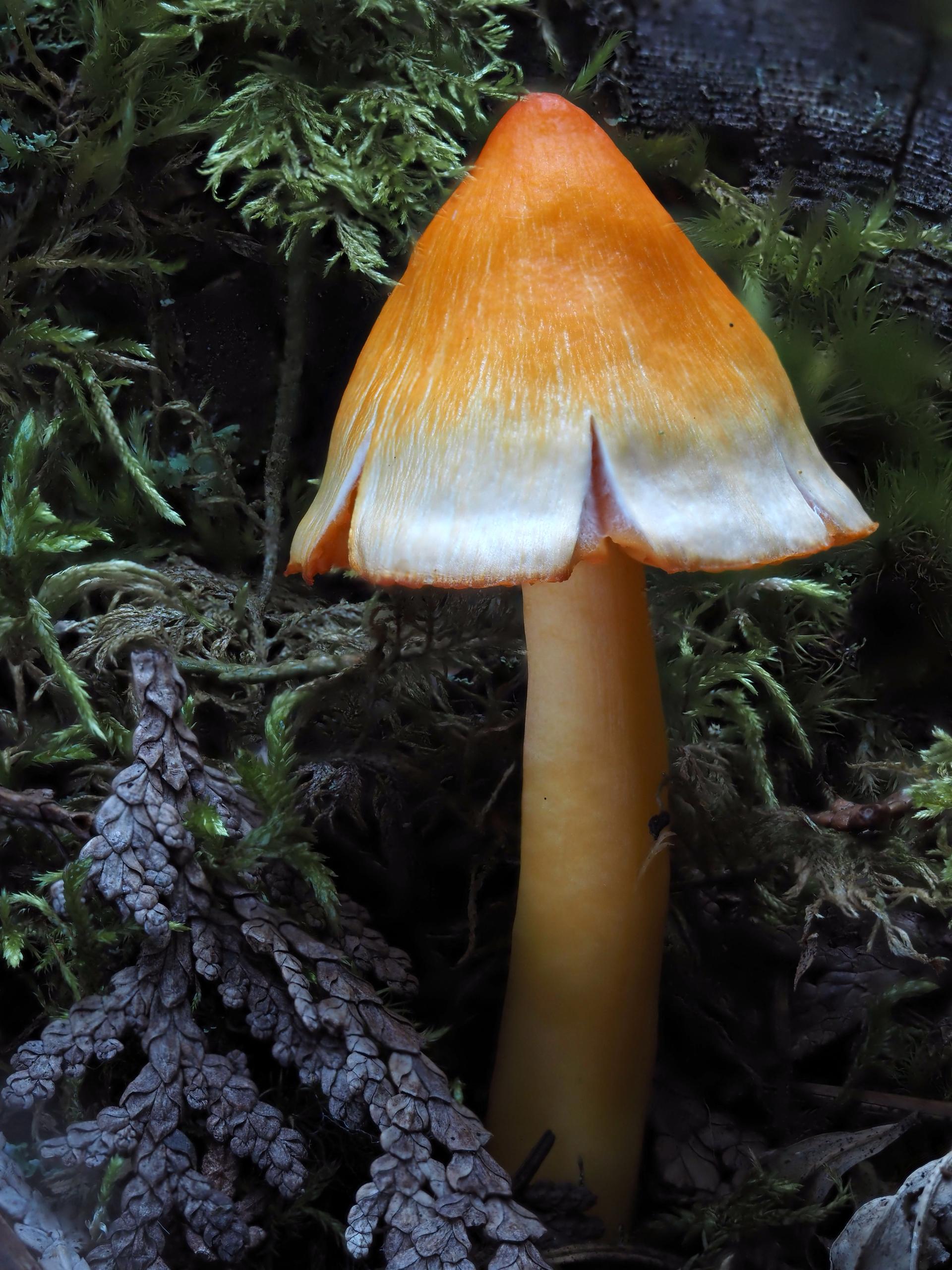
2nd Place: Orange Gilled Waxcap – Isle Royale, by Liz Weinstein |
|
|
1st Place: Anatomy Lesson, by Yelizaveta Renfro |
|
|
The Professional category brought the heavy hitters—photos so striking even the wolves paused mid-howl for a better look. With an incredible range of skill and artistry, these images captured Isle Royale’s wild heart in breathtaking detail. The competition was fierce, but a few rose to the very top. |
|
|
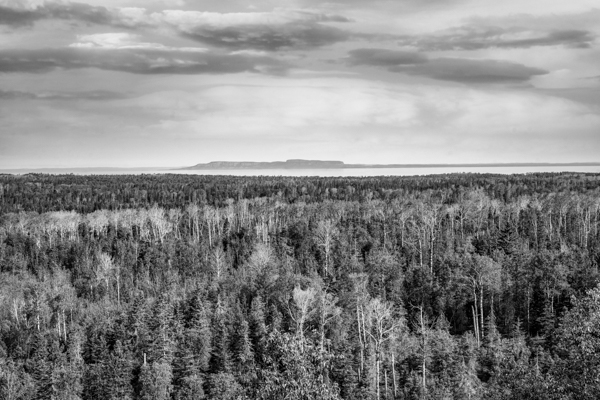
3rd Place: Sleeping Giants from the Ridge, by Joseph Harrington |
|
|
2nd Place: Start of the Journey, by Eileen Litchfield |
|
|
1st Place: Indian Portage Trail, by Ken Jacobsen |
|
|
See even more of the submissions by visiting our Photo Contest page on our website.
A huge thank-you to everyone who shared their photos and joined the fun—we loved every minute of seeing your work (and maybe argued a little too enthusiastically over our favorites). We can’t wait to do it all again next year! |
|
|
Howl About Some New Gear? |
|
|
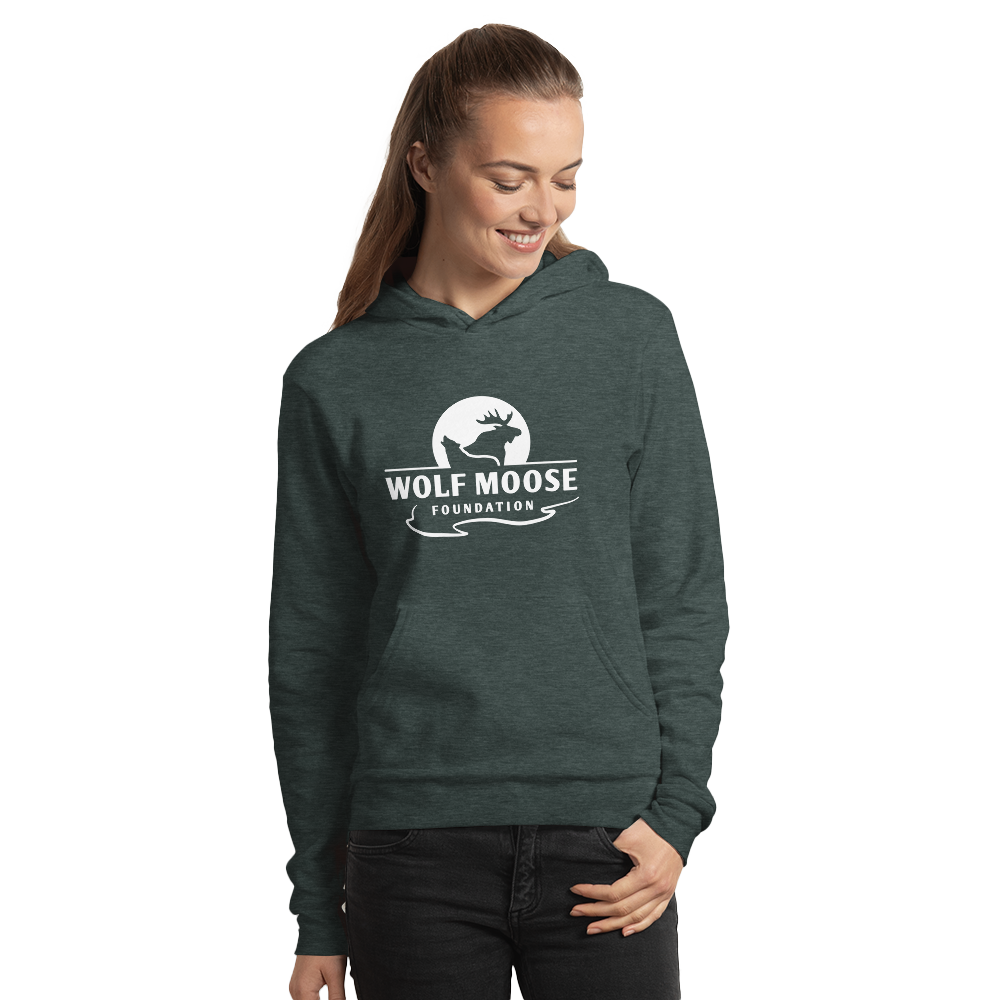
Guess what? We now have an online store—finally, a place where you can snag gear from both the Wolf-Moose Foundation and the Wolf-Moose Project. Proceeds go straight toward helping the Project become self-sustaining (so your hoodie is basically doing science). |
|
|
New items will appear, old items may mysteriously vanish… kind of like socks in the dryer. So check back often and grab your favorites while they last!
All gear is printed on demand—so you’re saving the planet one beanie at a time… but your mailbox might feel like it’s on moose time. Visit the Wolf-Moose Outpost today—before your size disappears into the laundry void. |
|
|
Welcome to “In the News”—your front-row seat to the latest on wolves, moose, Isle Royale, and beyond. From surprising scientific discoveries to bold conservation efforts across the globe, we’ll keep you informed, intrigued, and maybe even a little amazed by the wild world of wildlife research.
|
|
|
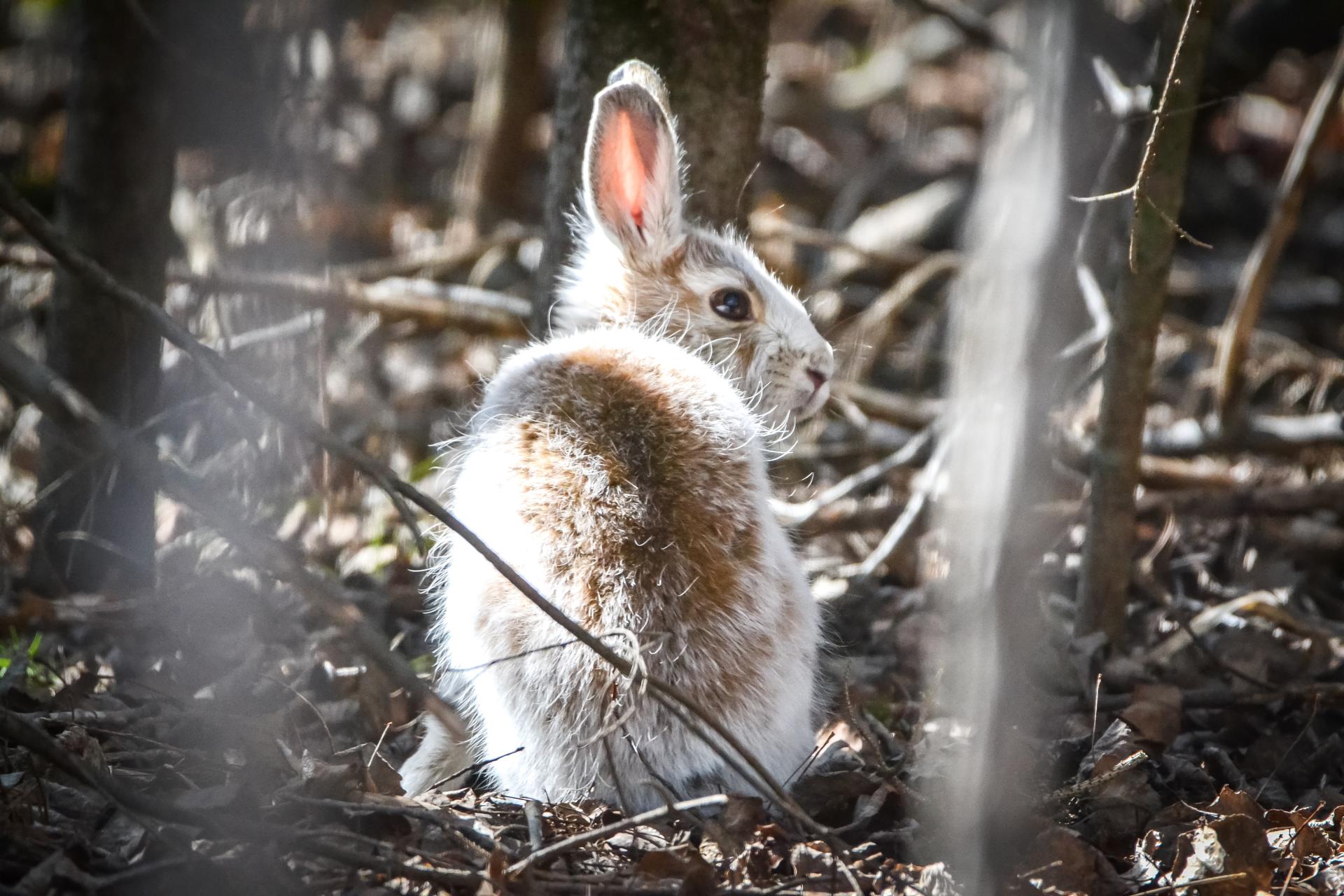
Snowshoe Hare Shedding to Its Summer Coat
Photo Credit: Amanda Griggs |
|
|
Our Contact Information
*{{Organization Name}}*
*{{Organization Address}}*
*{{Organization Phone}}*
*{{Organization Website}}*
*{{Unsubscribe}}* |
| The Wolf-Moose Foundation is a 501(c)(3) tax-exempt charitable nonprofit organization. Our Federal Tax Identification Number is 93-4654981. |
|
| |